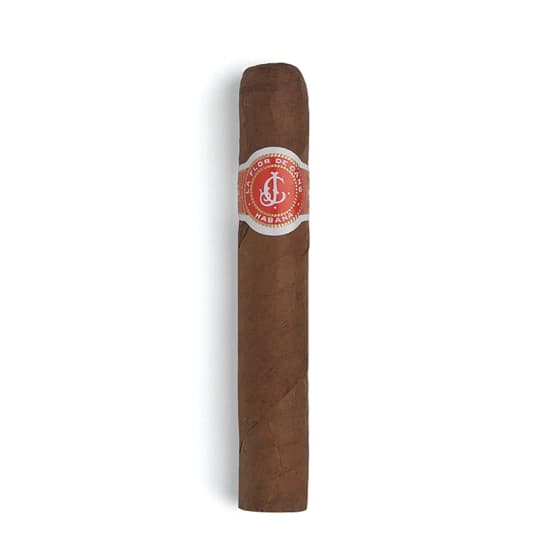
For the discerning aficionado, the world of Cuban cigars is often defined by the pursuit of hand-rolled masterpieces, yet there exists a distinct tier of collectibility within the machine-made segment that commands equal respect. Among these, the La Flor de Cano Predilectos Tubulares stands out as a quintessential example of industrial craftsmanship meeting tobacco heritage. While it may not have the handmade pedigree of a Cohiba, this cigar secured a permanent place in the hearts of smokers and collectors alike through its consistent construction, distinctive packaging, and impressive longevity in the global market. It serves as a tangible link to a different era of Habanos production, offering a glimpse into the history of the La Flor de Cano brand.


A Historic Timeline of Production and Discontinuation
The story of the Predilectos Tubulares is one of remarkable endurance. This particular vitola was not a fleeting release or a special limited edition; rather, it was a staple of the portfolio for decades. Its origins trace back to a time well before the industrial nationalization of the early 1960s, firmly establishing it as a pre-Revolutionary creation that successfully transitioned into the modern Cuban cigar industry. The cigar managed to weather the significant political and structural changes that swept through Cuba, remaining in regular production far longer than many of its contemporaries.
However, all good things must come to an end. After a production run that spanned nearly half a century, the Predilectos Tubulares was officially retired from active manufacturing in 2002. This discontinuation marked the close of a significant chapter for the brand. Today, the cessation of production has transformed what was once a readily available smoke into a sought-after artifact for those looking to complete a vintage collection.
Technical Specifications and Construction Details
Understanding the physical attributes of the Predilectos Tubulares is essential for proper identification and storage. Unlike the bulky Robustos or expansive Double Coronas that dominate the modern market, this cigar offers a more traditional, slender profile. It was crafted using a machine-bunched and machine-finished method, designated by the factory term "Standard Mano." This technique allowed for a uniform draw and burn, characteristics highly valued in the machine-made category.
The specific measurements of the cigar define its smoking experience, falling into the category of a slender Mareva or similar thin vitola. Collectors verifying authenticity should look for the following standard specifications:
- Dimensions: The cigar measures 123 mm (approximately 4 7/8 inches) in length with a ring gauge of 40.
- Weight: Each unit carries an official weight of 6.90 grams.
- Banding: It features the standard "Band A" design associated with the La Flor de Cano brand.
- Factory Origin: Produced under the Standard Mano designation.
While modern preferences have shifted heavily toward hand-rolled cigars, the machine-made construction of the Predilectos was considered top-tier for its time, providing a reliable smoke that required little maintenance from the user.
Packaging Evolution and Presentation
One of the most defining features of the Predilectos Tubulares was its presentation. The cigar was housed in aluminum tubes, a packaging choice that served a dual purpose: it preserved the freshness of the tobacco and elevated the product's aesthetic appeal. This "tubed" format made the cigar an excellent candidate for travel, as the metal casing protected the delicate wrapper leaf from damage. Furthermore, it positioned the cigar as a premium gift item, distinct from bundles or cellophane-wrapped alternatives.
Throughout its long history, the packaging underwent several subtle evolutions. Collectors will find examples wrapped in cellophane as well as the more common tubed variations. The tubes themselves evolved in design over the decades, with changes reflecting the branding shifts of the 1980s and 1990s. The final presentation was typically a dress box containing 25 individually tubed cigars. This "dress box" format—often featuring ornate lithography and a sliding lid—underscored the brand's commitment to presentation, ensuring that even a machine-made product felt like a luxury item on the tobacconist's shelf.
The Collector's Perspective
In the current landscape of cigar collecting, the Predilectos Tubulares occupies a unique niche. Because it is no longer in production, supply is strictly limited to existing stock, or "old stock" as it is known in the industry. For collectors of vintage Cuban cigars, the appeal lies in the history embedded in the packaging and the tobacco itself. The fact that the line survived for so many decades makes it a fascinating case study in brand resilience.
Finding a well-preserved box from the 1990s or earlier offers a tangible connection to the pre-2002 era of Cuban manufacturing. While the flavor profiles of aged machine-made cigars differ from their hand-rolled counterparts, they often develop a unique smoothness that is highly enjoyable. For those building a comprehensive portfolio of La Flor de Cano releases, acquiring a box of Predilectos Tubulares is not just about smoking; it is about preserving a piece of the brand's extensive timeline.