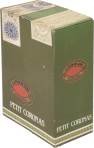
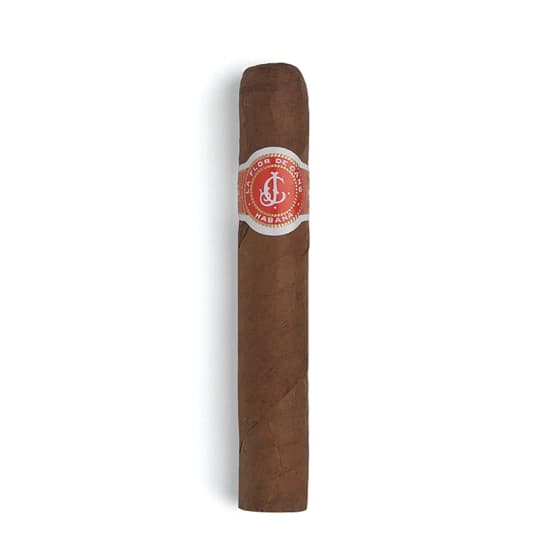
Within the vast and storied annals of Havana's tobacco industry, few narratives are as compelling as the evolution of specific vitolas that bridge the gap between artisanal tradition and industrial modernization. The La Flor de Cano Petit Coronas (1) stands as a definitive example of this phenomenon, capturing a specific era of Cuban cigar manufacturing that has since faded into history. While many brands have maintained a steady course for over a century, this particular cigar underwent a radical transformation during its lifespan, serving as a marker for the shifting priorities of the Cuban cigar industry throughout the latter half of the 20th century.

A Shift in Manufacturing Philosophy
The production history of the Petit Coronas (1) is characterized by a significant reversal of fortune regarding its construction methods. When the cigar was initially brought to the market prior to 1960, it was crafted entirely by hand, adhering to the time-honored traditions that define premium Cuban tobacco. However, the ensuing decade saw a major shift in strategy. Sometime before 1970, the manufacturers transitioned the production of this specific vitola to a machine-made process.
This move was not an isolated incident but rather reflective of a broader trend in Cuba during that period. Factories were seeking ways to streamline output and ensure a higher degree of uniformity across their products, leading many to abandon hand-rolling in favor of mechanization for certain lines. For decades, the Petit Coronas (1) remained a product of this machine-driven era. Yet, the story does not end there. Following the discontinuation of this version around 2002, the brand introduced a successor, the Petit Coronas (2), which notably returned to handmade craftsmanship. This reversal suggests a realization that the market ultimately placed a higher value on the traditional, labor-intensive methods that were once abandoned for the sake of efficiency.
Technical Specifications and Dimensions
For the modern aficionado or collector analyzing the anatomy of this discontinued smoke, the specifications reveal a classic format that was once a staple of the industry. The cigar measures 123 mm (approximately 4 ⅞ inches) in length with a ring gauge of 40, resulting in a slender, elegant silhouette that encourages a focused smoking experience. The official factory nomenclature for this size is "Standard Mano," a designation that interestingly hints at its hand-rolled origins despite its later machine-produced reality.
Weighing in at 6.90 grams, the cigar was constructed using a cedar wrap, a feature that imparts a distinct woody nuance to the tobacco over time. It was adorned with the Standard Band A, consistent with the visual identity of the La Flor de Cano brand. The combination of a 40-ring gauge and cedar wrapping created a smoking profile that differed significantly from the broader Robustos and Gorditos that dominate the modern market.
Presentation and Market Accessibility
One of the distinguishing characteristics of the Petit Coronas (1) during its active years was the sheer variety of packaging options made available to consumers. This diversity ensured the cigar was accessible to a wide demographic, ranging from casual smokers to serious collectors. The distribution strategy included:
- Small Format Packs: For those seeking a modest purchase, the cigar was sold in cardboard packs of three or five units, often sheathed in cellophane for preservation.
- Dress Boxes: Enthusiasts looking to stock their humidors could acquire dress boxes containing 25 cigars. These were available in two distinct configurations: one featuring cigars wrapped in cedar, and another offering the added protection of cellophane alongside the cedar.
This range of packaging highlights how the brand positioned the cigar as a versatile product—suitable for a quick trial or a long-term commitment in a humidor.
The Legacy of a Discontinued Vitola
Today, the La Flor de Cano Petit Coronas (1) exists exclusively in the realm of the secondary market and private collections. Its status as a discontinued regular production item has endowed it with a sense of exclusivity that it may not have possessed during its shelf life. The machine-made construction, combined with the cedar wrap, offers a distinct flavor profile that differs from the handmade successor that replaced it.
The decision to discontinue the line in the early 2000s and replace it with a handmade alternative speaks volumes about the cyclical nature of the luxury tobacco market. While mechanization was once viewed as the future of volume production, the enduring demand for "totalmente a mano" (totally by hand) products ultimately won out. For the historian and smoker alike, the Petit Coronas (1) remains a fascinating artifact—a bridge between the industrial ambitions of the past and the artisanal reverence of the present.