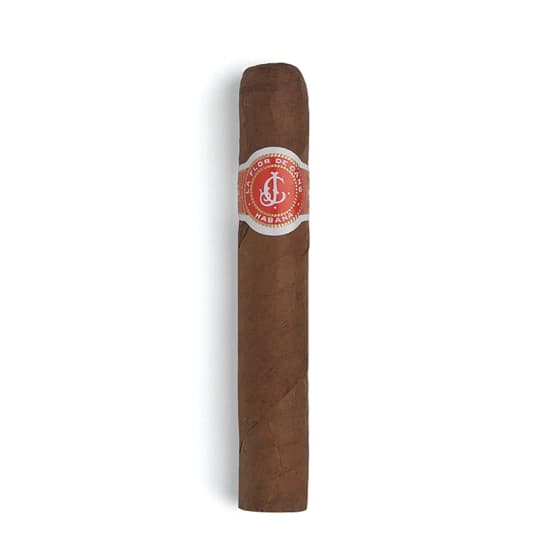
For the discerning aficionado, the pursuit of Cuban cigar history often leads to forgotten gems that no longer roll off the production lines. Among these elusive finds is the La Flor de Cano Iberos, a vitola that serves as a fascinating artifact from a bygone industrial era. While modern enthusiasts chase the latest limited editions, the Iberos stands as a testament to the brand's mid-century portfolio, offering a smoking experience that bridges the gap between the pre-revolutionary golden age and the nationalized production of the 1970s.

The Historical Timeline of the Iberos
The story of the Iberos is deeply intertwined with the turbulent history of Havana. This cigar made its debut on the global stage prior to 1960, situating its birth firmly in the pre-embargo era. During this time, La Flor de Cano was establishing itself as a reliable name in the Cuban tobacco landscape, and the Iberos was a staple in their regular production lineup.
What makes this cigar particularly intriguing to historians is its longevity. It survived the dramatic shift in the Cuban cigar industry following the 1959 revolution, continuing to be manufactured during the early years of the post-revolution government. However, the era of the Iberos eventually came to a close. By the 1970s, production ceased, effectively ending the life of this specific format. Consequently, any box found today represents a survivor of that specific transitional decade, making it a rare prize for those looking to complete a historical collection.
Technical Specifications and Industrial Craftsmanship
The Iberos was never intended to be a handmade masterpiece in the traditional sense; rather, it was a product of industrial efficiency. Classified as a machine-made cigar, it reflects a period when Cuban manufacturers utilized mechanized processes to ensure consistency and volume for specific market segments. Because of this machine-rolled nature, the physical dimensions are considered approximate, as slight variances were inherent to the automated process compared to the tactile precision of a torcedor.
The internal factory name for this vitola was the Vegueritos Mano. It measured a respectable 127 mm (or 5 inches) in length with a ring gauge of 37, placing it comfortably in the category of a thin to medium-bodied corona. The official weight was listed at 6.10 grams, suggesting a fairly packed draw typical of the era's machine-made offerings. Visually, the cigar was adorned with Standard Band A, maintaining the classic visual identity associated with La Flor de Cano during that epoch.
- Vitola Name: Iberos
- Factory Name: Vegueritos Mano
- Dimensions: 127 mm (Length) x 37 (Ring Gauge)
- Official Weight: 6.10 grams
- Construction: Machine-made
Packaging and Presentation Standards
In terms of presentation, the Iberos adhered to the standard conventions of regular production cigars during its time. The cigars were housed in dress boxes, with each container holding 25 units. This style of boxing was functional yet elegant, designed for retail shelves and humidors alike. To ensure the cigars maintained their integrity during transport and storage, each individual unit was wrapped in cellophane. This protective layer was crucial for preservation, especially given that these cigars would often travel long distances to reach international markets before the embargo solidified.
A Collectible from a Vanished Era
The status of the Iberos has evolved significantly since its discontinuation. In the modern secondary market, it is viewed less as a daily smoker and more as a piece of Cuban patrimony. The fact that it was discontinued decades ago means that supply is finite and dwindling. Finding a well-preserved box is a challenge, as time has taken its toll on the available stock.
For collectors, the appeal lies in the narrative of the cigar. It is a physical representation of La Flor de Cano's manufacturing philosophy during the mid-20th century. Owning an Iberos is akin to possessing a snapshot of the industry during its transition from private enterprise to state-run operations. While the flavor profiles of 50-year-old machine-made cigars can vary wildly depending on storage conditions, the historical value of the Iberos remains undisputed. It remains a sought-after entry for those dedicated to preserving the complete heritage of the Cuban cigar industry.