Guides
How to Tell if a Cohiba Is Real
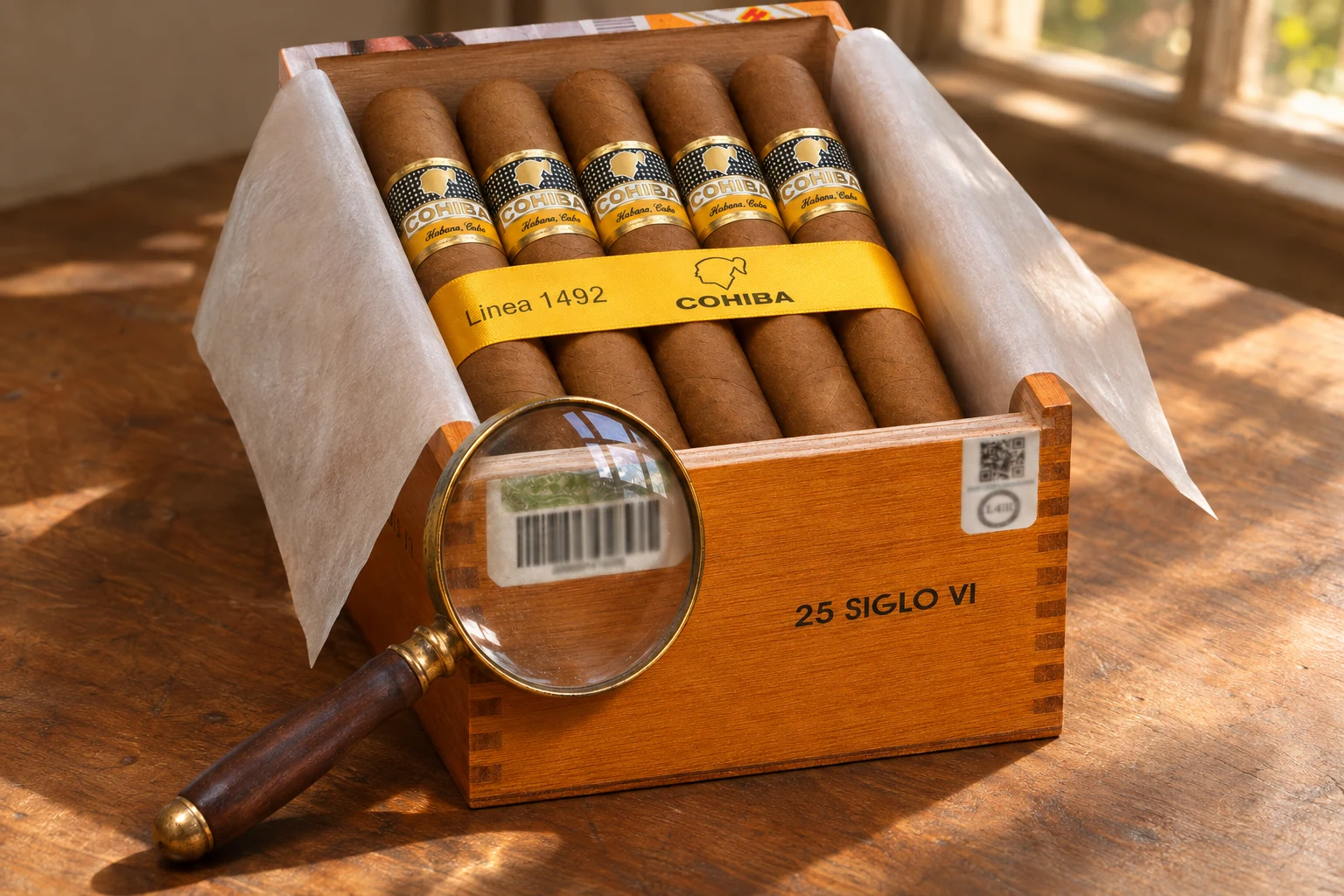
To tell if a Cohiba is real, check the box before the cigar: a green and white warranty seal with a hologram and barcode, the stamps on the underside, and a plain wooden or lacquered box with no glass lid. Then inspect the band and the cap. No single test is proof, but several failures together are a clear warning.
Why Cohiba is the first target
Cohiba is the most copied name in Havana cigars because it is the most valuable. Counterfeiters concentrate on the sizes that sell for the most, so the Behike line, the Siglo series and the Esplendidos deserve the closest look. Collectors treat every unfamiliar box the same way, whatever the seller says about it, and work through the same order each time: seal, stamps, box, band, cigar.
Start with the warranty seal
Every box of Habanos carries a green and white warranty seal across one edge. The design goes back to a Cuban law of 1912, and it has been revised several times since. The 2009 revision added a hologram and an individual barcode, so a box from recent years should have both.
The barcode can be entered on the verification page at habanos.com. A code that returns nothing, or returns a different cigar, is a strong sign of a fake. A correct result is weaker evidence: real codes can be cloned, so a match rules out only the crudest copies.
Look at how the seal is applied as well. It should be a separate paper seal fixed over the edge of the box. A seal printed straight onto the surface, or one lying loose inside, is a warning.
Turn the box over
The underside tells you more than the lid. A genuine box shows Habanos S.A. and Hecho en Cuba, and handmade cigars add Totalmente a mano. Hecho en Cuba has been on boxes since 1960 and Totalmente a mano since 1989, so a box claiming an earlier date with those marks needs explaining.
Two ink stamps should sit near those words: a factory code and a date. Since 2000 the date has been a three letter Spanish month and a two digit year, such as AGO 19 for August 2019. English month abbreviations, misspellings and odd typefaces are common mistakes on copies. Our guide to reading a Habanos box explains the codes in full.
Check the box itself
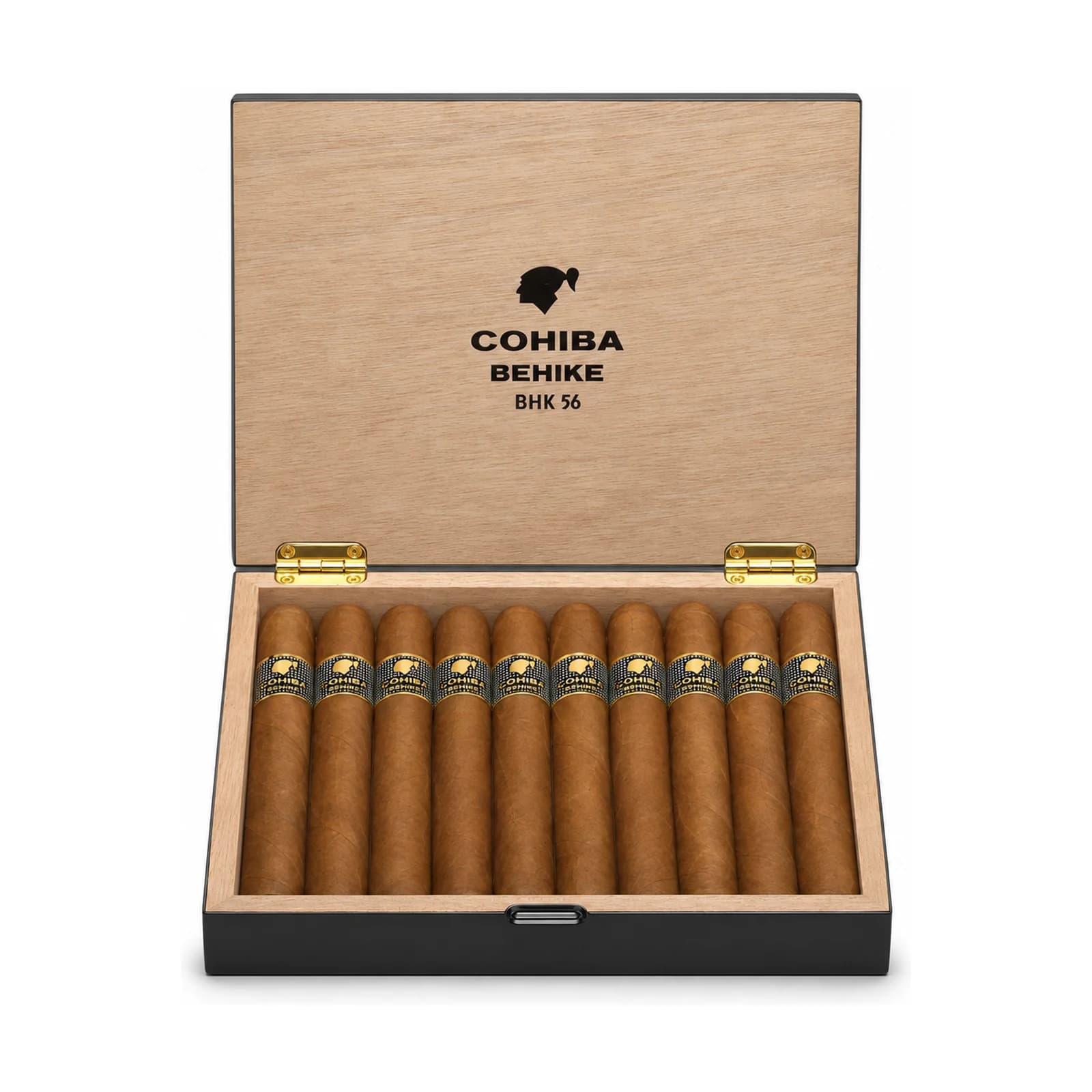
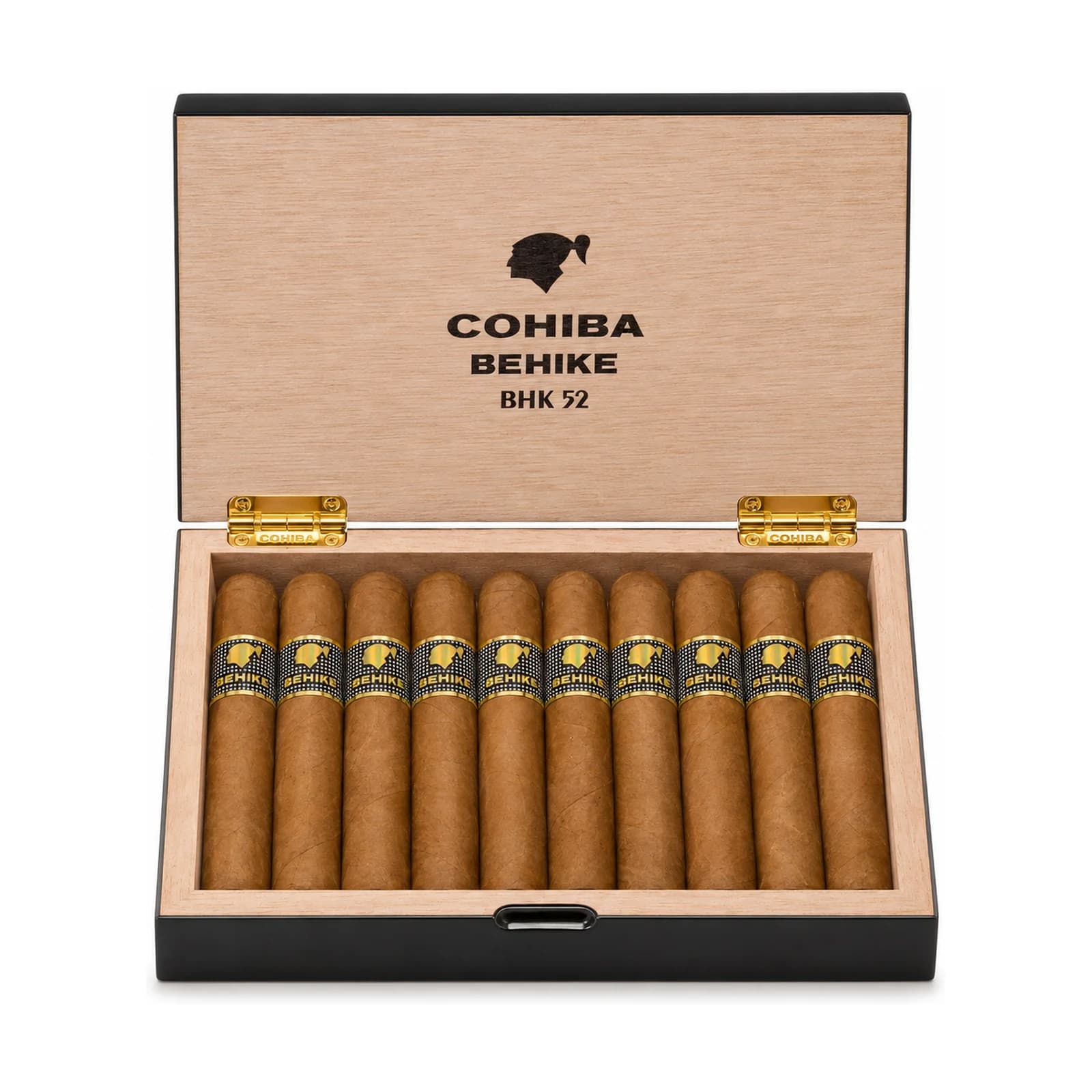
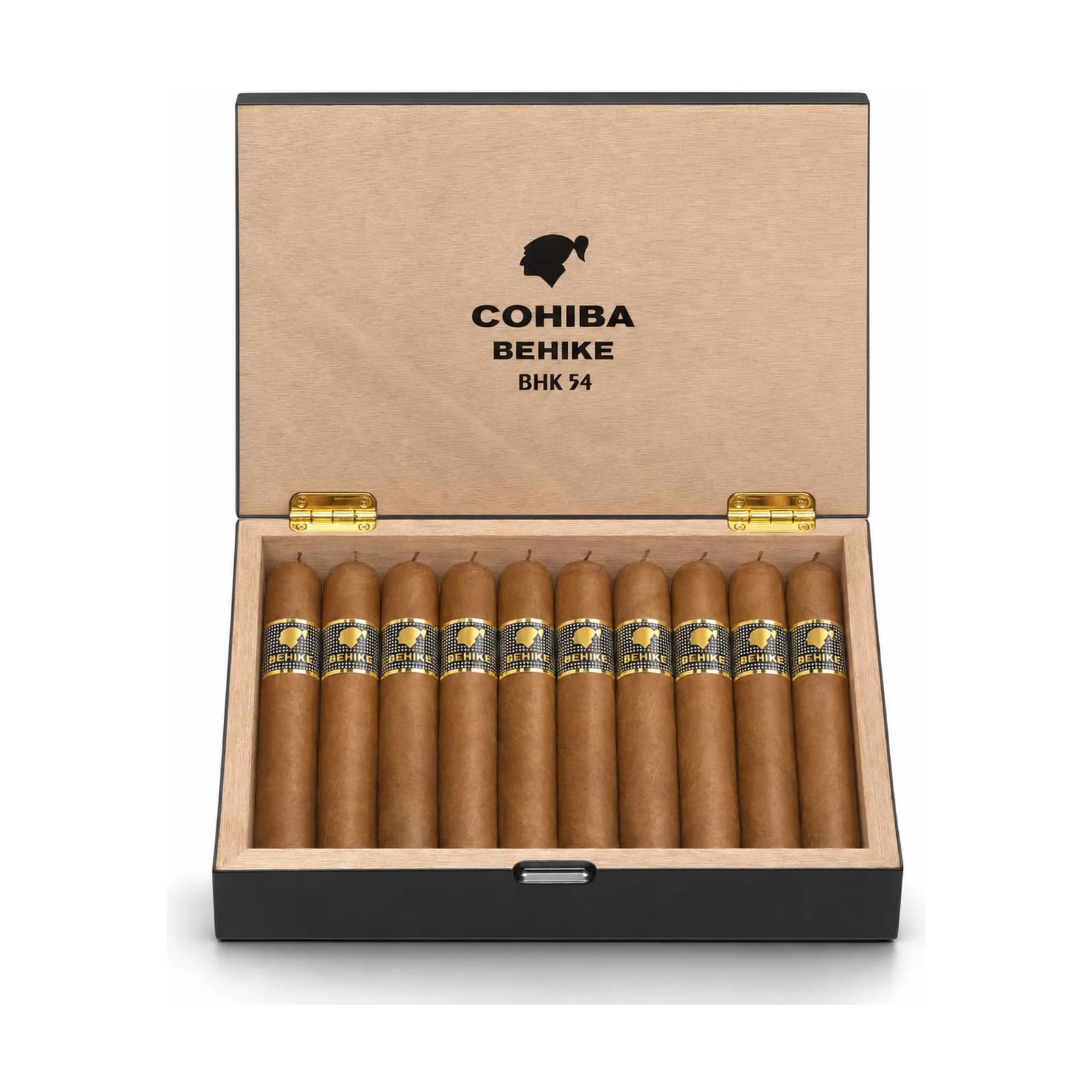
Habanos does not use glass, Lucite or clear plastic lids, so any box with one is counterfeit. Check the count too. The Behike 56 and its sister sizes come in boxes of 10, so a box of 25 Behikes does not exist. Compare the format, the finish and the count against a reliable reference before you trust what you are holding.
Read the band and the cigar
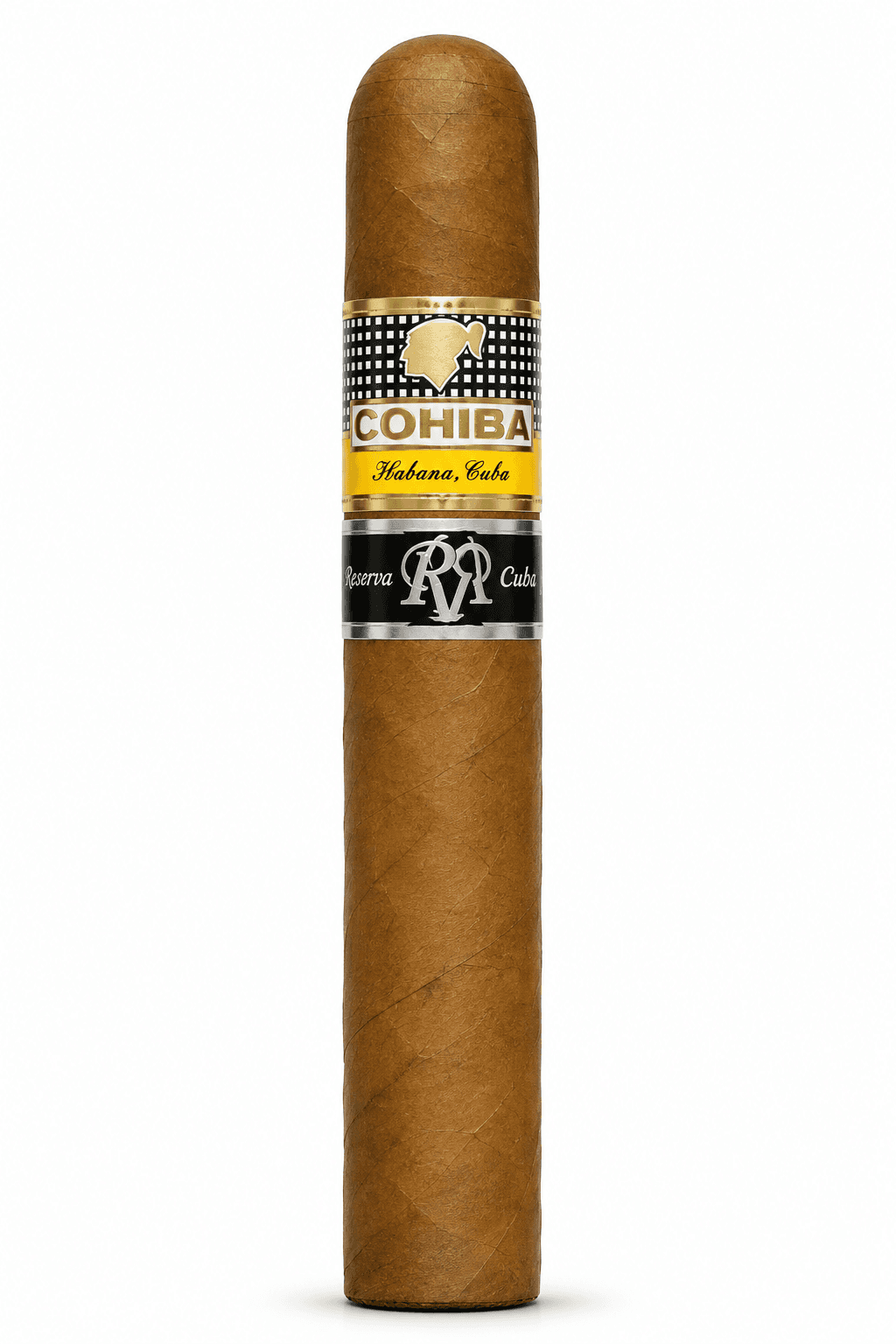
Print quality is where copies often slip. Look for blurred edges, dull metallic ink and lettering that does not line up. Compare the band with a known example of the same period, since Cohiba bands have changed over the years and a band that is simply different may only be older.
Then look at the construction. A handmade Cuban cigar should have a neatly applied cap with three seams at the head. Wrappers should match across the box in color and sheen. Cigars that are visibly different lengths or diameters within one box deserve suspicion, because each box is made to one size and sorted by shade.
What the smoke can and cannot tell you
Cuban tobacco usually leaves a gray or salt and pepper ash, while very white ash can point to tobacco from elsewhere. That is a useful signal rather than proof, and by then you have already lit the cigar. Treat the smoking test as the last check, never the first.
A short checklist
- Warranty seal present, applied over the edge, with hologram and barcode on recent boxes.
- Barcode returns the right product on habanos.com.
- Habanos S.A., Hecho en Cuba and Totalmente a mano on the underside.
- Factory code and date in Spanish format.
- No glass or clear lid, and the correct count for the line.
- Crisp band printing and a clean three seam cap.
- A price that makes sense. An offer far below the market is a warning on its own.
The most reliable protection is the combination of all these checks with a seller who will show you clear photographs of the seal and the underside of the actual box before you pay.
Reader questions
Questions & answers
No questions yet. Ask the first one.