Among the pantheon of Cuban cigar legends, the Davidoff 1000 Panetela stands as a testament to an era when Swiss precision met Caribbean tradition. This slender, elegant smoke carved out its place in history during a remarkable twenty-one-year production run that spanned the golden age of Cuban Davidoff craftsmanship, becoming one of the most sought-after discontinued vitolas among serious collectors worldwide.

The Origins and Cuban Era
The Davidoff brand's journey into Cuban production began with ambition and quickly evolved into excellence. The iconic 1000 Panetela made its debut on January 1, 1970, immediately establishing itself as a cornerstone within the company's portfolio. For over two decades, this refined panetela represented the sophisticated end of Davidoff's regular production offerings, appealing to smokers who appreciated subtlety and refinement over bold intensity.
The year 1991 marked a pivotal turning point for the brand. As political and business dynamics shifted, Davidoff made the consequential decision to relocate its manufacturing operations from Havana to the Dominican Republic. This transition effectively ended the 1000's Cuban chapter, concluding a remarkable twenty-one-year production run that had firmly established the vitola within collector circles and enthusiast awareness.
Construction and Technical Specifications
The 1000 exemplified the craftsmanship standards that defined the Cuban Davidoff era. Each specimen was entirely handmade, requiring exceptional skill from the torcedors who crafted these delicate cigars. The panetela format demanded precise technique, as the slender 34-ring gauge construction left little room for error in the rolling process.
The technical profile of the 1000 reflects its elegant positioning within the Davidoff range. The cigar measured 117 millimeters in length, translating to approximately 4⅝ inches, a proportion that allowed the blend to develop its characteristics gradually during a measured smoking session. The official weight of 4.94 grams contributed to the cigar's lightweight, almost ethereal presence in the hand.
Throughout its production period, the 1000 featured the Standard Band A designation, consistent with other offerings in the Davidoff family during that timeframe. This banding choice created visual continuity across the brand's portfolio while allowing the individual vitola characteristics to speak for themselves.
Presentation and Packaging
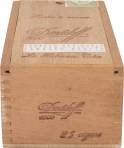
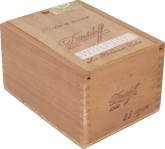
Understanding market preferences and collector needs, Davidoff offered the 1000 in two distinct packaging configurations. Enthusiasts could acquire the cigars in cardboard packs containing five units, an ideal format for those wishing to sample the vitola without committing to larger quantities. Alternatively, dedicated collectors and retailers could obtain the 1000 in elegant slide-lid boxes that held twenty-five cigars, designed to preserve freshness during extended storage periods.
The packaging approach reflected Davidoff's understanding of its customer base—sophisticated smokers who valued both immediate enjoyment and long-term preservation. These presentation options remain historically significant, as different packaging styles can affect a specimen's current market value among discerning collectors.
Collecting the Davidoff 1000 Today
Decades have passed since the final 1000 rolled off Cuban production lines, and well-preserved examples have become increasingly elusive in the collector's market. The relatively lengthy production span from 1970 to 1991 means that specimens do occasionally surface, though finding specimens that have maintained their integrity presents a considerable challenge. Humidification control, temperature management, and proper storage history all factor into determining whether a discovered 1000 has survived in collectible condition.
For serious collectors, acquiring a properly stored Davidoff 1000 represents not merely adding a cigar to their humidor, but preserving a tangible connection to a transformative period in premium cigar history. These slender panetelas embody the intersection of Swiss precision and Cuban tradition that defined an era, making them worthy subjects for both smoking and careful preservation.