In the rarefied world of premium tobacco, few artifacts command as much reverence as a vintage cigar from Davidoff's Cuban era. Among these coveted relics, the Dom Perignon stands out as a true icon of luxury and craftsmanship. Produced during a time when the Davidoff brand maintained a legendary partnership with Havana, this specific vitola has transcended its status as a mere consumable to become a prized trophy for collectors. It represents a fleeting moment in history where Swiss precision met Cuban terroir, resulting in a smoking experience that is now impossible to replicate.

A Golden Era: The Cuban Partnership
The Dom Perignon was officially unveiled to the world on New Year's Day in 1977. This launch solidified Davidoff's reputation for creating tobacco products that mirrored the sophistication of high-end luxury goods. The cigar remained in production for a distinct twelve-year window, concluding its run in 1989. This timeframe is significant because it predates the brand's eventual split from Cuban manufacturers and subsequent move to Dominican production. Consequently, every box of Dom Perignon existing today serves as a tangible reminder of that original collaboration, a piece of history that has been out of production for decades.
Technical Mastery and Dimensions
True to its namesake—the celebrated French champagne—this cigar was designed to offer a complex and refined profile. The physical specifications reveal a smoke intended for the patient and discerning aficionado. It falls under the "Julieta No.2" factory classification, a format favored for its elegant proportions.
- Dimensions: The cigar stretches an impressive 178 millimeters (7 inches) in length, providing a lengthy smoking duration.
- Ring Gauge: With a ring gauge of 47, it offers a comfortable draw and a slow, cool burn.
- Weight: The official weight is recorded at 15.07 grams, reflecting the density of the hand-rolled tobacco leaves.
- Construction: Each unit was entirely handmade, a standard for the brand's elite offerings.
The combination of considerable length and a substantial girth ensures that the flavors evolve distinctly throughout the smoke, a characteristic highly prized by connoisseurs who appreciate the "Julieta" shape.
Presentation and Packaging
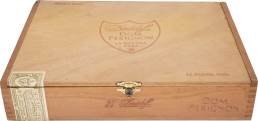
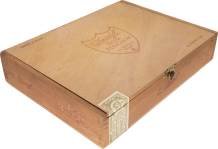
Even the presentation of the Dom Perignon was handled with the utmost care. The cigars were originally housed in semi boîte nature boxes, utilizing the natural wood aesthetic that protects the cigars while allowing them to breathe. Collectors will recognize that these cigars were available in two distinct box configurations during their commercial life. Some were sold in cabinets of 25, making for an impressive display, while others were offered in smaller dress boxes of 10. Adorned with the standard Davidoff band A, the visual identity was classic and understated, letting the quality of the wrapper leaf speak for itself.
The Secondary Market and Legacy
Since production ceased in 1989, the Dom Perignon has entered the pantheon of discontinued legends. The end of its run marked a significant shift in the industry, as Davidoff eventually transitioned its operations to the Dominican Republic. As the years pass, finding these cigars in pristine condition has become increasingly difficult. Surviving boxes and individual sticks now command significant premiums on the secondary market, driven by their scarcity and the nostalgia for the unique flavor profile of Cuban Davidoffs.
For those lucky enough to find one, the Dom Perignon is more than just a cigar; it is a museum-quality piece of tobacco history. It remains a benchmark against which other luxury vitolas are measured, forever remembered as a jewel of the late 20th-century cigar world.