
For the discerning aficionado, few artifacts evoke the golden age of Havana tobacco quite like the vintage offerings from Zino Davidoff’s Cuban period. Among the most illustrious of these relics is the Château Latour, a cigar that bridged the gap between the rolling hills of Pauillac and the fertile fields of Vuelta Abajo. Conceived as a luxurious homage to the First Growth Bordeaux wine estate, this cigar offered smokers a unique opportunity to savor the synergy between two of life's greatest pleasures: fine wine and premium tobacco. Today, surviving examples are treated not merely as consumables, but as historical artifacts representing a bygone era of craftsmanship.

The Origins of a Wine-Inspired Legend
The Château Latour made its debut in 1969, a time when the Davidoff brand was actively expanding its portfolio of wine-themed vitolas. This series was designed to appeal to the sophisticated palates of the era's elite, drawing direct parallels between the complexity of grand cru wines and the nuanced profiles of Cuban tobacco. The cigar remained a staple of the Davidoff catalog for exactly twenty years, with production ceasing in 1989. Its discontinuation marked a significant turning point in the industry, signaling the eventual end of Davidoff's manufacturing relationship with the island of Cuba. Consequently, every surviving Château Latour serves as a tangible memento of that twenty-year span of Cuban production history.
Understanding the Format and Construction
In terms of physical dimensions, this cigar adhered to the classic standards of elegance that defined the era. It was crafted in the Coronas format, a size that has long been favored for its ability to deliver a balanced concentration of flavors without requiring an excessive time commitment from the smoker.
Technical Specifications
- Factory Name: Coronas
- Dimensions: Measuring 142 mm (5⅝ inches) in length with a ring gauge of 42.
- Weight: The official weight was recorded at 9.29 grams.
- Construction: Entirely handmade, ensuring a meticulous draw and burn.
While modern trends have shifted toward thicker ring gauges, the slender 42 gauge of the Château Latour allows for a distinct flavor progression, where the wrapper leaf contributes a higher ratio of the overall taste profile compared to the filler. This proportionality was essential for a cigar named after a wine estate known for its structure and finesse.
Visual Evolution and Presentation Nuances
One of the most fascinating aspects of this vitola for historians and collectors is the evolution of its branding. In its earliest years, the Château Latour was sold completely devoid of a cigar band. This stark, minimalist presentation reflected the early Davidoff philosophy that the tobacco itself should speak volumes, unadorned by flashy aesthetics. However, around the year 1980, the branding strategy shifted. The cigar was subsequently adorned with Davidoff's standard "Band A," bringing it into alignment with the visual identity that most collectors associate with the brand today.
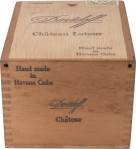
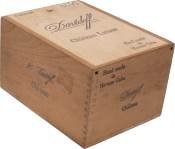
This transition creates a clear delineation for collectors: finding an early, unbanded specimen is a rare feat, and these specific units often command a premium at auction due to their scarcity and historical significance. The packaging options further reflected the luxury status of the product. Enthusiasts could acquire the cigar in several formats, including a modest cardboard pack of five, or opt for the more traditional slide-lid boxes which held either 25 or 50 cigars. These slide-lid boxes, often referred to as cajetas, were prized for their functional elegance, helping to maintain the humidity levels necessary for long-term aging.
The Collector's Perspective
Since production halted over three decades ago, the Davidoff Château Latour has transitioned from a regular production item to a highly sought-after collector's piece. The cigar represents the pinnacle of pre-embargo and post-embargo innovation, showcasing the specific flavor profiles that Cuban soil produced under the guidance of Swiss quality control. While the modern Davidoff brand has continued the Château series using Dominican tobacco, the original Cuban iterations remain irreplaceable. For those lucky enough to encounter a well-preserved box from the 1970s or 1980s, the experience offers a sensory window into the past, preserving the legacy of a collaboration that defined luxury smoking for a generation.