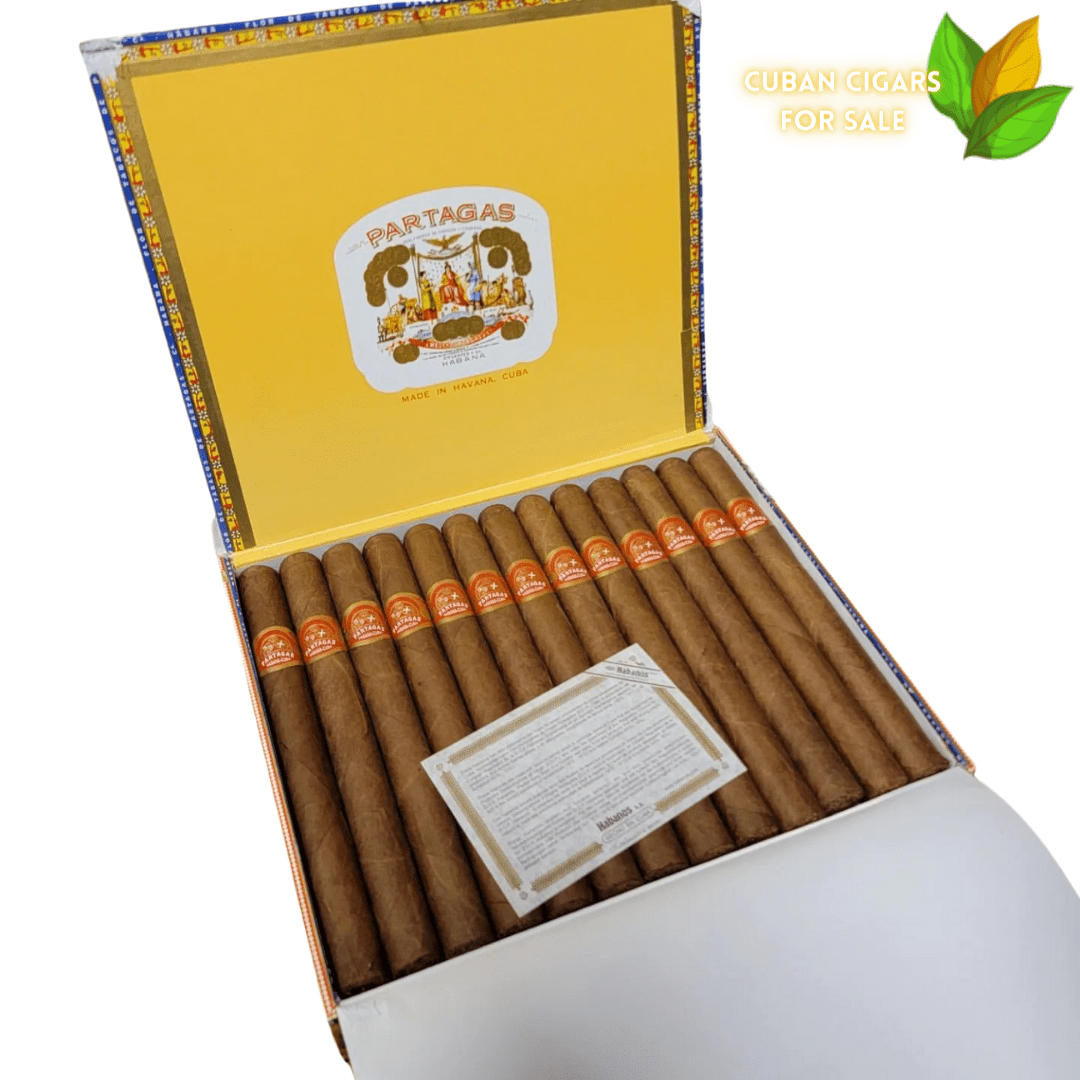

Description
Why the Partagas Lusitanias Deserves a Place in Your Humidor
Look, I’ve been smoking Cuban cigars for nearly three decades now, and I can tell you without hesitation – the Partagas Lusitanias is one of those sticks that reminds you why people obsess over Habanos in the first place. This isn’t just another double corona trying to ride on brand recognition. This is the cigar that taught me what “full-bodied” actually means, back when I was still figuring out the difference between strength and flavor complexity. Thing is, most people know Partagas for their Serie D No. 4, which is fantastic, don’t get me wrong. But the Lusitanias? It’s like comparing a great short story to a full novel – both can be brilliant, but one gives you time to really settle in and experience everything the blender intended.
The Partagas Legacy in a Grand Format
Partagas has been around since 1845, which means they were rolling cigars before the Cuban War of Independence. That’s not just history – that’s mastery passed down through generations of torcedores. The Lusitanias sits in their regular production lineup, and here’s what gets me: in an era where every brand is chasing limited editions and fancy bands, Partagas keeps producing this beast of a cigar with zero fanfare. It’s just there, waiting for smokers who know what they want.
This cigar measures in at a proper double corona format – we’re talking about a smoking experience that demands your attention and rewards your patience. The wrapper is classic Cuban tobacco from the Vuelta Abajo region, which is the Napa Valley of cigar tobacco. No joke, the soil and climate there produce leaves that other growing regions spend decades trying to replicate. The filler blend uses ligero, seco, and volado leaves in proportions that give you complexity without beating you over the head with nicotine.
Who’s this cigar for? Real talk: if you’re new to cigars, maybe start somewhere else. But if you’ve been around the block, if you know what retrohaling does for the experience, if you appreciate a cigar that changes and develops over the course of – wait, let me back up. This is for the smoker who has time. Not “I’ve got twenty minutes before my next meeting” time, but actual leisure time where you can sit, think, maybe read a chapter or two, and let this thing work its magic.
Technical Specifications
| Specification | Details |
|---|---|
| Vitola | Double Corona (Prominentes) |
| Length | 7.6 inches / 194 mm |
| Ring Gauge | 49 |
| Wrapper | Cuban (Vuelta Abajo) |
| Binder | Cuban |
| Filler | Cuban blend (ligero, seco, volado) |
| Strength | Medium to Full |
| Smoking Time | 90-120 minutes |
The Smoking Experience – Third by Third
Okay, so you’ve cut it – and I recommend a straight cut for this one, nothing fancy – and you’re getting ready for that first draw. The cold draw should give you hints of cedar and earth, maybe some dried fruit if you’ve got a good one. If it feels too tight, don’t panic. These big ring gauges sometimes need a minute to open up once you apply heat.
First third hits you with classic Partagas character. There’s this earthiness that I always associate with the brand, but it’s refined – not like sucking on potting soil, more like walking through a tobacco barn. You’ll get cedar notes pretty quickly, and depending on the vintage (more on that in a second), you might pick up some coffee bean or dark chocolate undertones. The smoke production should be generous. I mean, you’re literally burning a small log here, so if you’re not getting thick, creamy smoke, something’s wrong with your stick or your technique.
Here’s the thing about the first inch or so – the strength builds gradually. Some full-bodied cigars punch you in the face right out of the gate. The Lusitanias is smarter than that. It starts medium, maybe medium-plus, letting you acclimate. The burn should be pretty even if you’re not puffing too fast. And the ash? When it’s fresh, you might see it hold for an inch before dropping. With some age on it – we’re talking three to five years – I’ve seen ash hold for nearly two inches, which is just showing off at that point.
Moving into the second third – and you’re probably thirty to forty minutes in now, maybe halfway through whatever drink you paired with this – the complexity really opens up. The pepper that was hiding in the background starts asserting itself. Not aggressively, but it’s there on the retrohale, mixing with the cedar and earth. Some sticks give me leather here, that rich, well-oiled leather smell. Others lean more toward spicy territory, with black pepper and maybe some cinnamon or nutmeg-type baking spices.
This is where aging really shows its worth. A fresh Lusitanias from current production can be a bit rough in the second third – all muscle, not enough finesse. But give it time in your humidor, let those tobacco leaves marry and mellow, and suddenly you’re tasting things you didn’t know were there. Hints of cocoa. Sometimes this weird but pleasant mineral quality. My buddy Carlos from the cigar club swears he gets salted caramel in aged Lusitanias, and I thought he was nuts until I tried a 2015 stick last year. Damned if he wasn’t right.
The final third is where this cigar earns its reputation. Some big cigars peter out at the end – they get harsh, bitter, or just boring. The Lusitanias doesn’t do that. If anything, it intensifies while maintaining balance, which is a hell of a trick. The strength kicks up to full-bodied territory here, so if you haven’t eaten recently, be aware. The flavors concentrate: more pepper, darker earth tones, sometimes a touch of espresso bitterness that works beautifully with the sweetness from the natural tobacco sugars.
Construction-wise – and this matters with a cigar this size – Partagas generally does solid work. I’m not saying every single one is perfect. Cuban quality control has its ups and downs depending on the year and, honestly, which factory your box came from. But more often than not, you’re getting a well-constructed cigar that burns evenly, draws smoothly after it opens up, and doesn’t tunnel or canoe on you. The wrapper is usually pretty clean, maybe a few small veins but nothing that affects performance.
How Does It Stack Up Against Similar Cigars?
| Cigar | Strength | Smoking Time | Best For |
|---|---|---|---|
| Partagas Lusitanias | Medium to Full | 90-120 minutes | Patient smokers who want classic Cuban character with excellent aging potential |
| Hoyo de Monterrey Double Corona | Medium | 90-110 minutes | Those who want the size without the strength – smoother, more elegant |
| Ramon Allones Gigantes | Full | 100-120 minutes | Smokers who want more power and spice throughout the entire experience |
Between you and me, the Hoyo Double Corona is probably the more “refined” smoke if we’re being diplomatic about it. It’s got that Hoyo elegance and won’t tire you out. But the Lusitanias has personality – it’s got opinions, if that makes sense. The Ramon Allones Gigantes is closer in strength profile, maybe even a bit heavier, and it’s an incredible cigar. I’d say the Lusitanias sits right in that sweet spot between approachability and power.
What to Pair With This Beast
Not gonna lie, I’ve tried this cigar with everything from coffee to bourbon to rum to wine, and here’s what I’ve learned: go bold or go home. This isn’t a cigar for delicate pairings. That aged rum you’ve been saving? The one from Guatemala or Barbados with all that complexity? Perfect. A smoky Islay scotch like Laphroaig or Ardbeg? Surprisingly great, actually – the smoke-on-smoke thing works if you’re into that. I know some aficionados will disagree, but I love this with a strong espresso during the first third, then switching to something with more alcohol content as the cigar intensifies.
For bourbon drinkers – and I’m squarely in that camp – look for something high-proof and flavorful. A barrel-proof four roses or a nice Stagg Jr. can stand up to the Lusitanias without either one overwhelming the other. The sweet caramel and vanilla notes from the bourbon play really nicely with the natural tobacco sweetness and any cedar or chocolate notes you’re picking up from the cigar.
Time of day? This is an after-dinner cigar, full stop. I mean, you could smoke it whenever you want – I’m not your dad – but this is a lot of tobacco and a fair amount of nicotine. Late afternoon at the earliest, evening preferably. Special occasions. Saturday afternoons when you’ve got nowhere to be. The kind of day where two hours feels like a luxury, not a burden.
Aging Potential and Box Purchases
Okay, so here’s something important that not enough people talk about with the Lusitanias: this cigar is an absolute monster when it comes to aging potential. Fresh from the factory, it’s good. Solid. Enjoyable. But with five years on it? It transforms into something else entirely. The rough edges smooth out, the flavors integrate and deepen, and you get this amazing creamy quality to the smoke that just isn’t there when it’s young.
I actually think – and this might be controversial – that Lusitanias under two years old aren’t worth smoking. There, I said it. They’re harsh, one-dimensional, and they don’t show you what Partagas is really capable of. If you can afford to buy a box and forget about it for a few years, do that. Set a calendar reminder for 2028 or whatever. Future you will be thrilled.
The other advantage of box purchases is consistency. You’re getting cigars from the same production run, same tobacco batch, rolled around the same time. They’ll age uniformly, and you can track how they develop. Smoke one fresh, one at the one-year mark, one at three years, and so on. It’s like watching a kid grow up, except way less expensive and with better smoke production.
Construction and Quality Control Notes
Let me be honest with you: Cuban cigars aren’t perfect. I love them, I’ve dedicated a stupid amount of money and time to them, but quality control can be inconsistent. With Partagas Lusitanias, I’d say you’re looking at maybe 85-90% consistency in a good box. Most will be excellent. One or two might have draw issues or burn problems.
Here’s what to look for when you’re inspecting before you light up. The wrapper should be oily but not greasy – that’s the natural tobacco oils coming through. A few veins are fine; huge bumpy veins might indicate construction issues. Gently squeeze the cigar from head to foot – it should be firm but not rock hard, with no dead spots that feel hollow or overly soft. If you find a problem area, that’s probably where it’ll burn poorly.
The foot of the cigar – where you’ll be lighting it – should show you a nice even bunch of tobacco leaves. If it looks messy or you see a gap in the center, you might be in for draw problems. Not definitely, but maybe. Also check the cap. It should be cleanly applied. A sloppy cap doesn’t necessarily mean the cigar will smoke poorly, but it’s not a great sign about the quality control on that particular stick.
Frequently Asked Questions
How does the Partagas Lusitanias compare to the Serie D No. 4 in terms of flavor profile?
The Serie D No. 4 is like the Lusitanias’ younger, more energetic sibling. Both share that classic Partagas earthiness and strength, but the Lusitanias has more time to develop complexity. The Serie D gives you an intense, concentrated experience in 50 minutes. The Lusitanias stretches that out, adds more layers – cedar, chocolate, varying pepper notes – and builds gradually instead of hitting you all at once. If you love the D No. 4 but want more nuance and have the time for it, the Lusitanias is your next step.
What’s the ideal humidity level for storing Partagas Lusitanias?
I keep mine at 65% relative humidity, maybe 66% in the winter when the air is drier. Some people go higher – 68-70% is pretty standard – but I find that Cuban cigars, especially big ones like the Lusitanias, can get spongy and burn poorly if they’re too moist. Temperature-wise, aim for 65-68°F if you can manage it. The real key is consistency. Your humidor swinging between 62% and 72% is worse than keeping it steady at 67% even if that’s not “perfect.”
How long should I age a box of Lusitanias before smoking them?
Minimum two years, but honestly, five is where things get interesting. I know that’s a long time to stare at a box and not smoke it – believe me, I know – but the transformation is worth it. The harsh edges smooth out, the flavors integrate and deepen, and you get this creamy quality that young Lusitanias just don’t have. If you can’t wait that long (and I don’t blame you), at least give them a year. Even that makes a noticeable difference. Pro tip: buy two boxes if you can swing it. Smoke one box over the first couple years, let the other one age longer.
Is the Partagas Lusitanias too strong for someone transitioning from medium-bodied cigars?
Here’s the thing – it depends on your definition of “medium-bodied” and how well you handle nicotine. The first half of a Lusitanias is actually pretty manageable, sitting in that medium-to-medium-full range. It’s the final third where things get serious. My advice? Try it, but make sure you’ve eaten a real meal first, have a sugary drink nearby just in case, and don’t push yourself to finish it if you start feeling lightheaded. There’s no shame in putting down a cigar that’s too much for you at that moment. That said, if you’ve been smoking Monte No. 2s or Bolivar Royal Coronas comfortably, you’ll probably be fine.
What’s the best way to cut a Partagas Lusitanias?
Straight cut, every time. I use a good guillotine cutter – and I mean good, with sharp blades, not some dull thing you picked up at a gas station. Cut just above the cap line, removing just enough to open the cigar without unraveling the wrapper. Some people like V-cutters or punch cuts, and that’s fine for smaller cigars, but with a big ring gauge like this, you want maximum airflow. A straight cut gives you that. Make it clean and confident – no sawing back and forth or you’ll tear the wrapper.
Can you explain the difference between a vintage Lusitanias and current production?
Oh man, this is where cigar nerds get really nerdy. A “vintage” Lusitanias – let’s say from the early 2000s or before – was rolled with tobacco that many people consider superior to what’s available now. There’s debate about whether that’s actually true or just nostalgia talking, but I will say that pre-2006 Cuban cigars, in general, had a different character. They’re smoother, more refined, with this incredible complexity that modern production sometimes struggles to match. Part of that is tobacco, part is aging, and part is just the mysterious magic that happens over time. Current production Lusitanias are still excellent cigars, but if you find a box from 2005 or earlier that’s been well-stored? That’s special.
What makes the Vuelta Abajo wrapper special on Partagas cigars?
The Vuelta Abajo region in Cuba has this specific combination of soil composition, climate, and traditional growing methods that produces wrapper tobacco unlike anywhere else in the world. The leaves develop this natural oils content and elasticity that makes them perfect for wrapping – they’re strong enough not to tear easily but thin enough to contribute flavor without overpowering the blend. Plus there’s this inherent sweetness and complexity in Vuelta Abajo tobacco that other regions try to replicate but can’t quite nail. It’s why people obsess over Cuban cigars in the first place. That wrapper isn’t just holding the cigar together – it’s contributing a significant portion of what you taste, especially in the aroma and the initial flavor on your palate.
Final Thoughts on This Cuban Classic
Look, I’m not going to tell you the Partagas Lusitanias is the best cigar in the world – that’s subjective and honestly kind of a pointless debate. What I will tell you is this: it’s a benchmark cigar. It’s the stick you use to calibrate your palate for what full-bodied Cuban cigars should taste like. It’s reliable, it ages beautifully, and when you have the time to really sit with it and pay attention, it rewards that attention.
Is it for everyone? No. If you’re looking for a quick smoke or something mild and creamy, look elsewhere. But if you want to understand why Partagas has been around since 1845, why aficionados talk about Cuban terroir and aging potential, why people build humidors and wait years for cigars to mature – the Lusitanias will teach you all of that.
Get yourself a few. Put them away. Be patient. And when you finally light one up on a Saturday evening with nowhere to be and nothing to prove, you’ll understand exactly what I’ve been talking about. Real talk: that’s when this cigar goes from being just another smoke to being an experience you’ll remember.