
Description
The afternoon sun filtered through the mahogany shelves of my local tobacconist, catching the chrome-brown wrapper of the cigar in my palm. I remember feeling its substantial weight—15.05 grams of precisely rolled Cuban tobacco—and thinking this wasn’t going to be a quick smoke. The wrapper felt velvety under my fingers, with pronounced veins that spoke of careful curing in Cuba’s legendary Vuelta Abajo region. That first cold draw delivered hints of what was to come: earthy promise with whispers of sweetness beneath.
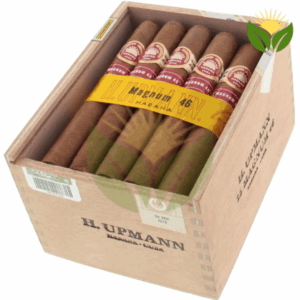
What I held was the H. Upmann Magnum 50, a Double Robusto that began life as a 2005 Edición Limitada before earning its place as a regular production cigar. This particular stick would occupy the next 90 minutes of my evening, but honestly, I didn’t mind at all.
Construction and Appearance
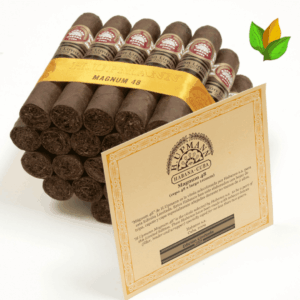
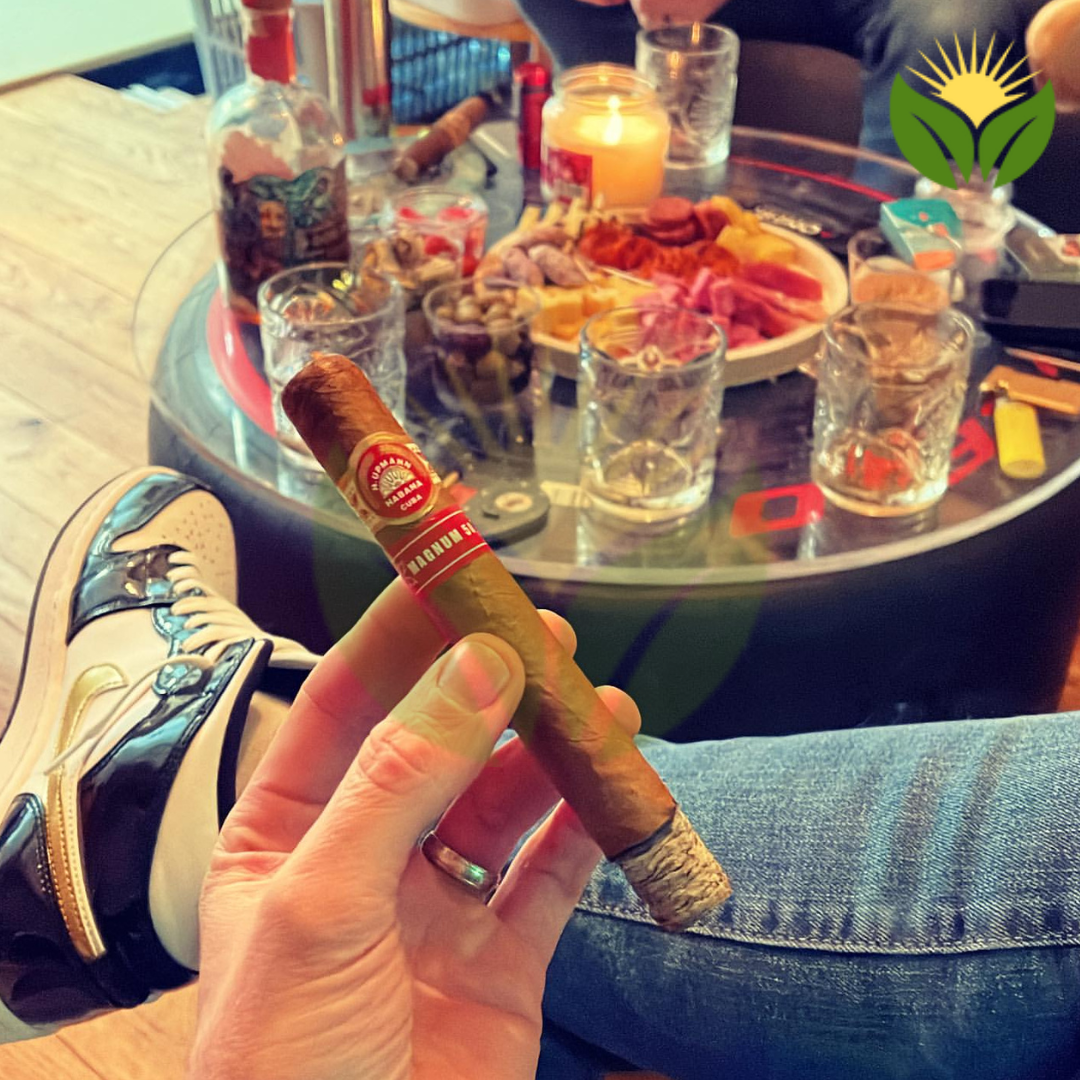
The first thing you notice about this Upmann is its impressive girth. At 50 ring gauge, it fills your hand with purpose. The wrapper—a beautiful Corojo leaf from Cuba—displays that characteristic chrome-brown hue that signals quality tobacco. Mine had a slightly oily sheen that caught the light, with veins running like tributaries across its surface.
Construction is where Cuban cigars either shine or disappoint, and I’m happy to report this one shines. The roll felt firm without being tight, and when I squeezed gently along its 6¼-inch length, I found consistent density throughout. The cap was perfectly applied—no loose edges or gaps that would unravel during smoking.
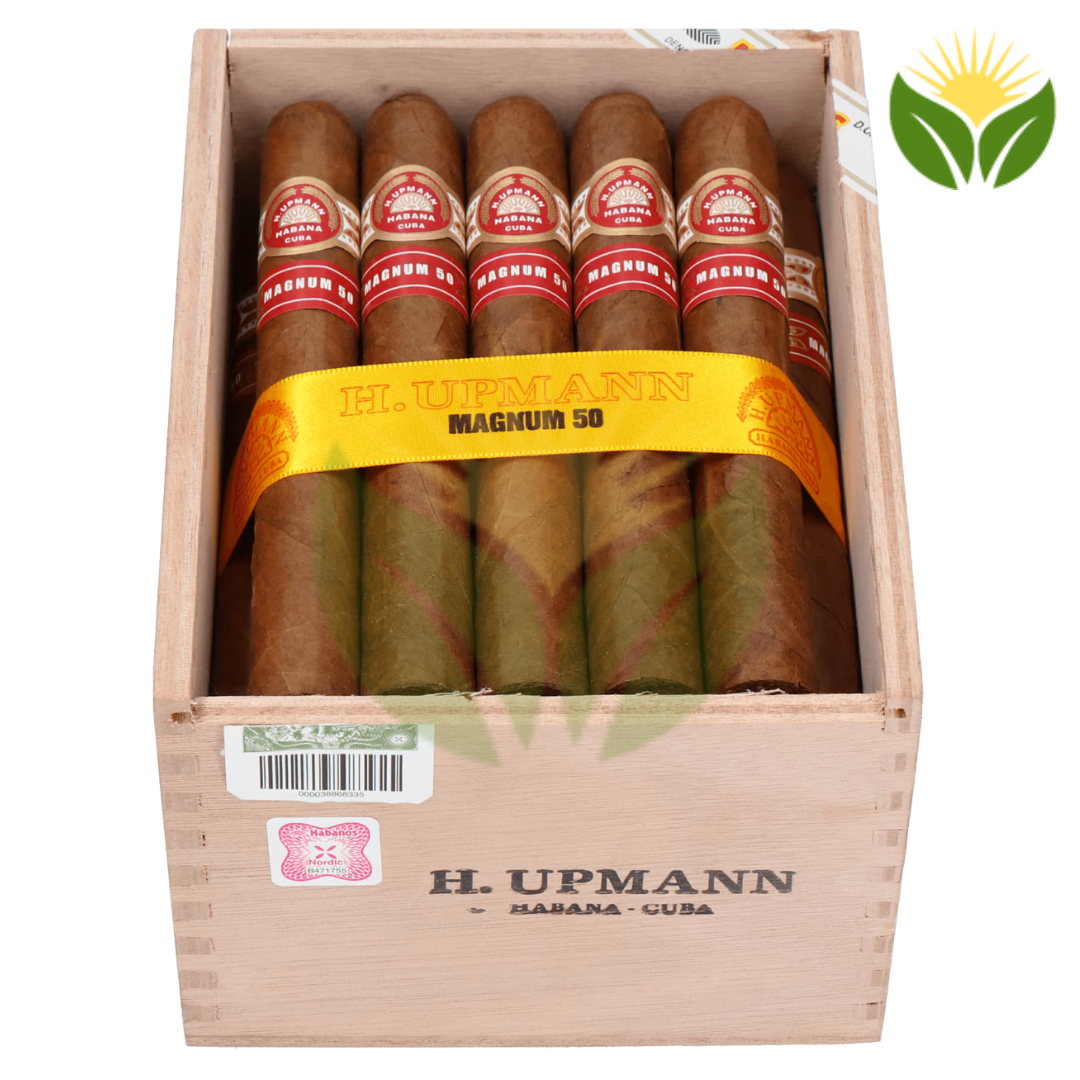
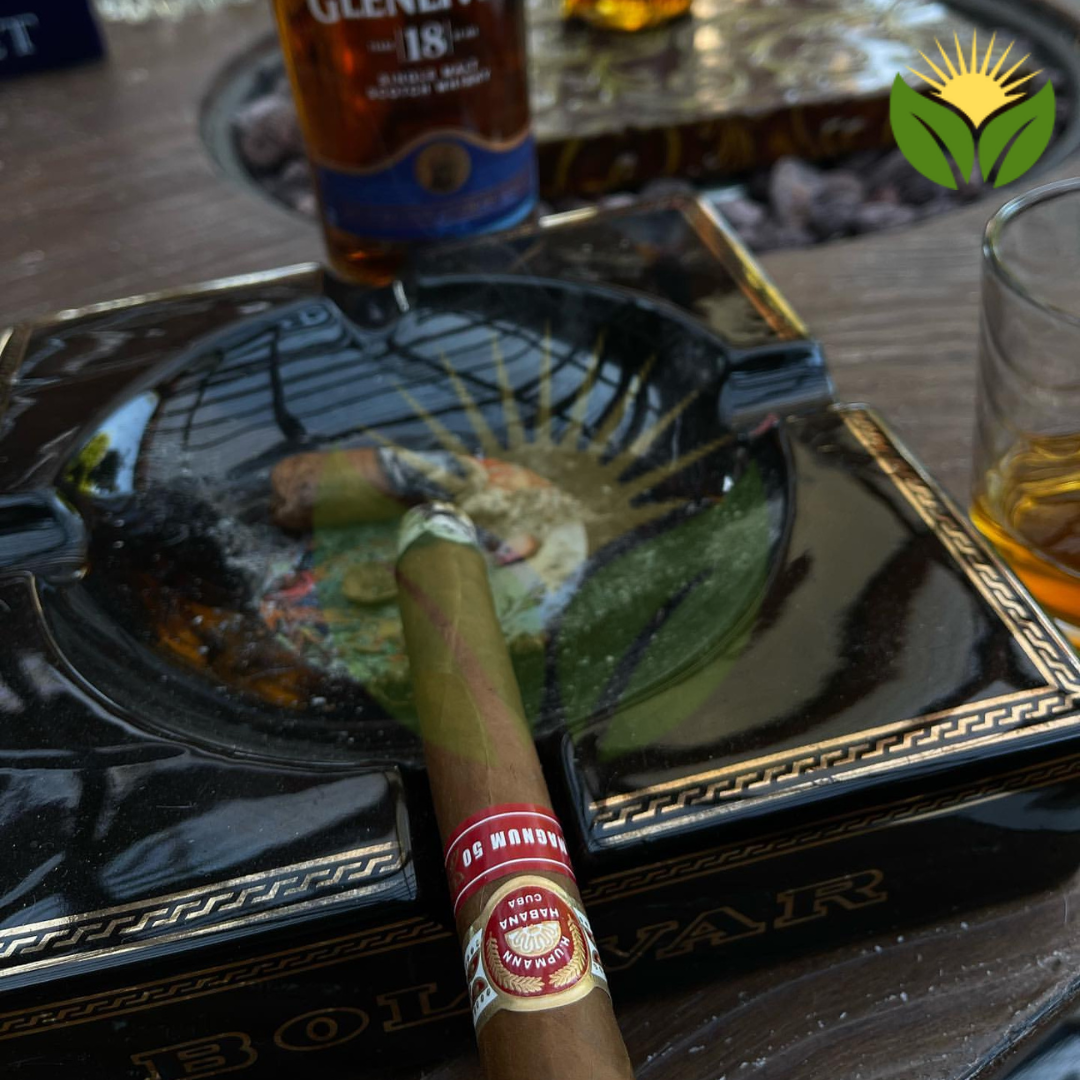
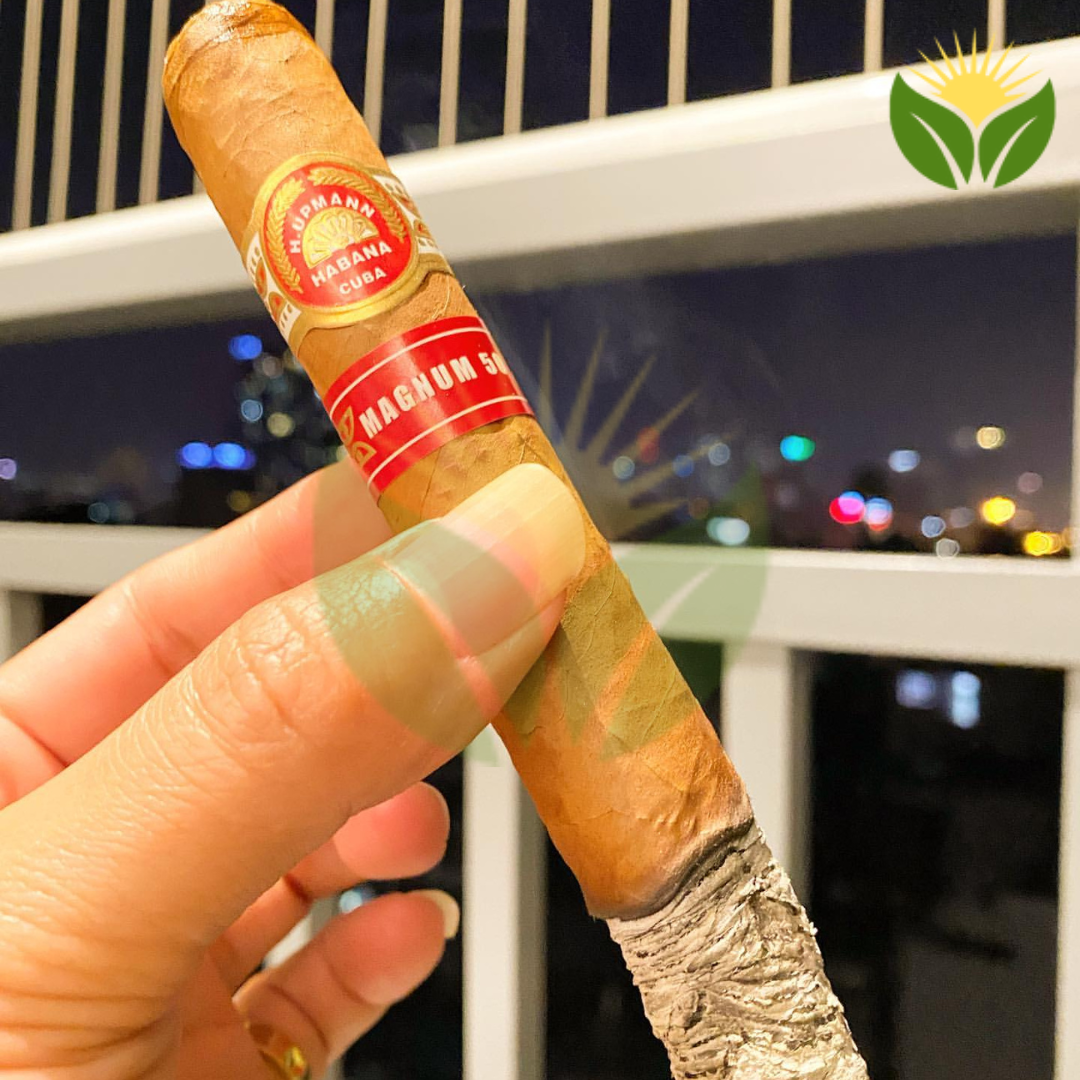
Two bands adorn this cigar: the classic H. Upmann band we all know, plus a special “Magnum 50” secondary band. Both were applied straight and showed no signs of the printing irregularities you’d see on counterfeits. The foot revealed a clean, even cut with tightly bunched filler tobacco that promised good airflow.
Flavor Profile: A Journey in Three Acts
First Third: Earthy Foundations
Those first few draws delivered massive earthy flavors that immediately announced this cigar’s Cuban heritage. I picked up distinct notes of graham cracker sweetness mixed with leather and a touch of salt. The smoke was voluminous right from the start—clouds that hung in the still air of my patio.
There’s something really delicious about how this grand Double Robusto opens up. The earthiness isn’t harsh or overwhelming; instead, it provides a solid foundation that hints at the complexity to come. I found myself already anticipating what the middle section would bring.
Middle Third: Fruity Transformation
Here’s where the Magnum 50 truly shows its character. Around the halfway point, those heavy earth tones began featuring fruity layers that transformed the entire experience. I tasted distinct apricot and peach notes, complemented by caramel sweetness and hints of vanilla.
The wheat and cinnamon flavors that developed reminded me of a gingersnap cookie—warm, spiced, and comforting. There were moments when I caught almonds on the retrohale, adding another dimension to an already complex profile. This section had some sweetness that balanced beautifully against the earlier earthiness, creating what I can only describe as harmony in tobacco form.
Final Third: Spicy Conclusion
As I approached the final inches, the character shifted again. Birch and oak notes emerged, bringing woody complexity that paired with increasing spice. The earthiness returned but in a drier form, accompanied by lingering saltiness that reminded me why Cuban tobacco is so distinctive.
The finish was long and creamy, with almond notes that persisted well after each puff. By this point, the strength had built from its mild-medium opening to a solid medium body—never overwhelming but definitely present. I smoked it down until my fingers felt the heat, reluctant to let the experience end.
Specifications
| Length | 160mm (6¼ – 6⅜ inches) |
| Ring Gauge | 50 |
| Vitola | Double Robusto |
| Strength | Mild-Medium to Medium |
| Smoking Time | Approximately 90 minutes |
| Wrapper | Cuban Corojo |
Perfect Pairings
I’ve experimented with various drink pairings for this cigar, and I’ll share what works best in my experience. The most successful pairing is a full-bodied red wine—think Cabernet Sauvignon or a robust Malbec. The wine’s tannins complement those earthy opening flavors beautifully, while its fruit notes echo the cigar’s middle section.
For spirits, I recommend a aged rum like Ron Zacapa 23 or Diplomatico Reserva Exclusiva. The rum’s sweetness plays well with those caramel and vanilla notes, while its complexity matches the cigar’s evolving profile. If you’re a whiskey drinker, try it with a sherried single malt—Macallan 18 or Glenfarclas 21 work wonderfully.
Coffee pairs surprisingly well too, especially a full-bodied Brazilian or Guatemalan roast. The coffee’s earthiness mirrors the cigar’s opening, while its subtle sweetness bridges to the fruity middle section. I’ve found this combination particularly enjoyable during morning sessions on the weekend.
Cutting and Lighting
With a 50 ring gauge, this cigar demands respect in how you prepare it. I always use a sharp guillotine cutter, removing just enough cap to expose the filler—about 2mm at most. The large diameter means you want a clean, straight cut to ensure even airflow across that substantial surface area.
For lighting, take your time. I prefer a butane torch for the precision it offers. Toast the foot evenly, rotating slowly until you see a consistent orange glow across the entire surface. Only then do I draw while applying flame. The size means it takes longer to establish an even burn, but patience here prevents the tunneling issues that can ruin such a substantial cigar.
The cold draw should offer slight resistance—not too tight, not too loose. If you’re getting minimal airflow, try a draw tool before giving up on the cigar. These Cuban cigars can sometimes benefit from a gentle opening up of the draw.
Who Should Smoke This Cigar
This is an interesting cigar in terms of audience. Despite its impressive size, the mild-medium strength makes it accessible to newer smokers who want to experience a premium Cuban without being overwhelmed. I’d confidently recommend it to someone who’s enjoyed milder cigars like Romeo y Julieta Wide Churchills or Montecristo No. 4.
However, experienced smokers shouldn’t dismiss it as lacking complexity. The flavor evolution throughout the smoke provides plenty of interest, and that 90-minute commitment makes it perfect for special occasions when you want to truly savor the experience.
It’s ideal for celebratory moments—promotions, anniversaries, or those rare afternoons when you have nowhere else to be. The size and smoking time make it less suitable for quick breaks or casual smoking. This is a cigar that demands your attention and rewards it handsomely.
If you’re someone looking to explore the world of Cuban cigars but worry about strength levels, this Upmann offers an excellent entry point into premium Cuban tobacco.
Authenticity: Spotting the Real Deal
Unfortunately, popular Cuban cigars like this attract counterfeiters, so knowing what to look for is crucial. Authentic H. Upmann Magnum 50 cigars feature two specific bands: the traditional H. Upmann band plus the secondary “Magnum 50” band. Both should be perfectly aligned and show crisp printing with no bleeding or blurred edges.
The wrapper should display that characteristic chrome-brown color with a velvety texture. Fakes often have wrappers that are too light, too dark, or have an artificial sheen. The construction should feel substantial—remember that 15.05g weight—and firm without being hard.
Check the foot carefully. Authentic cigars show tightly bunched, properly aged tobacco with consistent color. Fakes often have loose, discolored, or mixed tobacco that’s immediately obvious upon inspection. The draw should offer gentle resistance; if it’s either too tight or too loose, be suspicious.
Most importantly, buy from reputable sources. Established dealers who’ve built their reputation on authenticity are your best protection against counterfeits. Trusted retailers often guarantee authenticity and have relationships directly with authorized distributors.
Storage and Aging
These cigars benefit significantly from proper storage and aging. I keep mine in a well-maintained humidor at 65-70% relative humidity and 65-70°F. Proper humidor setup is crucial for maintaining the cigar’s intended flavor profile and ensuring even burning.
What’s fascinating about the Magnum 50 is how it improves with age. Fresh cigars are enjoyable, but those aged 2-3 years develop additional complexity and smoothness. The earthiness mellows slightly while allowing those fruity middle notes to become more pronounced.
I recommend buying a few and experimenting with different aging periods. Smoke one fresh to establish a baseline, then try others at six months, one year, and two years. You’ll be amazed at how the same cigar can offer different experiences based on aging. For detailed storage techniques, check out these proven preservation methods.
Temperature stability is just as important as humidity. Avoid storing these cigars anywhere with temperature fluctuations—basements, attics, or near heating vents are all problematic. Consistent conditions preserve the oils in the tobacco that create those complex flavors.
Frequently Asked Questions
How long does an H. Upmann Magnum 50 take to smoke?
Expect approximately 90 minutes for a complete smoking session. The large 50 ring gauge and 6¼-inch length mean this isn’t a quick smoke. I’d recommend setting aside at least an hour and a half, preferably when you can relax without distractions.
Is this cigar suitable for beginners?
Absolutely. Despite its intimidating size, the mild-medium strength makes it very approachable for newer smokers. It’s actually an excellent way to experience premium Cuban tobacco without the overwhelming strength of some other Cuban brands. Just be prepared for the time commitment.
What’s the difference between this and other H. Upmann cigars?
The Magnum 50 is significantly larger than most other Upmann cigars and offers a longer, more complex smoking experience. While maintaining the brand’s characteristic smoothness, its size allows for more flavor development throughout the smoke. It’s less intense than the Sir Winston but more substantial than the Half Corona.
How should I store these cigars for optimal aging?
Maintain 65-70% humidity and 65-70°F temperature in a quality humidor. These cigars improve dramatically with 2-3 years of aging, developing smoother earthiness and more pronounced fruity notes. Avoid temperature fluctuations and check your humidor’s calibration regularly.
What makes this cigar worth the price compared to non-Cuban alternatives?
The unique terroir of Cuban tobacco, particularly from the Vuelta Abajo region, creates flavor profiles that simply can’t be replicated elsewhere. The complexity of flavor evolution, the quality of construction, and the 90-minute smoking experience justify the premium price. While excellent non-Cuban cigars exist, this offers a distinctly Cuban experience that enthusiasts seek. For those interested in mastering Cuban cigar appreciation, this represents an excellent investment in your smoking education.