
For serious cigar collectors and enthusiasts, few resources prove as invaluable as a comprehensive reference guide that documents the precise measurements and specifications of Cuban cigars. In the spring of 2007, a remarkable publication emerged that would become a cornerstone for cataloging Habanos' standard production offerings. This collaborative project between Cuba's state-run tobacco company and its prestigious British distribution partner created something that transcended mere advertising—producing an authoritative record of every vitola in production at that moment in history.
Origins and Distribution
The initiative stemmed from a partnership between Habanos S.A. and Hunters & Frankau, the distinguished UK-based distributor with deep roots in the Cuban cigar trade. Rather than limiting availability, the publishers ensured global accessibility by translating the materials into six distinct languages. This multilingual approach allowed aficionados from diverse markets to benefit from the technical details contained within.
Commercial distribution focused primarily on the United Kingdom market, though international channels ensured the posters reached collectors worldwide. The timing of release—approximately May 2007—meant the content reflected production realities from the previous calendar year, serving as both a historical snapshot and a practical buying guide for enthusiasts seeking to understand exactly what dimensions and shapes comprised the standard Habanos lineup.
Structure and Presentation
Comprehensive Four-Part Format
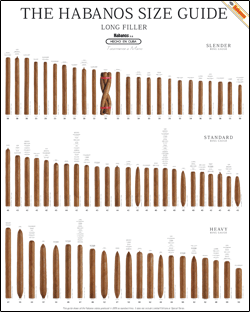
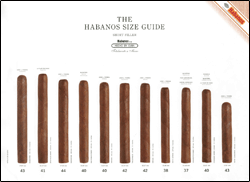
The collection arrived as a set of four separate sheets, each dedicated to a specific category based on ring gauge dimensions. Three of these sheets covered long-filler cigars, divided into heavy, standard, and slender gauge classifications. The fourth sheet addressed short-filler options, ensuring complete coverage of Habanos' manufacturing capabilities. Additionally, publishers produced a consolidated large-format version that focused exclusively on long-filler selections, offering enthusiasts a comprehensive single-sheet alternative.
Visual and Technical Details
Each entry featured a full-scale illustration of the cigar shape, deliberately presented without decorative bands to showcase the pure form of each vitola. Accompanying these images, the technical specifications provided everything a collector might need: the factory designation known as Vitola de Galera, precise ring gauge measurements with metric conversions, length expressed in both millimeters and inches, and the commercial names assigned across Habanos' various brands.
The production quality reflected the premium nature of the subject matter. Publishers selected substantial paper stock and employed vibrant color printing techniques that conveyed the gravitas appropriate for documenting such prestigious products. These were not disposable flyers but rather reference materials designed for longevity and repeated consultation.
Historical Documentation and Significance
What elevates this publication beyond mere promotional material is its function as a definitive historical record. The posters captured the complete standard production portfolio as it existed during 2006, providing researchers and collectors with an unambiguous snapshot of a pivotal moment in Cuban cigar history.
Several key findings emerge from careful examination of this documentation. Perhaps most significantly, the materials confirm that Habanos had streamlined its brand portfolio to precisely 27 distinct marques by this period—a notable contraction from earlier decades when scores of brands populated Cuban catalogs. This consolidation reflected strategic decisions about market positioning and production efficiency.
Equally telling was what the posters omitted: machine-made cigars had vanished entirely from Habanos' production range. This absence marked a watershed commitment to hand-rolled craftsmanship, signaling that the company had fully embraced handmade quality as its defining characteristic. The elimination of machine-made options represented not merely a product line adjustment but a philosophical statement about the values Habanos wished to project.
The posters notably excluded Limited Edition releases and Special production items, focusing exclusively on standard production. This editorial decision clarified that the materials served as a regular production reference rather than a comprehensive catalog of everything emerging from Cuban factories. Researchers consulting these documents must understand this scope limitation to avoid drawing erroneous conclusions about complete availability.
Dating Challenges and Minor Discrepancies
One curious aspect complicates cataloging efforts: the posters themselves carry no explicit date markings. Without contextual knowledge about release timing, future researchers might struggle to place these materials accurately within Habanos' chronological timeline. This absence of dating requires collectors to rely on external documentation and contextual clues when cataloging their reference materials.
A single notable inaccuracy appears within the documentation. The José L. Piedra Petit Cazadores appears listed among 2006 offerings, yet actual market availability did not occur until mid-to-late 2007. This discrepancy suggests the posters captured planned releases rather than actual retail availability—a distinction collectors should bear in mind when using these materials for historical research.