
Among the treasures sought by devoted collectors of vintage Habanos lies a diminutive yet significant smoke: the Siboney Coronitas Tip No.4. This compact handcrafted cigar embodies an chapter of Cuban rolling tradition that has long since closed, making surviving specimens genuine artifacts of tobacco craftsmanship from decades past. For those passionate about the island's storied cigar heritage, this particular vitola represents both a nostalgic artifact and a prized addition to any serious humidor collection.

A Snapshot of Cuban Rolling Heritage
The Coronitas Tip No.4 emerged during a transformative period in Cuban cigar manufacturing. Officially reaching the market around 1950, this petite smoke graced retail shelves during an era when the island's tobacco industry was experiencing remarkable growth and international demand. Its production run spanned approximately ten years before the brand met its end in the early 1960s. This relatively narrow window of availability has transformed the Coronitas Tip No.4 into something genuinely elusive, with remaining examples growing increasingly difficult to locate as time passes. The brand itself eventually disappeared from production entirely, adding another layer of significance to these surviving specimens.
Technical Profile and Measurements
Classified internally under the factory designation "Chicos," this vitola belongs to the smaller end of the cigar spectrum. The construction measured 106 millimeters in length—roughly four and one-eighth inches—paired with a slender 29-ring gauge. At a mere 3.00 grams, the Coronitas Tip No.4 was engineered for a condensed smoking session, perfect for moments when devotees craved authentic Cuban tobacco flavor but lacked the hours required for a larger format smoke. Each specimen was entirely handmade, reflecting the meticulous handcraft techniques that distinguished Cuban cigars during this period. The roller artisans of the era applied their skills without mechanized assistance, ensuring each individual cigar received devoted personal attention throughout its creation.
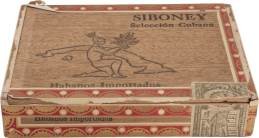
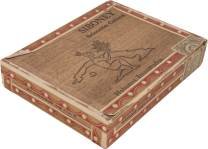
Band Design and Visual Identity
The Coronitas Tip No.4 featured the Standard band A designation, aligning with the broader visual language of the Siboney brand during its active years. This banding choice communicated the cigar's premium positioning within the Cuban portfolio, distinguishing it from lesser production tiers. The combination of quality tobacco, skilled rolling, and appropriate presentation materials created a cohesive product that reflected the standards expected of Cuban manufacturers during the mid-twentieth century.
Packaging and Original Presentation
When fresh from the factory, these cigars arrived in dress boxes housing 25 units each. Every individual cigar received protective cellophane wrapping, a practice that served both to maintain freshness and provide a barrier against environmental factors during storage and transport. This packaging approach mirrored the premium presentation standards established by other Cuban marques of the era. The dress box format offered elegant storage while the individual cellophane sleeves allowed smokers to retrieve single specimens without disturbing their companions. Together, these elements created a complete用户体验 that reinforced the Coronitas Tip No.4's position as a considered choice for discriminating smokers.
Contemporary Collectibility and Market Status
More than six decades have elapsed since production ceased, and the Siboney Coronitas Tip No.4 has transitioned from everyday smoke to collectible commodity. Its brief availability, combined with the eventual disappearance of the entire Siboney brand, has elevated these cigars to sought-after status among serious collectors of Cuban tobacco memorabilia. Surviving examples serve as tangible connections to an earlier chapter of Cuban cigar history, offering insights into the vitolas, construction methods, and presentation standards that characterized mid-century production. For collectors pursuing comprehensive representation of Cuban cigar evolution, the Coronitas Tip No.4 occupies a meaningful place in that narrative—one that continues to appreciate both historically and among those who appreciate vintage Habanos craftsmanship.