
For the serious aficionado, few pursuits are as rewarding as unearthing the history behind Cuba’s discontinued cigar brands. Among the most intriguing relics of mid-century tobacco production is the Siboney Coronas Tip No.3. This specific vitola serves as a tangible connection to a distinct period in Havana’s past, offering a glimpse into the standard of excellence that defined the island's cigar industry during the 1950s. While the Siboney brand itself has faded into obscurity for the average consumer, surviving examples of this specific format remain highly prized artifacts for historians and collectors alike.

Historical Context and Production Timeline
The story of the Coronas Tip No.3 is firmly rooted in the mid-20th century. It made its initial debut around the year 1950, entering a market that was rich with diverse brands and intense competition. During this era, Cuban cigar manufacturers were prolific, and the Siboney brand established itself as a reliable producer of quality handmade smokes.
However, the lifespan of this particular cigar was surprisingly brief when viewed through the lens of history. Production persisted for slightly more than a decade. By the early 1960s, the Coronas Tip No.3 was removed from the regular production lineup. This discontinuation coincided with a period of massive upheaval in Cuba, making cigars from this specific decade increasingly rare. Because the production window was limited to roughly ten years, finding a well-preserved specimen today is a significant challenge.
Detailed Specifications and Construction
Understanding the physical attributes of the Siboney Coronas Tip No.3 helps collectors verify authenticity and appreciate the smoking experience that was originally intended. The cigar was crafted entirely by hand, a testament to the artisanal methods prevalent at the time. It adheres to the classic proportions that were standard for the era, eschewing the larger ring gauges popular in the modern market.

Technical Measurements
- Vitola Name: The specific model is designated as the Coronas Tip No.3.
- Factory Name: The specific factory name for this format remains unrecorded in public archives, adding a layer of mystery to its provenance.
- Dimensions: The cigar measures 127 mm (5 inches) in length.
- Ring Gauge: It features a ring gauge of 40, offering a classic, slender feel in the hand.
- Weight: The official recorded weight is 5.98 grams.
- Banding: It utilizes the "Standard band A" design, consistent with the branding of the era.
These specifications place the cigar firmly in the traditional "Corona" category. The 40 ring gauge suggests a smoking profile that emphasizes the wrapper leaf's flavor contribution, a characteristic highly valued by traditionalists.
Presentation and Packaging Variations
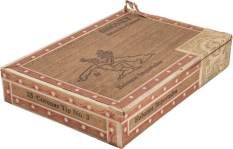
When originally sold, the Coronas Tip No.3 was presented to the public through two distinct retail formats. The primary method of distribution was through dress boxes, which contained 25 cigars each. These boxes were the standard for retail shelves, designed to showcase the product attractively.
For the more dedicated enthusiast or the high-volume buyer, Siboney also offered a larger presentation option. The brand released cabinets containing 100 cigars. This bulk packaging option is particularly interesting to collectors today, as larger cabinets often allowed for better aging conditions if stored correctly. A key feature of the packaging—regardless of whether the box held 25 or 100 units—was the use of cellophane. Each individual cigar was wrapped in cellophane, a protective measure that has helped preserve many surviving examples from the 1950s against the ravages of time and environmental damage.
The Status of a Discontinued Classic
Today, the Siboney Coronas Tip No.3 is classified strictly as a discontinued regular production cigar. It is no longer part of any active portfolio, and the Siboney brand does not enjoy the widespread recognition of surviving giants like Cohiba or Montecristo. Consequently, the Coronas Tip No.3 has transitioned from a consumer product to a collector's item.
For those looking to acquire this cigar, the market is limited to estate sales, private collections, and specialized auctions. The brief production run, combined with the natural degradation of tobacco over half a century, means that prices for intact boxes or even single cigars can be significant. It remains a fascinating footnote in the broader history of Cuban cigars, representing a specific moment in time before the industry underwent its radical transformation. Collectors who do manage to secure a Siboney Coronas Tip No.3 are not just buying tobacco; they are preserving a piece of Havana's manufacturing heritage.