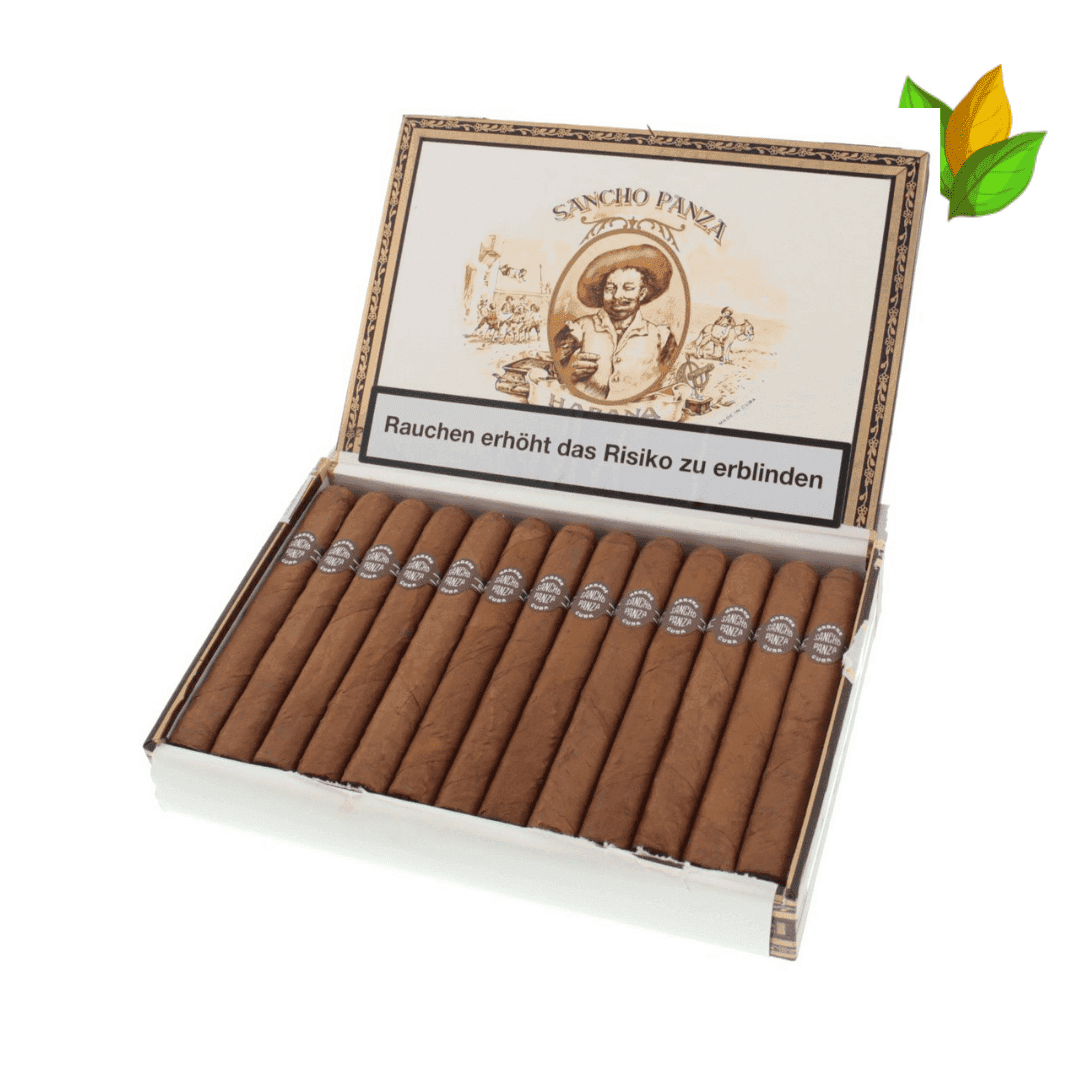
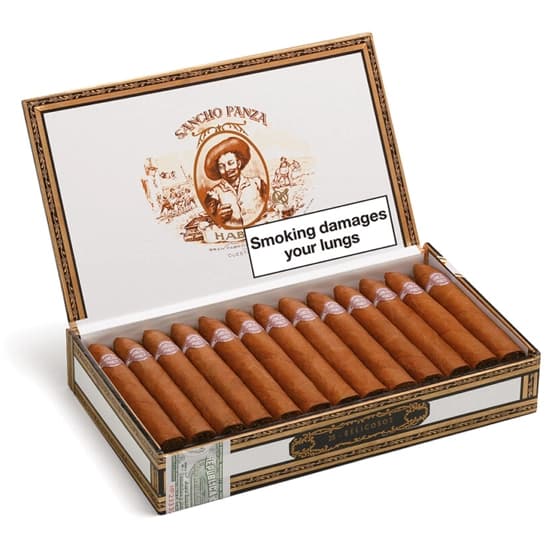
Among the pantheon of Havana’s most storied exports, few formats command the reverence reserved for the Gran Corona. The Sancho Panza Sanchos was a titan of this category, a cigar that stood as a testament to a different era of smoking. Before the industry shifted toward thicker ring gauges and shorter formats, this slender giant offered a smoking experience defined by patience and sophistication. Though it has since vanished from standard production lines, its legacy remains etched in the memories of seasoned connoisseurs who had the privilege of sparking its foot.

The Architecture of a Giant
Defining the physical presence of the Sanchos requires an understanding of its impressive scale. This was not a cigar for a quick break; it was a commitment. Measuring an astounding 235 mm (9¼ inches) in length with a ring gauge of 47, the vitola was designed for the long haul. To hold one is to hold a piece of history, weighing in at nearly 19 grams of pure Cuban leaf.
The construction was strictly handmade, a necessary detail for a cigar of this length to ensure an even burn over such a distance. The format, known in factory parlance as the Gran Corona, is a rarity in the modern market. While contemporary smokers often favor the robusto or the gordito, the Sanchos demanded a slow burn, allowing the complexities of the tobacco to unfold gradually over hours rather than minutes.
A Production History Spanning Generations
The timeline of the Sancho Panza Sanchos reads like a chronicle of the Cuban cigar industry itself. Born before the revolutionary era, specifically prior to 1960, this cigar weathered decades of political and economic shifts. It maintained a steady presence on shelves for nearly half a century, a feat that speaks to its enduring popularity among traditionalists.
Throughout its lifespan, the presentation of the cigar evolved. In its earlier days, aficionados could purchase dress boxes containing ten cigars. However, as the years progressed, the packaging shifted toward more premium presentations. The standard for its later years became the dress boxes of five, where each individual cigar was encased in its own slide lid box. This packaging added a layer of protection and exclusivity, though the ten-count boxes were eventually phased out in the early 2000s. Ultimately, the regular production of the Sanchos ceased entirely in 2006, marking the end of an era for the Gran Corona format.
Flavor Profile and Tasting Notes
For those who tracked down this vitola, the reward was a smoking experience defined by elegance rather than brute force. According to aggregated enthusiast reviews, the Sanchos earned a commendable rating of 4.21 out of 5. This high score was largely attributed to its exceptional balance and complexity, qualities often lost in shorter, thicker cigars.
The strength of the smoke was moderate, rated at a 3 out of 5, making it approachable for many palates yet substantial enough to hold interest. The flavor profile was a tapestry of classic Cuban tasting notes. The primary characteristics were distinctly woody and floral, accented by a unique salty quality that savory smokers appreciate.
- Primary Notes: A dominant woody character, specifically cedar, mingled with floral elements and a distinct saline finish.
- Secondary Nuances: As the burn progressed, secondary layers emerged. Reviewers frequently noted hints of cinnamon, creamy textures, the earthiness of hay, the sweetness of licorice, and the richness of nuts.
The aftertaste was particularly celebrated, leaving a lingering reminder of the cigar's quality long after the final puff.
The Special Edition Legacy
While the standard production model has been retired, the Sanchos name lives on through special releases. Most notably, the vitola was resurrected for the Sancho Panza Sanchos Siglo XXI Millennium Humidor. This release was a celebratory nod to the turn of the millennium, offering collectors a unique expression of the classic format. For modern enthusiasts, finding an original Sanchos from the pre-2006 era is a challenge, turning this once-regular cigar into a sought-after relic of Cuban cigar heritage.