For the discerning aficionado, the pursuit of Cuban cigar history often leads to the discovery of hidden gems that have long since vanished from the shelves. Among these elusive artifacts is the Quintero Conchas No.1, a vitola that offers a tangible link to the pre-revolutionary golden age of Havana. While modern enthusiasts are accustomed to the robust, thick ring gauges of contemporary smoking, this slender classic tells a story of a different era—one defined by elegance, tradition, and the meticulous art of the hand-rolled torcedor.

A Glimpse into Pre-Revolutionary Heritage
The Quintero brand has long been associated with accessible yet authentic Cuban flavor profiles, but the Conchas No.1 holds a special place in its lineage. This specific size was introduced to the market well before the sweeping changes of 1959, securing its status as a pre-revolutionary release. Its arrival coincided with a time when Cuban tobacco production was hitting its stride globally, fueled by generations of agricultural expertise and rolling tradition.
Although the brand continued under the state-run infrastructure after the revolution, the Conchas No.1 saw its production life cycle extend only through the turbulent 1960s. By the time the 1970s arrived, this particular format was retired from active manufacturing. Its relatively brief tenure on the global stage—spanning roughly two decades—has rendered it a finite resource. Today, it stands as a marker of a specific historical window, preserved only through the few remaining boxes that have survived the passage of time.
Understanding the "Conchas" Format
To appreciate the Conchas No.1, one must understand the smoking characteristics defined by its dimensions. This cigar belongs to a category of thinner formats that were once the standard for discerning smokers.
- Dimensions: Measuring 113 mm (approximately 4½ inches) in length with a ring gauge of 38, this vitola falls squarely into the "thin" category by modern standards.
- Weight: The official weight clocked in at a mere 6.03 grams, reflecting the tight bunching of tobacco leaves characteristic of the era's rolling style.
- Flavor Profile: The slender ring gauge naturally forces the combustion of the wrapper leaf to play a more dominant role in the flavor profile. Smokers could expect a concentrated and often more intense delivery of the tobacco's character, distinct from the cooler, milder burn of today's massive robustos.
The name "Conchas" (translating to "shells") was utilized across various Cuban marques, but the No.1 designation within the Quintero portfolio offered a specific smoking duration. It provided a moderate experience—ideal for a mid-day break rather than a lengthy evening session—delivering the signature earthy and herbal notes associated with Quintero tobacco blends.
Handmade Authenticity and Presentation
In an age where mechanization is increasingly common, the Quintero Conchas No.1 serves as a reminder of the handmade pedigree that once defined the brand's premium offerings. Unlike the machine-made or machine-bunched variants that would appear later in the industry, this cigar was constructed entirely by hand. This method relied heavily on the skill of the torcedores, who ensured the draw and burn were consistent without the aid of industrial equipment.
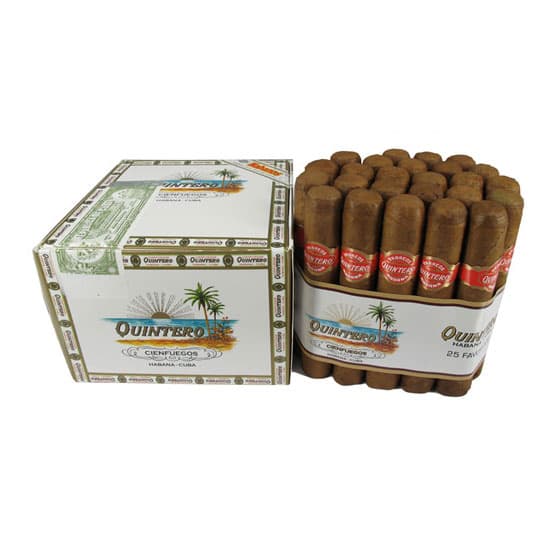
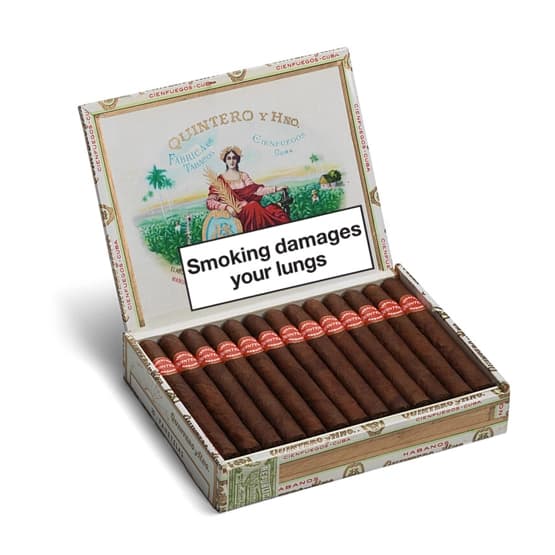
The presentation of the cigar further underscored its premium positioning. The cigars were housed in traditional dress boxes, each containing 25 units. This packaging style, combined with an early custom band design, signaled to the consumer that they were purchasing a product of merit. The band itself has become a point of study for collectors, as the design elements differ from the more standardized bands seen in later decades.
The Collector's Pursuit
Because the Quintero Conchas No.1 ceased production in the 1970s, it has transitioned from a consumer product to a collector's item. The scarcity is compounded by the fact that the production window was relatively short compared to perennial favorites like the Montecristo No.4. Finding a box in good condition is a rare event, as the cigars that remain have often succumbed to the ravages of improper storage or simple consumption over the decades.
For historians of Cuban tobacco, the Conchas No.1 represents more than just a smoking instrument; it is a piece of ephemera from a vanished industrial landscape. The "Unknown" factory name often associated with its records adds a layer of mystery to its provenance, inviting speculation and research into exactly which Havana rolling floor birthed these specific units. As time marches on, the value of these surviving examples continues to grow, not merely in monetary terms, but as preserved chapters of Cuban cigar lore.