Among the treasures sought by Cuban cigar collectors lies a modest but significant smoke that quietly disappeared from store shelves two decades ago. The Quintero Brevas (2) represents a fascinating chapter in the story of accessible Cuban cigars, offering machine-made quality at a price point that once put premium tobacco within reach for everyday enthusiasts. This discontinued smoke carries its own history, quirks, and collectible appeal that merit closer examination.

The Origins and Era of Production
The Brevas (2) emerged from Habanos S.A.'s extensive portfolio during the early 1980s, joining Quintero's lineup as part of the brand's strategy to serve smokers seeking affordable Cuban tobacco experiences. The Quintero marque has long occupied a distinctive position within Cuba's tobacco hierarchy, emphasizing straightforward, unpretentious smokes that prioritize flavor over fancy presentation. This particular vitola survived in continuous production for roughly twenty years before vanishing from official distribution around 2002, making it a relatively long-lived member of the discontinued family.
What makes this cigar particularly interesting from a historical standpoint is its role as a bridge between Cuba's machine-made traditions and the more artisanal offerings that dominate the market today. During its production run, the Brevas (2) represented one of the last generations of affordable, mass-produced Cuban cigars before shifting market dynamics prompted manufacturers to refocus their attention on handcrafted alternatives.
Technical Specifications and Construction
Understanding the Brevas (2) requires familiarity with its technical details. This parejo-shaped smoke measured 140 millimeters in length with a 40-ring gauge, placing it squarely in the classic petit corona category. The official weight registered at 8.28 grams, and the cigar carried the factory designation "Nacionales Mano," indicating its status as a domestically produced machine-made offering.
The construction approach relied entirely on mechanized rolling techniques, utilizing short fillers rather than the long fillers found in premium handmades. This methodology enabled consistent production at scale while maintaining the distinctive Cuban tobacco character that distinguished it from non-Cuban alternatives. The standard band A adorned each stick, providing the simple visual identification that collectors have come to associate with Quintero's no-frills aesthetic.
Packaging and Presentation
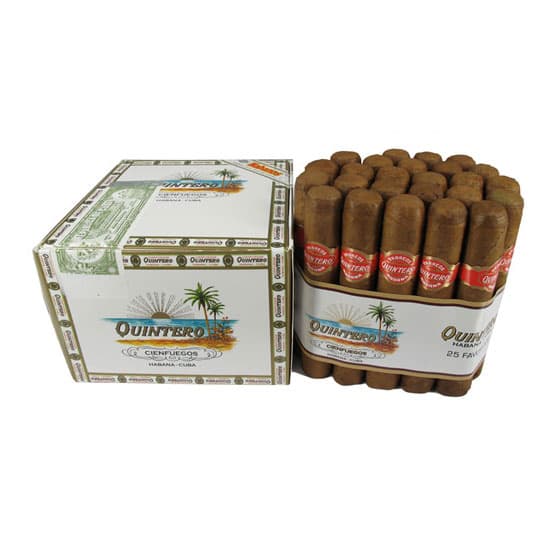
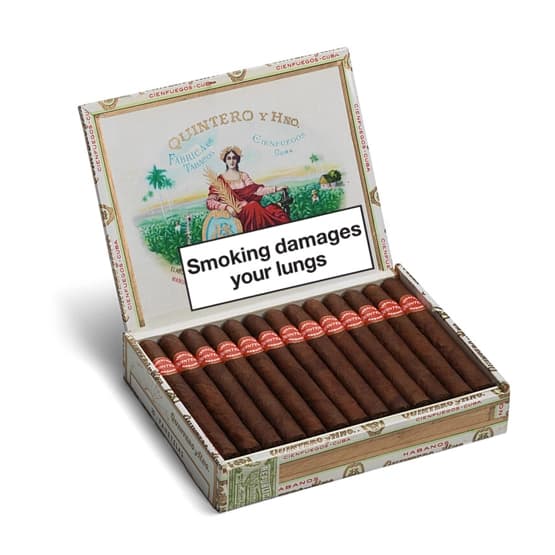
Quintero packaged the Brevas (2) in practical cardboard boxes holding twenty-five individual cigars. Each cigar received its own aluminium foil wrapping before being bundled within the box, a preservation method designed to maintain freshness during storage and transportation. This attention to practical packaging reflected the cigar's positioning as an everyday smoke rather than a cellophane-wrapped collector's item meant for display.
The Brevas Family Tree
For collectors, understanding the Brevas lineage proves essential for accurate identification and appreciation. The Brevas designation within Quintero's catalog encompasses three distinct expressions that each represent different eras and manufacturing approaches. The original Brevas (1) existed as a discontinued handmade version, crafted with traditional techniques and premium long fillers during an earlier period. The Brevas (2), which is the subject of this review, represented the machine-made evolution that prioritized accessibility over artisanal method.
Today, the brand continues with the Brevas (3), a current short-filler handmade version that maintains the family name while employing different construction techniques. This progression from fully mechanized to handcrafted production illustrates broader industry trends toward premiumization while honoring the heritage of the original Brevas concept.
Collectibility and Contemporary Appeal
The Brevas (2) occupies an intriguing niche in the secondary market, appealing to both smokers curious about historical Cuban烟草 and collectors building comprehensive regional displays. While not among the rarest or most valuable discontinued Cubans, the model gains significance through its connection to Quintero's heritage and its representation of a particular era in Cuban cigar manufacturing. Well-preserved specimens with intact foil wrapping and proper storage command modest premiums over common vintage smokes, though finding quality examples growing increasingly challenging as existing stocks deplete.
For those fortunate enough to encounter a box of these discontinued treasures, the smoking experience offers a time capsule back to an earlier period of Cuban cigar culture when machine-made options still formed a legitimate part of the national portfolio. The Brevas (2) may lack the prestige of handcrafted Cohibas or Montecristos, but its place in Cuban smoking history remains firmly established.