Among the treasures awaiting discovery by devoted smokers and memorabilia hunters alike sits a storied vitola from one of Cuba's historic marques: the Quintero Churchills. This particular Churchill-sized offering once graced the humidors of connoisseurs worldwide before vanishing from production lines in the early 1990s. Its tale weaves together decades of Cuban cigar tradition, meticulous craftsmanship, and the enduring appeal of discontinued premium smokes.

Historical Background
The roots of the Quintero Churchills stretch back to the years preceding 1960, placing it among the earliest creations of the brand's distinguished lineage. During its heyday spanning several decades, this Churchill vitola carved out a loyal following among those who appreciated its characteristic flavor profile and classic proportions. The cigar represented the sort of everyday luxury that Quintero cultivated—offering premium Cuban tobacco without the pretension sometimes associated with more exclusive houses.
Manufacture continued uninterrupted through the latter half of the twentieth century, witnessing dramatic shifts in global politics, cigar industry consolidations, and evolving consumer tastes. Yet the Churchills endured as a reliable staple until the early 1990s, when Alvaro Aguado's Habanos S.A. made the difficult decision to retire numerous beloved sizes during a period of declining demand. The discontinuation marked the end of an era for admirers of this particular format, transforming existing stock into increasingly precious commodities.
Physical Specifications and Construction
Measured at 165 millimeters—equivalent to six and a half inches—the Churchills presented smokers with an extended, leisurely smoking experience. The 42-ring gauge maintained traditional proportions favored by purists who appreciated the balance between wrapper surface area and draw resistance. Each stick weighed approximately 10.80 grams, a weight consistent with Cuban export standards of the period.
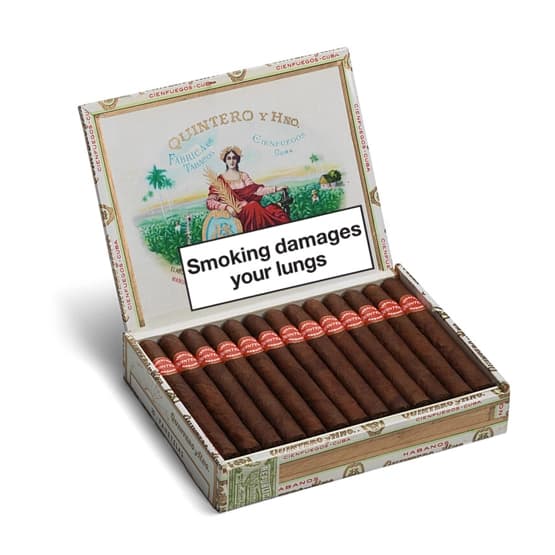
Inside the cedar-scented exterior lurked meticulous handiwork passed down through generations of torcedors. Every Churchill emerged from the Cervantes factory—one of several prestigious rolling operations scattered across Havana's industrial zones—bearing the hallmark of human expertise rather than mechanical precision. Skilled rollers selected and calibrated filler leaves, arranged them according to time-honored techniques, and applied the cap with practiced precision. The standard band A adorned each stick, displaying the Quintero name in familiar script against a backdrop of red and gold.
Packaging and Presentation
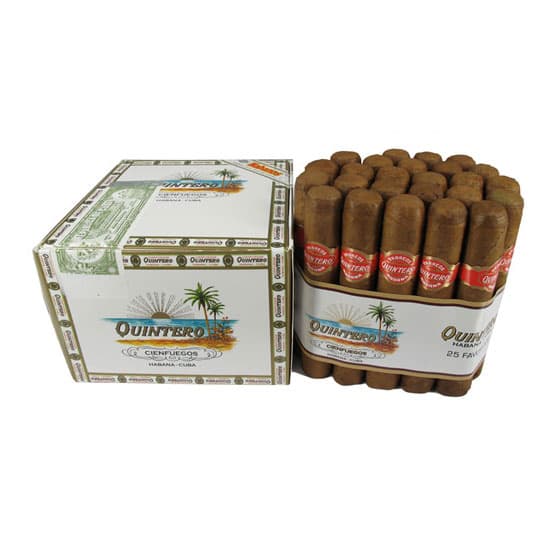
Throughout its production tenure, the Churchills reached consumers through several distinct packaging configurations designed to accommodate varying preferences and budgets. The most common format featured a dress box containing twenty-five individually cellophaned cigars, providing protection during transit while allowing each piece to breathe gradually through the permeable wrapping. This option appealed particularly to retailers seeking to offer customers freshly sealed product.
Non-celled versions in identical dress boxes of twenty-five also found their way to humidors worldwide, granting smokers the option of purchasing more traditionally bundled sticks. For those stocking up or planning extended aging regimens, a slide lid box accommodating fifty cigars offered both economy and convenience. This larger format became especially popular among collectors who recognized the potential for complexity development in properly maintained specimens.
Collector Appeal and Special Editions
Beyond standard production runs, the Churchill vitola achieved notable distinction through association with celebratory releases. The appearance of this format within the Quintero Churchills Siglo XXI Millennium Humidor represented a convergence of heritage and modernity. Issued to mark the turn of the millennium, these special presentations combined the beloved Churchill size with premium aged tobaccos and elaborate accompanying accessories.
Today, surviving examples command premium prices among collectors pursuing comprehensive representation of Cuban cigar history. The Churchill's pre-Castro origins, lengthy production span, and eventual retirement combine to create a compelling narrative reflected in market valuations. Smokers fortunate enough to encounter aged specimens often describe experiences markedly different from fresh productions—suggesting that the discontinuation, while regrettable for ongoing enjoyment, may have enhanced the legacy of this venerable vitola.