Among the many treasures that have emerged from Cuba's celebrated tobacco fields, few tell a story quite like the La Gloria Cubana Pinares. This modest yet meaningful cigar captures a pivotal moment in Cuban cigar history, existing at the crossroads between handcrafted tradition and industrial innovation. For collectors and enthusiasts who appreciate the nuanced evolution of Habanos, the Pinares represents far more than a simple smoke—it embodies an entire era of transformation that reshaped Cuba's cigar industry forever.

A Product of Changing Times
The Pinares entered the market during what many consider the golden age of Cuban tobacco, arriving on shelves sometime before 1960. This timing placed the cigar squarely within one of the most dynamic periods in the nation's history, as the island transitioned through profound political and social upheaval. While many premium cigars of the era were meticulously rolled by skilled torcedores, the Pinares took a different path entirely.
Manufacturers made a deliberate choice to produce this vitola using machine methods rather than traditional hand-rolling techniques. This decision reflected a broader trend sweeping through Cuban factories at the time, as producers sought ways to make their brands more accessible to everyday consumers without sacrificing the essential character that made Cuban tobacco world-renowned. The result was a cigar that delivered authentic Cuban flavor at a price point that welcomed new smokers into the fold.
Dimensions and Technical Details
The Pinares carried specifications that placed it comfortably within the popular Corona family of formats, though with subtle distinctions that gave it a personality all its own:
- Vitola: Pinares
- Measurements: 142 millimeters in length with a 42 ring gauge, translating to approximately 5⅝ inches
- Weight: 8.51 grams
- Production Method: Machine-manufactured
- Band: Standard La Gloria Cubana band A
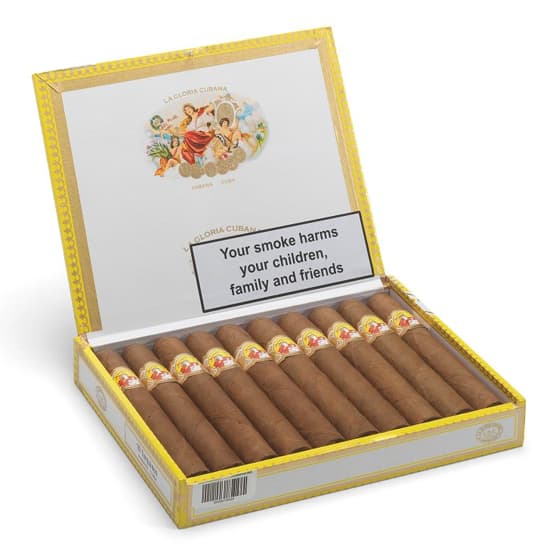
- Packaging: Dress boxes containing 25 cigars
These dimensions created a smoking experience that balanced duration with intensity, offering enough length for flavor development while remaining approachable for those new to the brand. The 42 ring gauge provided sufficient draw for a satisfying smoke without demanding the extended commitment of larger formats.
Presentation and Market Position
La Gloria Cubana dressed the Pinares in presentation befitting a brand with serious heritage. The standard band A design maintained visual continuity across the entire portfolio, instantly communicating the cigar's pedigree to knowledgeable smokers. Dress boxes of twenty-five units provided the traditional presentation that Cuban manufacturers had perfected over generations, making the Pinares equally suitable for personal cellaring or as a thoughtful gift for fellow enthusiasts.
The machine-made construction allowed La Gloria Cubana to offer this cigar at a more approachable price point than their fully hand-rolled offerings. This strategic positioning opened the brand to a wider audience, creating a pathway for smokers to discover La Gloria Cubana's distinctive flavor profile before potentially exploring the portfolio's premium expressions.
Historical Significance and Modern Collectibility
Production of the Pinares continued through the turbulent early years following the Cuban Revolution, demonstrating the cigar's enduring appeal during a period when the industry faced unprecedented challenges. However, the 1970s marked the end of this particular chapter, as the Pinares joined numerous other vitolas in retirement from regular production.
Today, surviving boxes and individual specimens have transitioned from everyday smokes to prized collector's items. The Pinares serves as a tangible connection to a manufacturing philosophy that prioritized accessibility alongside quality—a philosophy that has largely given way to modern premium positioning. For historians of Cuban tobacco, this cigar documents the industry's shift away from machine-made offerings toward exclusively hand-crafted luxury products.
The Pinares also represents one of the relatively few Cuban cigars that genuinely bridge the pre-revolutionary and post-revolutionary periods. Its production timeline offers researchers and enthusiasts a unique window into how Cuban manufacturers adapted their practices during years of profound change, making each surviving specimen a small piece of tobacco archaeology.