There's something undeniably romantic about holding a cigar that no longer exists in production—a tangible connection to craftsmen who rolled it decades ago using techniques and tobacco harvests that can never be replicated. For the serious aficionado, few discontinued vitolas capture this mystique quite like the La Gloria Cubana Flechas, a slender masterpiece that bridges the gap between Cuba's pre-revolutionary golden age and the early decades of the post-revolutionary industry.

A Window Into Havana's Golden Age
The story of the Flechas begins in an era when Cuba's tobacco fields were tended by farmers whose families had cultivated the same soil for generations, and when Havana's cigar factories hummed with the rhythmic sounds of lectors reading novels aloud to rows of skilled torcedores. This vitola emerged prior to 1960, placing its birth squarely within what historians consider the pinnacle of Cuban cigar artistry—a time when hundreds of brands competed for the attention of discerning palates across the globe.
What makes the Flechas particularly intriguing to historians is its survival into the post-revolutionary period. While many brands and vitolas vanished during the massive industry consolidation that followed 1959, the Flechas continued to be produced, carrying forward the traditions of its earlier era. The cigar remained in production through the 1960s before finally being retired during the 1970s, leaving behind only scattered boxes and single cigars as proof of its existence.
Understanding the Flechas Format
The dimensions of this discontinued gem tell us much about smoking preferences of the era. Modern cigar enthusiasts have grown accustomed to robustos and larger ring gauges, but the Flechas represents an older aesthetic—one that valued elegance and refinement over sheer girth.
- Ring Gauge: 37, a slender measurement that would be considered quite thin by today's standards
- Length: 156 mm (approximately 6⅛ inches), providing an extended smoking experience
- Weight: 7.18 grams, reflecting the delicate construction
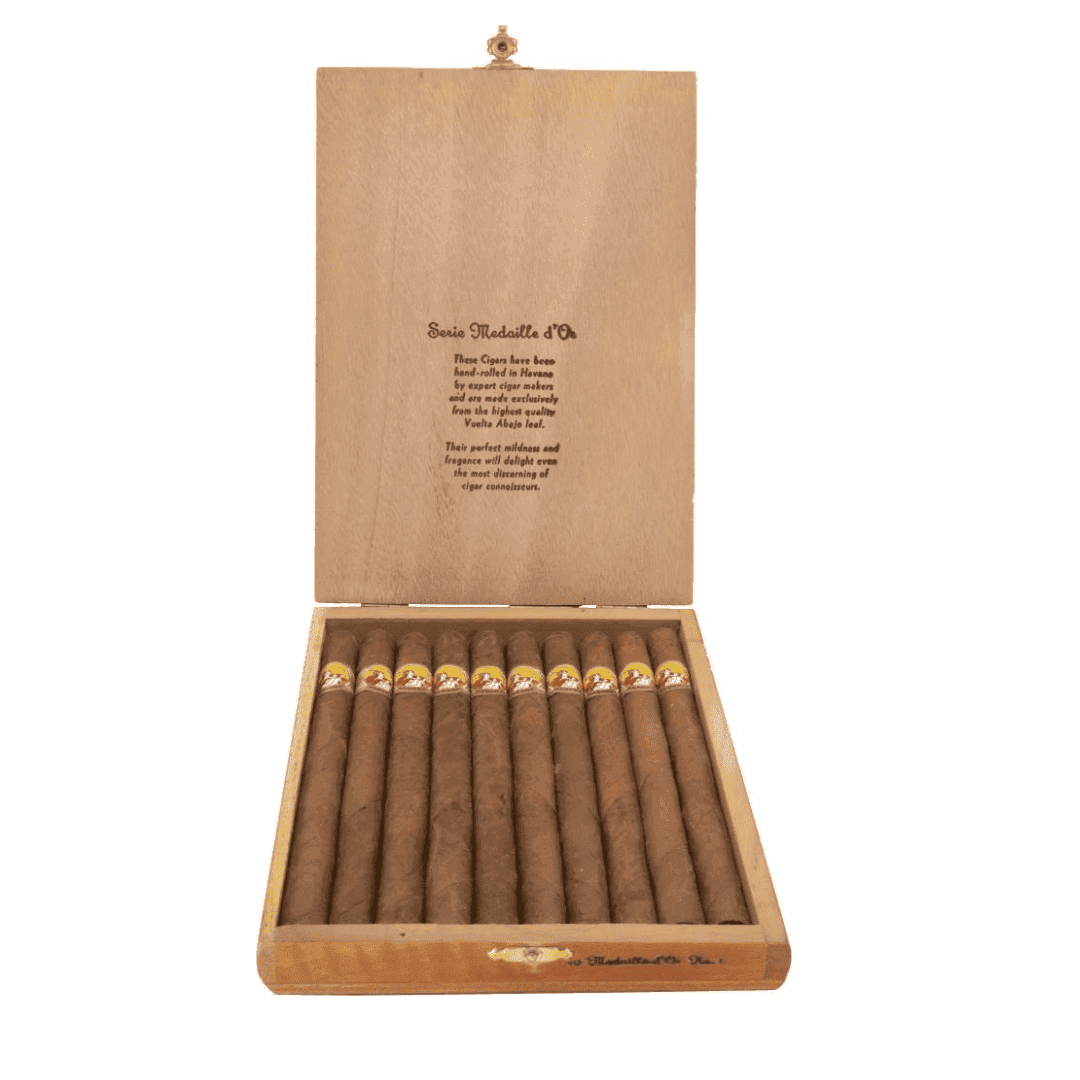
- Packaging: Dress boxes containing 25 cigars each
This combination of a thin ring gauge with considerable length creates what experienced smokers describe as a concentrated flavor delivery system. The narrower diameter means the smoke travels through less tobacco before reaching the palate, allowing for a more focused expression of the leaf's characteristics. Meanwhile, the generous length ensures the smoke cools considerably during its journey, resulting in a refined, sophisticated profile that rewards patient contemplation.
Craftsmanship and Presentation
Every Flechas was rolled entirely by hand, a testament to the skill of Havana's torcedores during this transitional period in Cuban cigar history. The construction reflected the standards of an era when machine-made alternatives existed but had not yet begun their slow conquest of the premium market. These were cigars meant to be savored, not rushed.
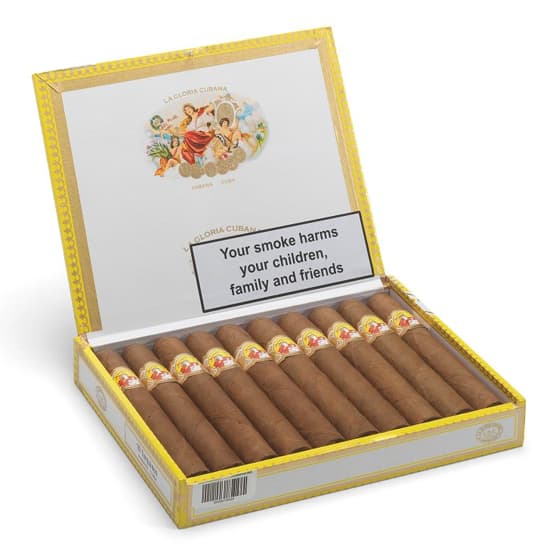
The presentation adhered to the conventions of premium Cuban cigar packaging. Each specimen bore the standard band A design associated with La Gloria Cubana, a brand whose name translates evocatively as "The Glory of Cuba." The dress boxes of 25 cigars represented the industry's traditional approach to packaging, designed to protect the delicate cigars while also serving as attractive display pieces for tobacconists' shelves.
The Modern Collector's Perspective
For contemporary collectors, discovering a Flechas represents something akin to finding a rare manuscript or a forgotten photograph—it's an artifact that opens a dialogue with the past. Any surviving examples have endured for at least five decades, making them genuine pieces of Cuban patrimony that cannot be replaced or reproduced.
The collectibility of the Flechas stems from multiple factors. Its pre-1960 origins connect it to tobacco harvests that predate modern agricultural practices, potentially offering flavor profiles impossible to replicate today. The discontinuation during the 1970s means production numbers were inherently limited, and the passage of time has only reduced the number of surviving specimens. For the serious collector, acquiring a Flechas isn't merely about adding another cigar to a humidor—it's about preserving a chapter of Havana's tobacco heritage that would otherwise be lost to history.
Those fortunate enough to encounter one of these rare vitolas would do well to treat it with the reverence it deserves, recognizing that each remaining Flechas represents not just a smoking experience, but a direct link to an artistry and tradition that has largely vanished from the modern world.