
Brand history
Vintage Cuban Cigar Bands: The Collectible History of La Escepción
When a Cuban cigar is lit, the smoke carries a narrative that stretches far beyond flavor. Each wrapper, filler, and binder holds a lineage, and the bands that encircle the cigars act as silent historians. For collectors of vintage Cuban smokes, the band is often the first clue to age, authenticity, and the brand’s journey through time.
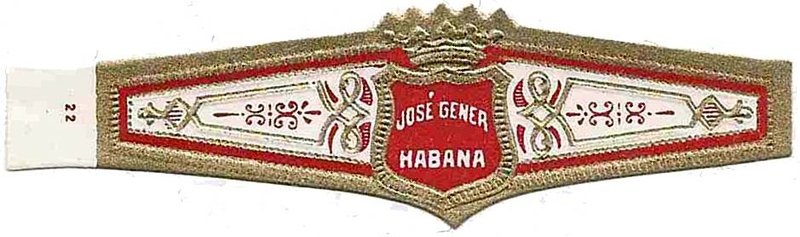
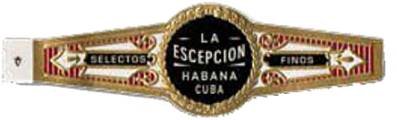
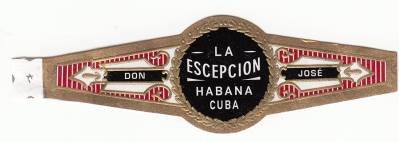
The Heritage of La Escepción
La Escepción is one of Cuba’s most storied cigar marques, celebrated for its dedication to craftsmanship and its role in the island’s rich tobacco culture. Over the decades the brand has refined its visual identity, giving each era a distinct band that reflects both aesthetic trends and production techniques. These bands are more than decorative; they serve as markers that help enthusiasts pinpoint a cigar’s production window and verify its provenance.
Early Bands and Their Evolution
Before the brand settled on a uniform look, La Escepción experimented with several early designs. Each version was phased out as the factory modernized its processes, and today those early bands are prized for the glimpse they give into the brand’s formative years.
- Early Band 1 – Discontinued around the early 1970s. This version featured raised lettering that gave the cigar a regal appearance, and its embossed finish is a hallmark of pre‑modern production.
- Early Band 2 – Dropped in the early 1970s. Another embossed variant, it differed from its predecessor in subtle shading and border details, catering to the market’s taste for refined presentation.
- Early Band 3 – Removed during the 1970s decade. A more austere design, it abandoned the raised elements in favor of a flatter, simpler print that still conveyed the brand’s prestige.
- Early Band 4 – Final early iteration, discontinued mid‑1970s. This band marked the bridge between the experimental early period and the later standardization, offering a clean look that paved the way for the brand’s next chapter.
For a quick reference, here is a condensed chronology of the brand’s band evolution:
- Early Band 1 – Pre‑1970s → discontinued around the early 1970s (embossed).
- Early Band 2 – Pre‑early 1970s → discontinued early 1970s (embossed).
- Early Band 3 – Pre‑1970s → discontinued within the 1970s (standard, flat).
- Early Band 4 – Pre‑mid‑1970s → discontinued mid‑1970s (standard, transitional).
- Standard Band A – Mid‑1970s → 1989 (embossed).
- Special Don José – Limited special releases (premium, exclusive).
The Standard Band A: A Benchmark of the Modern Era
In the mid‑1970s La Escepción introduced the Standard Band A, a design that would become synonymous with the brand’s later production run. The band’s embossed texture and bold graphics communicated a new level of consistency and quality. Band A remained in continuous use until 1989, when the brand ceased its regular production of this line, covering the final chapter of standard output. Its durability ensured that many specimens have survived in excellent condition, further enhancing the band’s desirability on the secondary market.
Special Releases: The Don José Edition
Beyond the regular catalogue, La Escepción produced limited‑run releases to celebrate exceptional
Reader questions
Questions & answers
What is La Escepción and why are its vintage cigar bands collectible?
Asked by TobaccoEnthusiast · Mar 18, 2026
La Escepción is one of Cuba's historic cigar marques known for distinctive band designs throughout its production history. The Standard Band A, introduced during the mid-1970s and discontinued in 1989, serves as an important marker for collectors authenticating vintage specimens. These bands represent significant markers for dating and valuing rare Cuban cigars from this celebrated brand. Explore our collection of premiumCuban cigars at <a href="/cohiba-behike-52">Cuban Cigars For Sale</a>.
Cuban Cigars For Sale · Mar 18, 2026
How can I identify authentic La Escepción cigar bands from the 1970s-1980s production era?
Asked by FirstTimeBuyer · Jan 4, 2026
To identify authentic La Escepción bands from this era, examine the Standard Band A's embossed design introduced in the mid-1970s. This band remained in production until 1989, making it the most commonly encountered design from the final fifteen years of standard production. Look for proper embossing quality and authentic Cuban seals. Our <a href="/cohiba-double-corona-limited-2003">Cohiba Double Corona Limited Edition 2003</a> features similar vintage authentication markers.
Cuban Cigars For Sale · Jan 4, 2026
Is collecting vintage La Escepción cigar bands worth the investment?
Asked by CigarDad · Mar 3, 2026
Vintage La Escepción bands from the mid-1970s represent significant collectible value for enthusiasts. The Standard Band A, discontinued in 1989, serves as an important authentication marker for dating vintage specimens. While values depend on condition and provenance, these historic bands from one of Cuba's celebrated marques often appreciate over time. Browse investment-grade options in our <a href="/cohiba-sublimes-limited-2004">Cohiba Sublimes Limited Edition 2004</a> collection.
Cuban Cigars For Sale · Mar 3, 2026
What's the difference between La Escepción Standard Band A and Special Edition bands?
Asked by SmokeLounge · Feb 21, 2026
The Standard Band A represents La Escepción's most widely recognized design from the modern production era (mid-1970s-1989), featuring embossed styling. Special edition bands, such as the Special Don José, were produced for distinguished releases and typically command higher collector values. Understanding these distinctions helps authenticate and date vintage Cuban cigars. Discover premium examples at <a href="/cohiba-behike-52">Cuban Cigars For Sale</a>.
Cuban Cigars For Sale · Feb 21, 2026


