
In the nuanced world of premium Cuban tobacco, the cigar band serves as far more than a mere decorative accent; it is a historical fingerprint. For collectors and connoisseurs of La Corona, a brand with a deep and resonant history, these paper rings offer a definitive method for tracing the lineage of a vintage smoke. Each design iteration tells a story of industrial change, artistic trends, and the brand's enduring commitment to identity. Understanding the subtle differences between these bands is essential for anyone looking to verify the provenance of a box or simply appreciate the evolution of this venerable Havana marque.
The Late 20th Century Standard
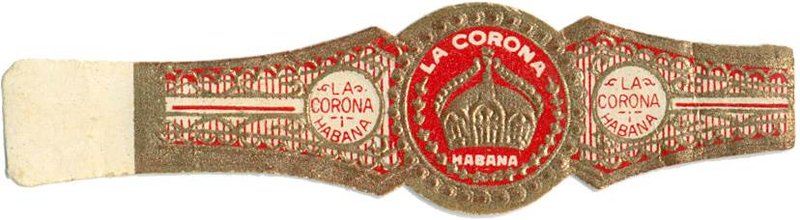
For the final decade of the millennium, La Corona utilized a specific design that has since become a primary reference point for modern collectors. Known among aficionados as Standard Band A, this particular design made its debut in 1989 and remained in circulation exactly ten years, before being phased out in 1999. Because this band was strictly limited to this specific window of time, it acts as an immediate chronological marker. Finding a cigar adorned with this specific ring signals that the tobacco inside hails from the closing years of the century, a period often sought after by those curating collections from the post-embargo transitional era.
Diverse Designs of the Pre-1978 Era
Prior to the late 1970s, La Corona’s branding strategy was far more segmented, utilizing a variety of distinct bands to differentiate between manufacturing methods and cigar shapes. This earlier era was characterized by a diverse visual portfolio, with each design serving a specific functional purpose within the brand's catalog.
The Standard and Machine-Made Variations
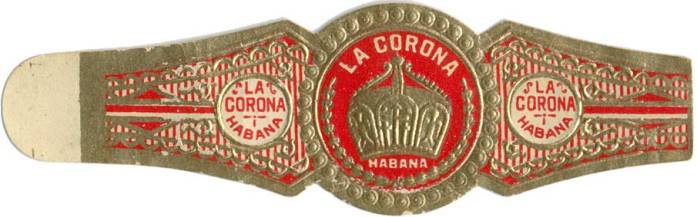
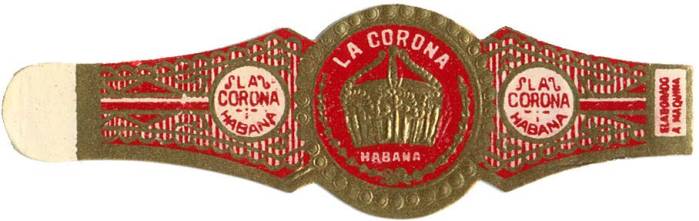
Before the streamlined approach of the 1980s and 90s, the brand relied on an earlier version of the Standard Band A. This predecessor featured an embossed design that defined the brand's look for a significant portion of the mid-20th century. However, as the industry began to embrace mechanization, La Corona adapted its presentation. To distinguish their machine-rolled output from traditional hand-rolled cigars, the brand introduced a specific "Machine-made" band. This allowed knowledgeable smokers to instantly identify the production method, ensuring transparency in an evolving marketplace.
The Distinctive Perfecto Ring
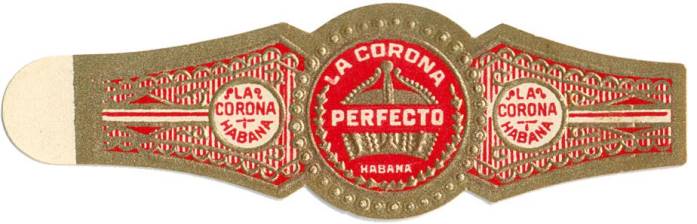
Perhaps the most specialized of the pre-1978 designs was the band created for the Perfecto vitola. This unique shape, characterized by its tapered head and pointed foot, requires a high level of artisanal skill to construct. To honor this craftsmanship, La Corona assigned the Perfecto its own dedicated embossed band. This distinction highlighted the premium nature of the shape, separating it visually from the standard straight-sided offerings in the lineup.
Embossing as a Hallmark of Authenticity
A unifying thread that weaves through the entire history of La Corona’s packaging is the consistent application of embossing. Regardless of the specific era or the type of cigar—be it a hand-rolled Perfecto or a machine-made standard—the brand maintained a textured, raised relief on its bands. This was not a mere aesthetic choice; it served as a tangible indicator of quality and a sophisticated security feature. The tactile nature of an embossed band provided a layer of defense against counterfeiters, who often found it difficult and expensive to replicate the intricate depth of the official rings.
- Standard Band A (1989-1999): The definitive marker for the final decade of the 20th century.
- Early Standard Band A (Pre-1978): The historical precursor to the modern design, featuring classic embossing.
- Early Machine-made Band (Pre-1978): A practical design used to differentiate mechanized production from hand-rolled stock.
- Early Perfecto Band (Pre-1978): A specialized ring reserved exclusively for the tapered Perfecto vitola.
For historians and collectors, these bands are indispensable tools for dating inventory. Because specific designs correspond to strict manufacturing periods, the presence of a particular band allows experts to estimate the age of a cigar with remarkable precision. In this way, the humble cigar band becomes a key that unlocks the history of the smoke, providing a glimpse into the production capabilities and aesthetic priorities of a bygone era.