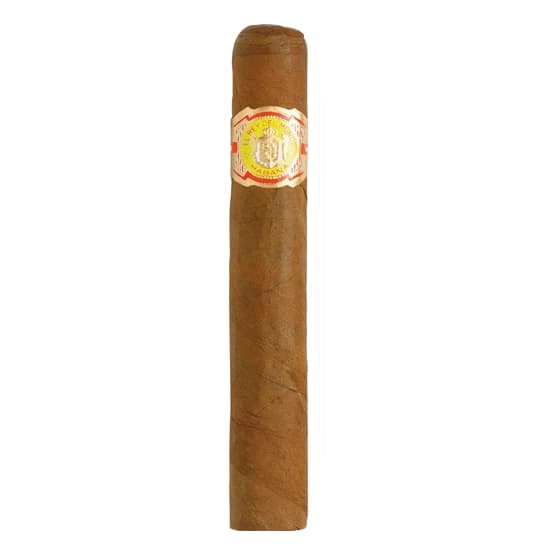
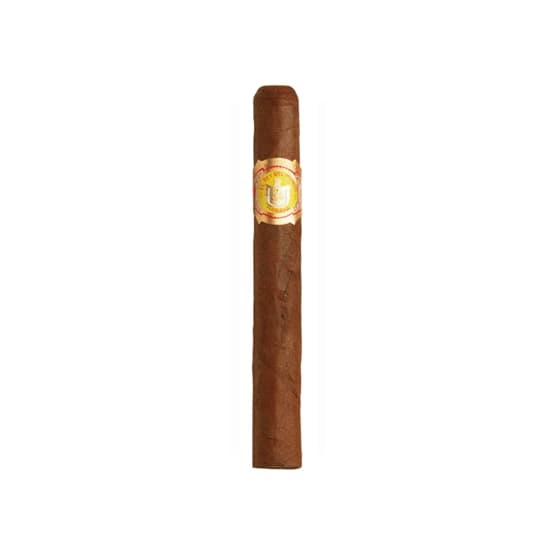
For the discerning smoker looking back at the golden age of Cuban tobacco, few shapes evoke the same level of nostalgia and reverence as the Lonsdale. Among the most celebrated examples of this format was the El Rey del Mundo Lonsdales, a cigar that embodied the sophistication and heritage of Havana for over four decades. Though it has long since vanished from retail shelves, the memory of this "Cervantes" vitola remains a touchstone for collectors who value the elegance of a bygone era in cigar manufacturing.

The Architecture of a Classic Vitola
In the factory halls of Havana, the dimensions of this cigar were known by the industrial name "Cervantes." This nomenclature refers to a specific template of cigar making: a slender, elongated format that demands patience and precision from the roller. Measuring a substantial 165 mm (6½ inches) in length with a ring gauge of 42, the El Rey del Mundo Lonsdales was designed for a long, contemplative smoking experience.
Weighing in at an official 10.80 grams, the construction was entirely handmade, a testament to the manual dexterity that defined Cuban cigar production prior to the modern era of mechanization and shorter formats. The 42 ring gauge is particularly significant; by contemporary standards, it appears slender, yet for traditionalists, this dimension allows for a perfect balance between the wrapper leaf's flavor profile and the filler's combustion. It creates a smoking curve where the intensity builds gradually, a characteristic often lost in the thicker "Robusto" or "Gordo" sizes that dominate the market today.
A Historical Journey from Pre-Revolution to Extinction
The timeline of the El Rey del Mundo Lonsdales mirrors the tumultuous history of Cuba itself. This vitola was firmly established in the brand's portfolio well before 1960, placing its origins squarely in the pre-revolutionary "golden era." It survived the nationalization of the industry and remained a staple offering for decades, serving as a bridge between the old world of Cuban tobacco and the modern age.
However, all good things must come to an end. In 2002, Habanos S.A. underwent a significant restructuring of its product lines, a move that saw many traditional sizes culled in favor of more commercially viable products. The El Rey del Mundo Lonsdales was a casualty of this shift. After a production run spanning more than forty years, the plug was pulled, and the regular production of this classic ceased. Its discontinuation marked the closing of a significant chapter for the brand, leaving a void in the lineup that was never truly filled.
Packaging Variations and the Millennium Edition
Throughout its long production life, the Lonsdales was presented to the public in two distinct styles, each appealing to a different type of consumer. The most common presentation was the standard Dress Box of 25 cigars. These boxes featured the cigars adorned with the recognizable "A" band of the brand, offering a polished, dressed-up aesthetic that sat proudly in humidors around the world.
Conversely, a more traditional option existed in the form of the Slide Lid Box (SLB). This packaging method hearkened back to an older, more utilitarian approach to cigar storage. Interestingly, the cigars found within these slide lid boxes were shipped without bands. For the modern collector, this distinction is vital; finding an unbanded example in an original slide lid box offers a different, perhaps more "pure," historical experience than the banded dress box counterparts. While the dress boxes survived until the final discontinuation in 2002, the slide lid presentation was phased out earlier, making those specific bundles increasingly rare finds.
Before its ultimate demise, the vitola received one final, prestigious curtain call. A special edition of the Lonsdales was included in the El Rey del Mundo Lonsdales Siglo XXI Millennium Humidor. This commemorative release, designed to celebrate the turn of the millennium, ensured that the Cervantes shape received a fitting send-off among the brand's most elite offerings.
The Modern Legacy
Today, the El Rey del Mundo Lonsdales exists exclusively as a ghost in the machine, traded solely on the secondary market and guarded within private collections. It is no longer a cigar one simply purchases; it is a cigar one hunts for. The four-decade production history ensures a steady—if diminishing—supply of vintage stock, but the reality of its extinction adds a layer of urgency to every auction listing.
For those who manage to acquire one, the experience is more than just a smoke; it is a tactile history lesson. It represents a standard of manufacturing and a style of blending that has largely been relegated to the history books, preserving the legacy of the classic Lonsdale dimensions for future generations to study and savor.