Within the hallowed halls of cigar collecting, few topics generate as much intrigue as the "ghosts" of Havana—the brands and specific vitolas that have vanished from production but live on in the aging humidor. The El Rey del Mundo Epicures serves as a prime example of this phenomenon. It represents a distinct era of Cuban cigar making, offering a window into the preferences and standards of the mid-20th century. While the El Rey del Mundo brand remains active today, this particular format has long since ridden off into the sunset, leaving behind a legacy that is cherished by historians and collectors who appreciate the slender elegance of the past.

A Product of the Golden Age
The story of the Epicures begins in a time before the sweeping changes of the Cuban Revolution altered the island's tobacco industry forever. The vitola was introduced to the market prior to 1960, placing it squarely in the pre-revolutionary era. During this epoch, the El Rey del Mundo marque enjoyed a reputation as one of the most prestigious producers on the island, often commanding respect for its refined and consistent blends.
However, the lifespan of this particular cigar was relatively short in the grand scheme of Cuban history. It managed to survive the transitional period of the 1960s, a time of immense upheaval for cigar manufacturers. Ultimately, the Epicures was discontinued during the 1970s. Its departure marked the end of a specific style of production, as changing consumer tastes and economic rationalizations began to reshape the Cuban cigar portfolio.
Dimensions and Technical Profile
To the modern cigar enthusiast, who may be accustomed to the robust girth of contemporary Robustos or Gordos, the specifications of the Epicures might appear surprisingly delicate. This vitola is a classic example of the "panatela" style, a format that demands a high level of skill from the roller to ensure a proper draw and burn.
Key Specifications
- Vitola Name: Epicures
- Factory Name: Unlisted
- Dimensions: 130 mm (5⅛ inches) in length
- Ring Gauge: 29
- Official Weight: 3.91 grams
- Status: Discontinued (circa 1970s)
The slender ring gauge of 29 was once a standard benchmark for elegance. In the mid-20th century, smokers often favored these thin formats for their concentrated flavor profile and elegant appearance. Weighing in at roughly 3.91 grams, the construction had to be impeccable; a tight roll in such a thin cigar could ruin the experience, while a loose roll would cause it to burn too hot. It was a cigar designed for a refined, measured smoke, prioritizing nuance over volume.
Construction and Presentation
True to the standards of its time, the Epicures was a fully handmade creation. This was an era when machine-made cigars were beginning to proliferate, but the premium sector of the industry still relied heavily on the hands of skilled torcedores. The quality of craftsmanship was paramount for a brand like El Rey del Mundo, which carried a legacy of excellence.
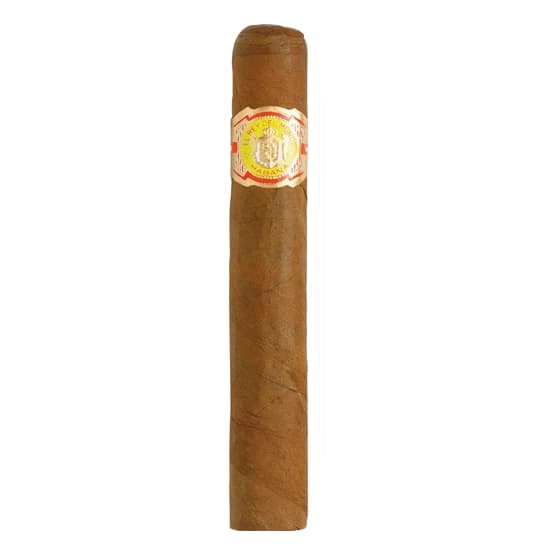
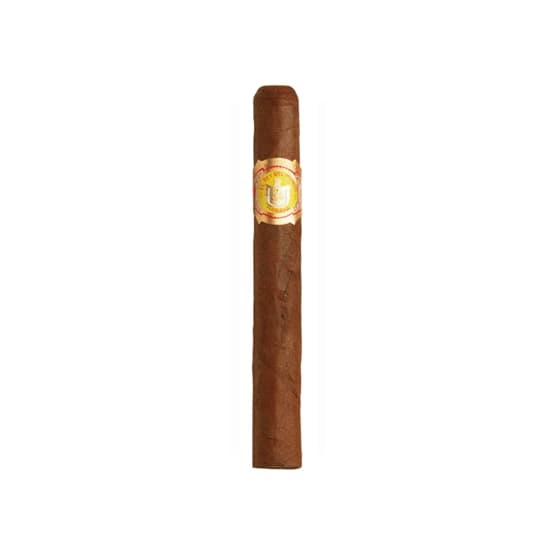
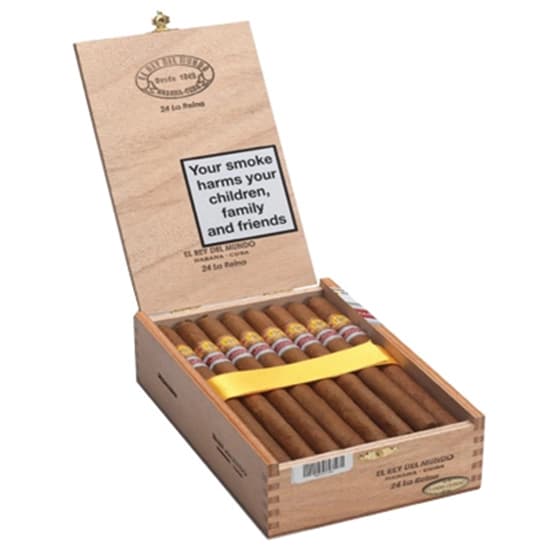
Visually, the cigar was distinguished by the brand's standard "A" band. This iconic labeling was instantly recognizable to aficionados of the period, serving as a stamp of quality and heritage. The presentation was equally traditional; the cigars were housed in dress boxes containing 25 units. This style of packaging, often referred to as a "wheel" or slide-lid box depending on the specific iteration, allowed the cigars to be displayed prominently, showcasing their slender, elongated bodies and the rich sheen of the wrapper leaves.
The Legacy of a Lost Vitola
The discontinuation of the El Rey del Mundo Epicures during the 1970s signaled a broader shift in the global cigar market. As the decades progressed, the trend moved decisively toward thicker ring gauges, pushing the slender panatela formats to the margins. Consequently, finding an original box of Epicures today is akin to uncovering a time capsule.
For the modern collector, this cigar offers more than just a smoking opportunity; it provides an educational experience. It allows the smoker to taste the terroir of a pre-revolutionary mindset, preserved through decades of aging. The distinct combination of a 29 ring gauge and the specific blend of El Rey del Mundo tobaccos from that era creates a profile that simply cannot be replicated by modern equivalents. It stands as a silent monument to the changing tides of taste and the enduring allure of Cuban tobacco history.