In the rarefied air of Cuban tobacco, few brands command the respect and allure of Cohiba. As the flagship label of Habanos S.A., the brand is synonymous with luxury, history, and distinct flavor profiles. However, even within this prestigious lineage, there exist ghosts—cigars that appeared for a fleeting moment only to vanish, leaving behind a trail of myth and collector desire. Among these phantom vitolas is the Cohiba Coronas, a regular production cigar that enjoyed a surprisingly brief existence. Though it was available for purchase for only a handful of years, its legacy offers a fascinating glimpse into the evolution of Cuba's most famous cigar portfolio and the strategic shifts that occurred during a pivotal era.

A Fleeting Presence in the Cohiba Lineup
The story of the Cohiba Coronas is one of brevity. Introduced to the global market in 1988, this cigar was not a limited edition or a special release, but rather a standard addition to the brand's classic lineup. For a marque that often relies on long-standing traditions, a four-year production run is remarkably short. The cigar remained in circulation until 1992, at which point it was unceremoniously retired. This short window of availability has transformed the cigar into a sought-after artifact. Aficionados who seek out these vintage sticks are often drawn not just to the tobacco, but to the historical context of a brand navigating the changing tides of the international cigar market in the late 20th century.
Defining the Dimensions
True to its name, the Cohiba Coronas adhered to the classic dimensions that define the "corona" category, serving as a benchmark for elegant smoking experiences. It was not a massive cigar designed for hours of smoking, but rather a perfectly proportioned vitola that embodied balance.
- Factory Name: Known simply as "Coronas" within the factory walls.
- Ring Gauge: It featured a slender ring gauge of 42, a measurement that allows for a higher proportion of wrapper leaf, often resulting in a more nuanced flavor delivery.
- Length: The cigar measured 142 mm (approximately 5⅝ inches), placing it comfortably in the mid-length category.
- Weight: With an official weight of 9.29 grams, it was a substantial yet manageable smoke.
Every unit was hand-rolled, adhering to the rigorous construction standards of the Cohiba brand. It was dressed in the standard Cohiba livery of the time, featuring the iconic yellow and black band that signifies the highest tier of Cuban tobacco.
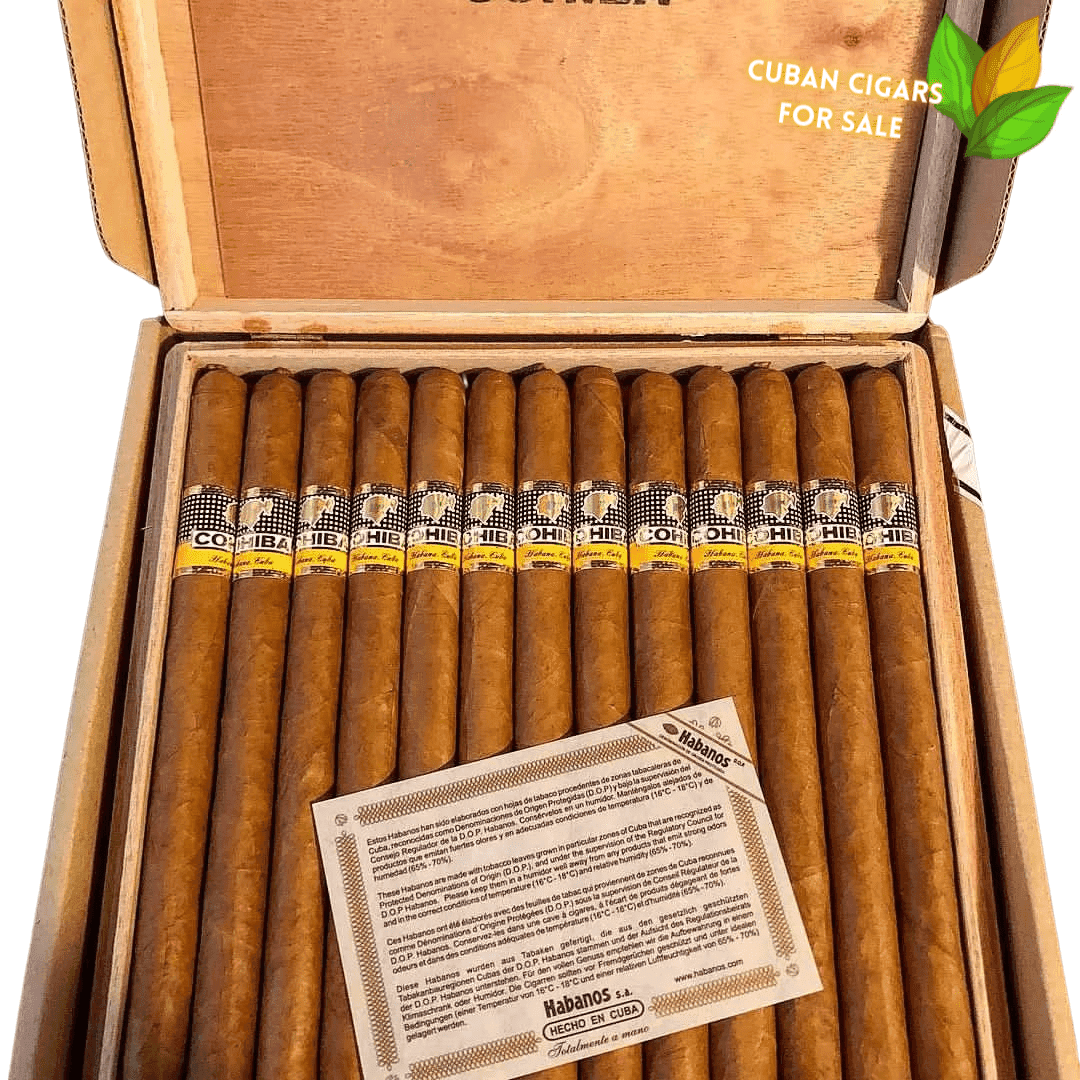
The Varnished Box and Cellophane Protection
presentation has always been a key component of the Cohiba experience, and the Coronas was no exception. The cigar was packaged in what is known in the industry as a "varnished semi boîte nature" box. This distinctively finished wooden container, with its polished aesthetic, held 25 cigars. A notable detail of this specific release was the individual wrapping of each cigar in cellophane. While some modern collectors prefer naked cigars for aging in the box, the use of cellophane at the time served a practical purpose: it provided an additional layer of protection against environmental fluctuations and physical damage during transport, ensuring the delicate wrappers remained pristine until the moment of lighting.
The Siglo Series and Strategic Redundancy
The most compelling aspect of the Cohiba Coronas narrative is the reason for its disappearance. Unlike many cigars that are discontinued due to poor sales or scarcity of raw materials, the Coronas fell victim to a strategic evolution. In 1992, Cohiba underwent a massive expansion with the introduction of the Siglo Series. This new line was created to celebrate the 500th anniversary of Columbus's arrival in the New World and marked a significant shift in the brand's identity.
With the launch of the Siglo line came a variety of new sizes intended to modernize the portfolio. It became apparent to the brand managers that the dimensions of the Coronas were too similar to offerings in the new Siglo range. Specifically, there was a size overlap that made the Coronas functionally redundant. To streamline the catalog and prevent market confusion, the decision was made to cease production of the Coronas. It was replaced by the momentum of the Siglo Series, rendering it a footnote in history. Today, the cigar stands as a marker of that specific transition period—a symbol of the old guard stepping aside for the new era of Cohiba.