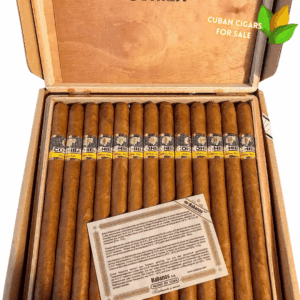
Description
Why the Trinidad Coloniales Deserves More Attention
I remember the first time I saw a box of Trinidad Coloniales at a small shop in Havana – must’ve been around 2006, maybe 2007. The tobacconist pulled them out almost reluctantly, like he was sharing a secret. That’s kind of been Trinidad’s thing since day one. Started as Castro’s personal gift cigars in the 60s, didn’t even hit the market until 1998. And even then, they kept that exclusive vibe going.
The Coloniales vitola came later to the lineup, and honestly? It flew under the radar. Everyone obsesses over Cohiba this and Montecristo that – don’t get me wrong, I love both – but Trinidad has always been the quieter, more contemplative choice. This particular size gives you enough complexity to appreciate what Vuelta Abajo tobacco can do without demanding your entire afternoon.
If you’re the type who appreciates subtlety over showmanship, who’d rather discover something yourself than follow the crowd, you need to try this cigar. I’m going to walk you through exactly what makes it special, how it smokes, and why I keep coming back to it when I want something refined but not precious.
What Makes This Stick Different
Trinidad as a marca has always occupied this interesting space in the Cuban cigar hierarchy. It’s not as bold or brash as some of the bigger names – it doesn’t need to be. The tobacco selection for Trinidad is supposedly handled with extra care, focusing on leaves from the San Juan y Martínez and San Luis zones of Vuelta Abajo. Whether that’s marketing talk or reality, I can tell you the cigars themselves show a consistency that’s impressive.
The Coloniales format specifically – it’s what I’d call a thinking person’s smoke. Not too big that it becomes a production, not so small that you’re done before you get into it. The construction is typically excellent. We’re talking invisible seams, firm but not hard pack, and that slightly oily sheen that Cuban wrappers get when they’re properly fermented. I’ve gone through probably two dozen of these over the years, and I can count on one hand the ones that gave me draw issues.
Who should smoke this? If you’re already into medium-bodied Cubans and you want to explore beyond the usual suspects, this is your cigar. If you appreciate elegance over power, complexity over one-note strength, you’ll get it. This isn’t for the guy who wants to knock himself sideways with nicotine or impress his buddies with giant smoke rings. It’s for the aficionado who actually pays attention to what they’re smoking.
| Specification | Details |
|---|---|
| Vitola | Coloniales |
| Length | 5.2 inches / 132 mm |
| Ring Gauge | 44 |
| Wrapper | Cuban (Vuelta Abajo) |
| Binder | Cuban |
| Filler | Cuban Blend |
| Strength | Medium |
| Smoking Time | 50-70 minutes |
How It Actually Smokes
Right out of the gate – and I mean on the cold draw before you even toast the foot – you get this clean, almost floral sweetness. Not perfume-y, but delicate. Hay and honey, maybe a whisper of white pepper. Light it up properly, take your time with the toast, and that first puff is pure Cuban grassiness. It’s a flavor that reminds me why I fell in love with these cigars in the first place.
The first third develops into this beautiful interplay of cream and wood. Not cedar exactly – more like fresh-cut oak with a buttery undertone. There’s a subtle nuttiness too, almost like toasted almonds. The smoke is abundant but not heavy, and it coats your palate in this really pleasant way. Construction-wise, you’re looking at an even burn from the start if you’ve stored it right. The ash holds solid to about an inch and a half before you need to tap it. It’s that dense, layered ash that tells you the blend is well-made.
Second third is where things get interesting – actually, scratch that – it’s where the cigar shows you what it can really do. The sweetness pulls back slightly and you start getting these deeper earth tones. Leather comes through, but it’s supple leather, not that harsh, tannic stuff you get in overly strong cigars. Coffee notes start appearing, more cappuccino than espresso. And the whole time there’s this underlying mineral quality, almost a salinity, that keeps it from being one-dimensional. The retrohale at this point? Oh man. White pepper and roasted nuts with just a hint of cocoa.
Final third – and this is important – doesn’t turn bitter or harsh if you’ve been pacing yourself. Some medium-bodied cigars fall apart at the end, but the Coloniales maintains its composure. The flavors concentrate, sure. You get more spice, the leather becomes more prominent, there’s a slight increase in strength but nothing that knocks you around. I’ve smoked these down to the nub more times than I probably should admit. The very end brings out some dark chocolate notes and a lingering spice on the finish that stays with you.
Burn characteristics deserve mention because they’re consistently good. Razor-sharp line? Not always – this isn’t a factory cigar from the DR – but it stays even and doesn’t require constant corrections. The ash is that beautiful light gray with dark striations. Smoke production is moderate but satisfying. This isn’t a smoke bomb, it’s refined.
| Cigar | Strength | Smoking Time | Best For |
|---|---|---|---|
| Trinidad Coloniales | Medium | 50-70 min | Afternoon contemplation, refined palates |
| Montecristo No. 4 | Medium | 40-60 min | Classic Cuban experience, any time |
| H. Upmann Magnum 46 | Medium-Light | 60-75 min | Morning smoke, milder preference |
What to Drink With It
I’ve paired this cigar with everything from Cuban coffee to aged rum, and honestly, it’s pretty versatile. My go-to? A good single malt scotch, something from Speyside with a bit of sweetness to it. Glenmorangie Original works beautifully – those vanilla and citrus notes complement the cigar’s natural sweetness without overpowering it. If you’re more of a rum person, try a well-aged Cuban rum like Havana Club Selección de Maestros. The caramel and oak notes create this really nice harmony with the tobacco.
Coffee works too, especially a well-made Cuban coffee or a smooth cold brew. The nuttiness in both plays nicely together. I wouldn’t go with anything too acidic though – save the citrus-forward stuff for stronger cigars. As for when to smoke it? Late afternoon is my sweet spot. After lunch has settled, before dinner, when you’ve got an hour to yourself and nowhere pressing to be. Weekend mornings work too if you’re a slower starter and want something contemplative with your coffee.
How does Trinidad Coloniales compare to other Trinidad vitolas?
The Coloniales sits right in the middle of the Trinidad lineup in terms of both size and intensity. It’s more approachable than the Fundadores but has more complexity than the shorter Reyes. I’d say it’s the best introduction to the marca if you’ve never tried Trinidad before – gives you the full flavor profile without being overwhelming or requiring a huge time commitment.
What’s the ideal humidity level for storing these cigars?
I keep mine at 65-67% relative humidity, which is pretty standard for Cubans. Go higher and you risk draw issues, go lower and they can smoke too hot and lose some of that delicate complexity. Temperature-wise, aim for around 65-68°F if you can manage it. These aren’t finicky cigars, but they do reward proper storage with better performance.
Is Trinidad Coloniales too mild for experienced smokers?
Not even close. Medium doesn’t mean boring – it means balanced. I’ve been smoking cigars for over 25 years and I reach for these regularly because complexity matters more than raw strength. If you need nicotine to feel satisfied, maybe this isn’t your speed, but if you appreciate nuanced flavors and excellent construction, experience level doesn’t matter. Some of the most seasoned aficionados I know prefer cigars in this strength range.
How long should I age Trinidad Coloniales before smoking?
They’re good to go right from the factory honestly, but like most Cubans, they benefit from rest. Give them at least 3-6 months if you can wait, a year if you’ve got the patience. I’ve got some from 2018 that are smoking phenomenally right now – the edges have smoothed out and the flavors have integrated beautifully. That said, I’ve also smoked fresh ones and enjoyed them plenty. Your call.
Why is Trinidad less popular than Cohiba or Montecristo?
Marketing and availability, mostly. Cohiba and Montecristo have been globally recognized names for decades – they’re the ones tourists buy, the ones that show up in movies. Trinidad was literally a secret for its first 30 years of existence. Even now, production numbers are lower and distribution is spottier. Also, these cigars don’t shout at you – they’re subtle, refined, maybe a bit reserved. Not everyone appreciates that, especially folks newer to Cubans who expect bold flavors.
Can I smoke Trinidad Coloniales right out of the box from overseas shipping?
You can, but should you? Probably not. Let them rest at least two weeks, preferably a month, after they arrive. Shipping stress – temperature swings, humidity fluctuations, physical jostling – affects how cigars smoke. I’ve made the mistake of lighting one up the day it arrived, and while it wasn’t terrible, it wasn’t showing its best either. A little patience goes a long way with Cubans.
What’s the difference between Trinidad and the EGM brands?
Trinidad operates a bit differently than some of the bigger houses. While it doesn’t have the EGM factory designation specifically, the quality control and tobacco selection are definitely top-tier. EGM cigars – like certain Cohiba lines – get first pick of tobacco and extra attention during production. Trinidad gets similar treatment even if they don’t always advertise it the same way. In practical terms, you’re getting exceptional construction and leaf quality either way.
Final Thoughts on This Underrated Gem
The Trinidad Coloniales isn’t trying to be the loudest cigar in your humidor. It’s not competing for attention with bold bands and aggressive marketing. What it does is deliver a consistently excellent smoking experience with enough complexity to keep you interested from start to finish. The medium body makes it accessible without being boring, the construction is reliably solid, and the flavor profile shows you what well-selected Cuban tobacco can do when it’s treated right.
If you’ve been stuck in a rotation of the same usual suspects – and I get it, we all have our favorites – give this one a shot. It might not blow your mind on the first puff, but by the time you’re halfway through, you’ll understand why some of us keep coming back to it. Add a few to your next order. Let them rest properly. Smoke one when you’ve got time to actually pay attention. I think you’ll see what I mean.