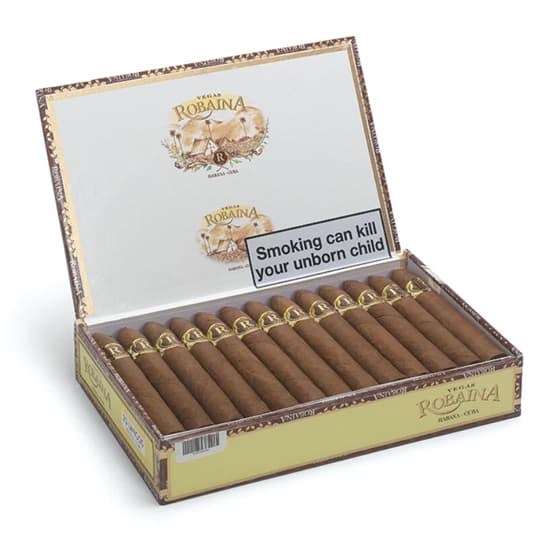
The Vegas Robaina Marshall represents a fascinating intersection of market strategy, production quirks, and collector appeal within the world of premium Cuban cigars. This regional release stands out not only for its limited availability but also for the unusual circumstances surrounding its creation and branding journey. For enthusiasts seeking a cigar with both smoking merit and historical intrigue, the Marshall delivers on multiple fronts.


Origins and Market Positioning
The Marshall emerged as part of Habanos S.A.'s regional edition initiative, which assigns specific vitolas to defined geographic markets rather than releasing them worldwide. In this case, the Adriatic territories received exclusive access to this particular Robusto format, creating natural scarcity through geographic restriction rather than pure numerical limitation. This strategic allocation allows the company to respond to regional preferences while building anticipation among collectors in other markets who cannot legally obtain these releases.
Physical Characteristics and Presentation
Measuring 124mm with a 50 ring gauge, the Marshall adheres to the Robusto proportions that have become synonymous with rich, concentrated flavor profiles. Each cigar tips the scales at 11.66 grams, a weight that ensures proper combustion and a satisfying smoking duration. The construction remains handmade throughout, preserving the traditional craftsmanship that defines Cuban premium cigars.
The cigars arrive in distinctive varnished boxes characteristic of regional editions. Numbered 8-9-8 configurations house precisely ten cigars per box, and the entire production run was restricted to just 1,500 boxes worldwide. This strict limitation transforms the Marshall into a genuinely scarce commodity, particularly for those seeking complete, sealed boxes for investment purposes.
Visual identification relies on the dual-band system employed across regional releases. The primary Vegas Robaina band (designated as Band A) clearly marks the marque, while a secondary Regional Edition Adriático band announces its exclusive market designation. This two-band approach helps collectors and retailers instantly recognize the cigars' provenance and limited nature.
Timeline Anomalies and Production History
Perhaps the most intriguing chapter of the Marshall's story involves its release timeline. Although officially stamped with a January 1, 2008 production date, the cigars did not actually appear in retail establishments until late 2009. This eighteen-month gap between official designation and market availability exemplifies the bureaucratic and logistical challenges inherent in international cigar distribution.
The delay, while notable, falls within acceptable parameters for regional editions. Such time lags between production dating and retail availability occur periodically throughout the industry, and the Marshall represents a textbook example of this phenomenon rather than an anomaly. Collectors should factor these timeline discrepancies into their understanding of regional edition releases broadly.
The La Gloria Cubana Connection
The Marshall's most compelling narrative involves its unexpected brand evolution. Originally conceived under the La Gloria Cubana label, the project encountered trademark complications that necessitated a complete rebranding exercise. Rather than abandoning the production entirely, Habanos devised an innovative solution: existing La Gloria Cubana boxes received custom metal nameplates bearing the Vegas Robaina designation, effectively transforming them into the new marque's product.
This adaptation preserved the production run while navigating legal obstacles that would have otherwise derailed the project. Pre-release samples bearing the original La Gloria Cubana bands occasionally surface among collectors, serving as tangible evidence of the cigar's transitional history. These early specimens command significant attention from specialists interested in production anomalies and brand migrations.
Collector Appeal and Legacy
The Vegas Robaina Marshall Edición Regional Adriático occupies a unique position in the collector's landscape. Its appeal stems from multiple factors: the restricted production numbers, the geographic exclusivity, the curious timeline between production and release, and most importantly, the fascinating La Gloria Cubana rebranding story that reveals how Habanos adapts when original plans encounter obstacles.
For serious collectors focusing on regional editions or unusual production circumstances, the Marshall represents essential material. The combination of limited availability, dual-band presentation, and transparent production history creates a compelling narrative that transcends mere smoking enjoyment. Each sealed box tells a story of strategic market positioning, production adaptation, and enduring craftsmanship.