In the rarefied air of Cuban cigar collecting, few topics generate as much quiet reverence as the "lost" vitolas of Havana's golden age. Among these vanished treasures, the Ramón Allones Trumps occupies a special place, serving as a benchmark for a style of production and presentation that has largely receded into history. While the Ramón Allones brand itself remains a pillar of the Habanos portfolio, renowned for its robust flavors, the Trumps tells a different story—one of changing industrial tides and the evolution of cigar formats. It is a cigar that exists today only in sealed humidors and faded photographs, a true artifact of a bygone era.

The Historical Trajectory of a Lost Vitola
The story of the Trumps begins in the early 20th century, with roots extending back to an era before the 1930s. During this prolific period for Cuban tobacco, the Ramón Allones brand was expanding its reach, offering a diverse array of shapes to satisfy a global clientele. The Trumps emerged as a staple of that early catalog, enjoying a long run of popularity that spanned decades. However, the cigar's lifespan was ultimately cut short by the sweeping changes that swept through Cuba mid-century.
The 1960s marked a watershed moment for the entire Cuban cigar industry. Following the nationalization of tobacco operations, the newly formed state-run enterprises undertook a massive rationalization of cigar lines and sizes. It was during this period of industrial restructuring that the Ramón Allones Trumps was retired. Its discontinuation signaled a shift in strategy, where certain traditional vitolas were deemed obsolete or surplus to requirements, leaving the Trumps as a relic of the pre-revolutionary landscape.
Decoding the Specifications
To understand the Trumps, one must look at the physical attributes that defined its smoking experience. The cigar was constructed using the factory designation "Eminentes," a format that is rarely seen in modern production. This nomenclature points to a specific set of dimensions that offered a unique balance between flavor concentration and burn time.
- Dimensions: The cigar measured 132 mm (approximately 5¼ inches) in length, paired with a ring gauge of 44. This placed it firmly in the "corona grande" category, offering a slightly longer smoke than standard coronas of the time.
- Weight and Build: Weighing in at 8.74 grams, the vitola was entirely handmade. In an era where machine-made cigars were becoming more common, the Trumps maintained the integrity of hand-rolling by skilled torcedores.
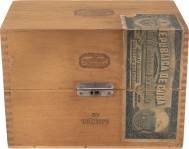
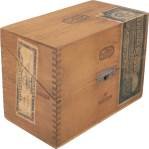
- Presentation: The presentation was distinct. While many brands utilized standard bands across their lines, the Trumps featured a unique, specific band designed exclusively for this vitola. It was housed in boîte nature boxes—plain, natural wood boxes—containing 50 cigars, a presentation style that emphasizes the organic nature of the product.
Aesthetic and Craftsmanship
The decision to equip the Trumps with its own distinct band design speaks volumes about the brand philosophy of that era. Rather than relying solely on the main Ramón Allones branding to carry the product, the manufacturers invested in a unique visual identity for this specific size. This attention to detail suggests that the Trumps was considered a premium offering within the lineup, worthy of distinction on the shelf. The boîte nature packaging further underscored this commitment to tradition; the unvarnished wood allowed the cigars to breathe and age gracefully, a nod to the traditionalist smoker who values the natural aging process over flashy marketing.
The Modern Collectibility of the Trumps
Today, finding a Ramón Allones Trumps is akin to uncovering a piece of industrial archaeology. Because production ceased in the 1960s after starting before the 1930s, the remaining stock is incredibly finite. These cigars have not just aged; they have transcended their status as consumables to become historical documents. The tobacco inside these surviving specimens represents a blend of varietals and curing techniques that may differ significantly from modern production methods.
For the serious historian of Habanos, the Trumps serves as a tangible link to the Ramón Allones of the past. While the brand continues to thrive with other celebrated vitolas today, the Trumps remains a silent sentinel of the brand's expansive history. Surviving examples are now largely considered museum-quality pieces, preserved not necessarily for consumption, but to honor the craftsmanship and heritage of Cuba’s tobacco heyday. It stands as a reminder that in the world of premium cigars, some of the finest creations are the ones that got away.