For the discerning aficionado, the pursuit of vintage Cuban cigars is often less about the smoke itself and more about preserving a tangible piece of history. Among the most intriguing relics of Habanos' past stands the Ramón Allones Private Stock No.1, a format that has long since vanished from production lines. While the brand is currently celebrated for robust offerings like the Gigantes, this discontinued vitola serves as a reminder of a more elegant, mid-century era in Cuban cigar manufacturing. It remains a ghostly figure in the brand's portfolio, whispering stories of a time when slender gauges ruled the day.

A Decade of Production: History and Timeline
The timeline of the Private Stock No.1 is tightly woven into a transformative period for the Cuban tobacco industry. Records indicate that this specific cigar was introduced to the market prior to 1960, placing its origins firmly in the pre-revolutionary landscape. It survived the tumultuous shifts of the early revolutionary years, continuing to be produced throughout the 1960s.
However, its lifespan was relatively short in the grand scheme of Cuban heritage. By 1970, production ceased entirely, closing the book on this particular chapter. This ten-year window means that any surviving box today represents a very specific slice of history, bridging the gap between the old world of Cuban tobacco and the consolidation of the industry under the national entity. It was a regular production item, not a limited edition, making its eventual disappearance all the more poignant for collectors who value the "everyday" cigars of yesteryear.
Dimensions and the Slender Experience
Modern trends have shifted toward thicker ring gauges, but the Private Stock No.1 hails from an era that favored length and elegance over girth. The specifications reveal a cigar built for patience:
- Dimensions: Measuring 163 mm (6⅜ inches) in length with a ring gauge of 38.
- Weight: An estimated 8.61 grams per unit.
- Classification: A slender, long-format cigar known for a cooler burn profile.
These dimensions suggest a smoking experience that prioritizes nuance over power. A 38 ring gauge concentrates the flavor profile, forcing the palate to detect subtle shifts in earth and spice that might be lost in a wider format. Furthermore, the considerable length would have ensured a lengthy smoking duration, allowing the smoker to enjoy a cooling draw and a gradual evolution of flavors. It was a cigar designed for leisurely contemplation, characteristic of the refined tastes of its era.
The Art of Presentation
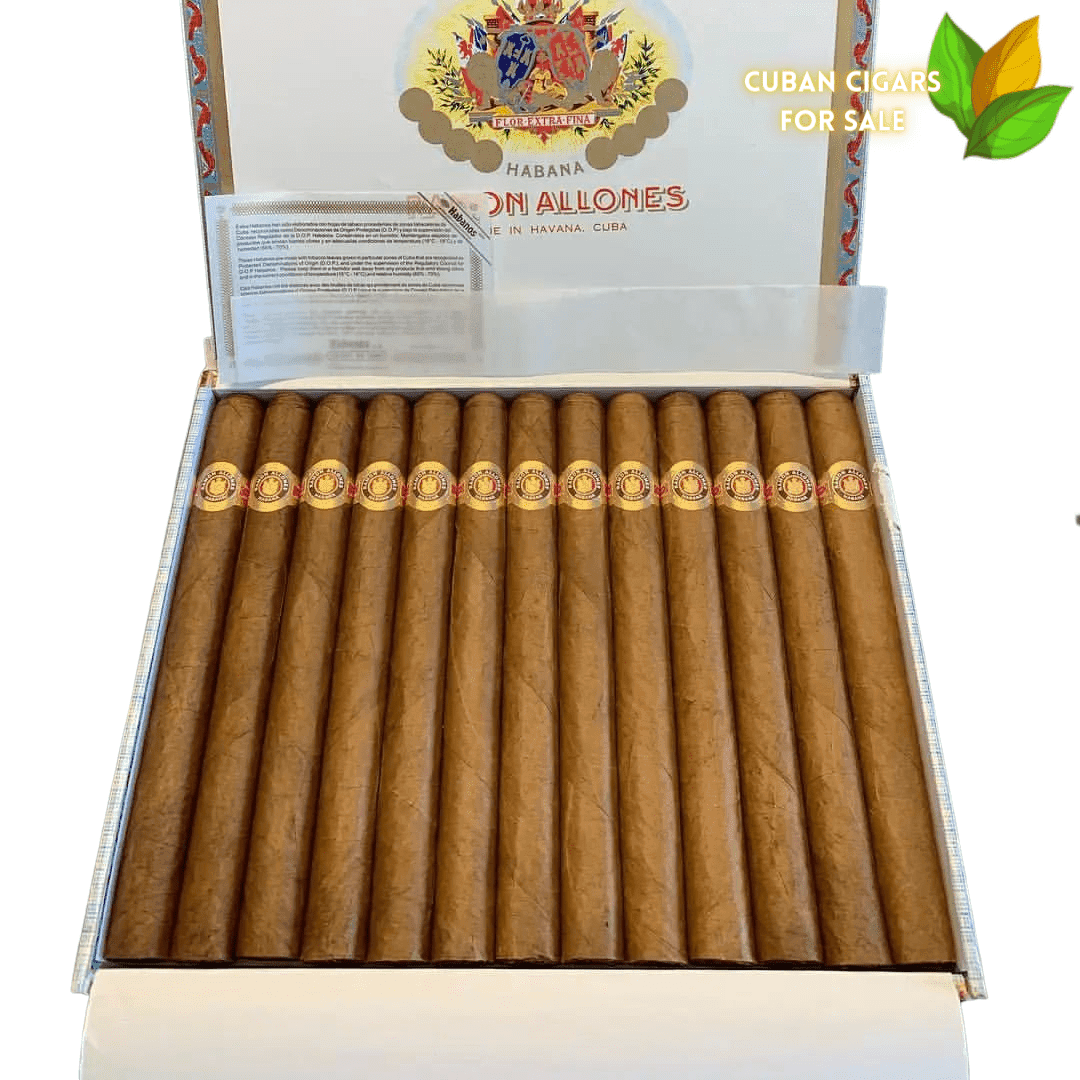
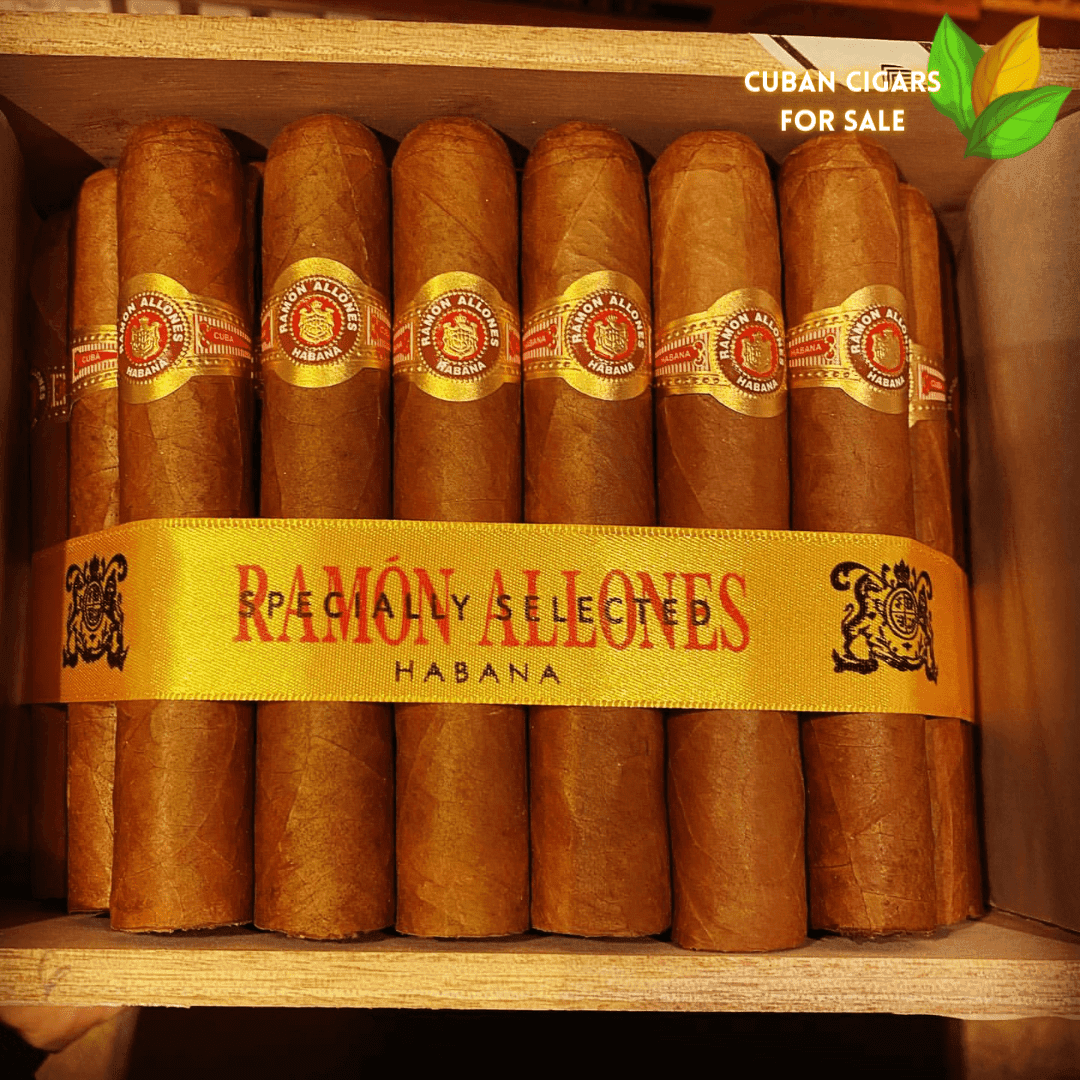
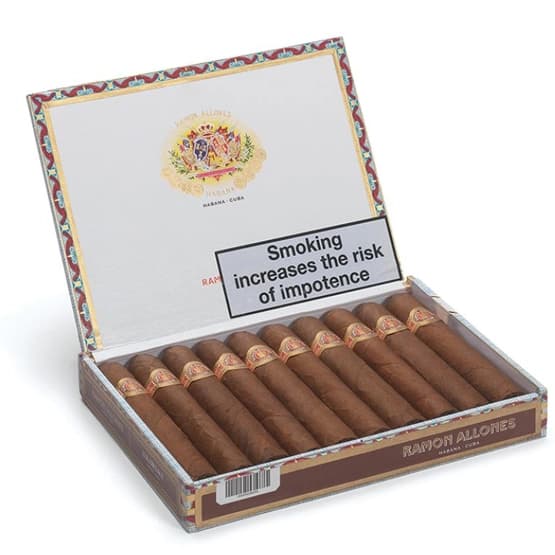
In the golden age of Cuban exports, the packaging was nearly as important as the tobacco inside, and the Private Stock No.1 was no exception. The cigars were housed in dress boxes containing 25 units, a standard configuration for premium inventory. However, the interior told a story of luxury. The box featured a decorative ribbon that lay across the cigars, a stylistic flourish designed to enhance the visual appeal upon opening.
This ribbon was not merely loose; it was an integral part of the box's architecture, fastened to the exterior via a press-stud mechanism. This attention to detail highlights the "Private Stock" designation—it was marketed as a tier above the standard fare. The band used was the standard Ramón Allones design, yet coupled with the unique box presentation, it signaled to the consumer that they were purchasing a product of distinction. This level of craftsmanship in packaging is rarely seen today, making the physical box a collector's item in its own right.
Current Status and Collectibility
Because the Ramón Allones Private Stock No.1 has been out of production for over half a century, it has transitioned from a consumer good to a rare artifact. The relatively brief production run—roughly a decade—means that inventory was always finite. Add to that the fragility of cigars stored over fifty years, and one begins to understand the scarcity on the secondary market.
For historians and collectors, finding a well-preserved box is akin to uncovering a time capsule. The surviving examples offer a glimpse into the blend profile and construction techniques of mid-century Cuba. While the factory name for this vitola remains lost to history, the physical specifications and the distinctive ribboned presentation ensure that this discontinued classic remains a highly sought-after prize for those dedicated to the preservation of Cuban cigar heritage.