For the discerning aficionado, the landscape of Cuban cigars is often defined by the hunt for lost treasures—those discontinued vitolas that represent a bygone era of manufacturing. Among these sought-after relics stands the Ramón Allones Mille Fleurs, a cigar that offers a unique window into the brand's storied past. While modern shelves are dominated by handmade premiums, this particular Petit Corona once served as a workhorse option for smokers seeking the classic Ramón Allones flavor profile without the premium price tag. Its departure from the market in 2005 marked the end of a significant chapter for the brand, leaving behind a legacy that continues to intrigue collectors to this day.

The Origins of the "Thousand Flowers"
The history of the Mille Fleurs stretches back to a vibrant period in Cuban cigar production, originating in the years preceding the 1960s. This longevity makes it one of the more enduring productions within the Ramón Allones catalog, having satisfied smokers for nearly half a century. The cigar's nomenclature is particularly poetic; derived from French, "Mille Fleurs" translates to "thousand flowers." This name was not chosen at random, but rather served as a descriptor of the smoking experience itself, hinting at a bouquet defined by aromatic and floral nuances that set it apart from heavier, earthier blends.
For decades, this vitola maintained a reputation as a reliable, everyday choice. It bridged the gap between the casual smoker and the brand loyalist, offering a taste of the Ramón Allones heritage in a format that was both approachable and distinct. However, the turn of the millennium brought significant changes to Habanos S.A. and their portfolio consolidation, leading to the decision to cease production of this machine-made classic in 2005.
Technical Specifications and Presentation
The Mille Fleurs was constructed using the time-honored Petit Corona format, a size that has long been a staple in Cuban cigar factories. Known internally by its factory name, Petit Coronas, the cigar measured a classic 129 mm (approximately 5 1/8 inches) in length with a ring gauge of 42. This dimension creates a smoking duration that is ideal for those with limited time, typically offering a satisfying experience of 30 to 45 minutes.
In terms of construction, the Mille Fleurs was distinct from the hand-rolled masterpieces that define the modern luxury market. It was a machine-made cigar, a classification that speaks to a different era of Cuban manufacturing where mechanized production was utilized to ensure consistency and affordability. The presentation was traditional yet practical, featuring standard Ramón Allones bands—specifically the B and C variations—to maintain brand identity.
- Vitola: Petit Corona
- Dimensions: 129 mm (Length) x 42 (Ring Gauge)
- Weight: 8.46 g
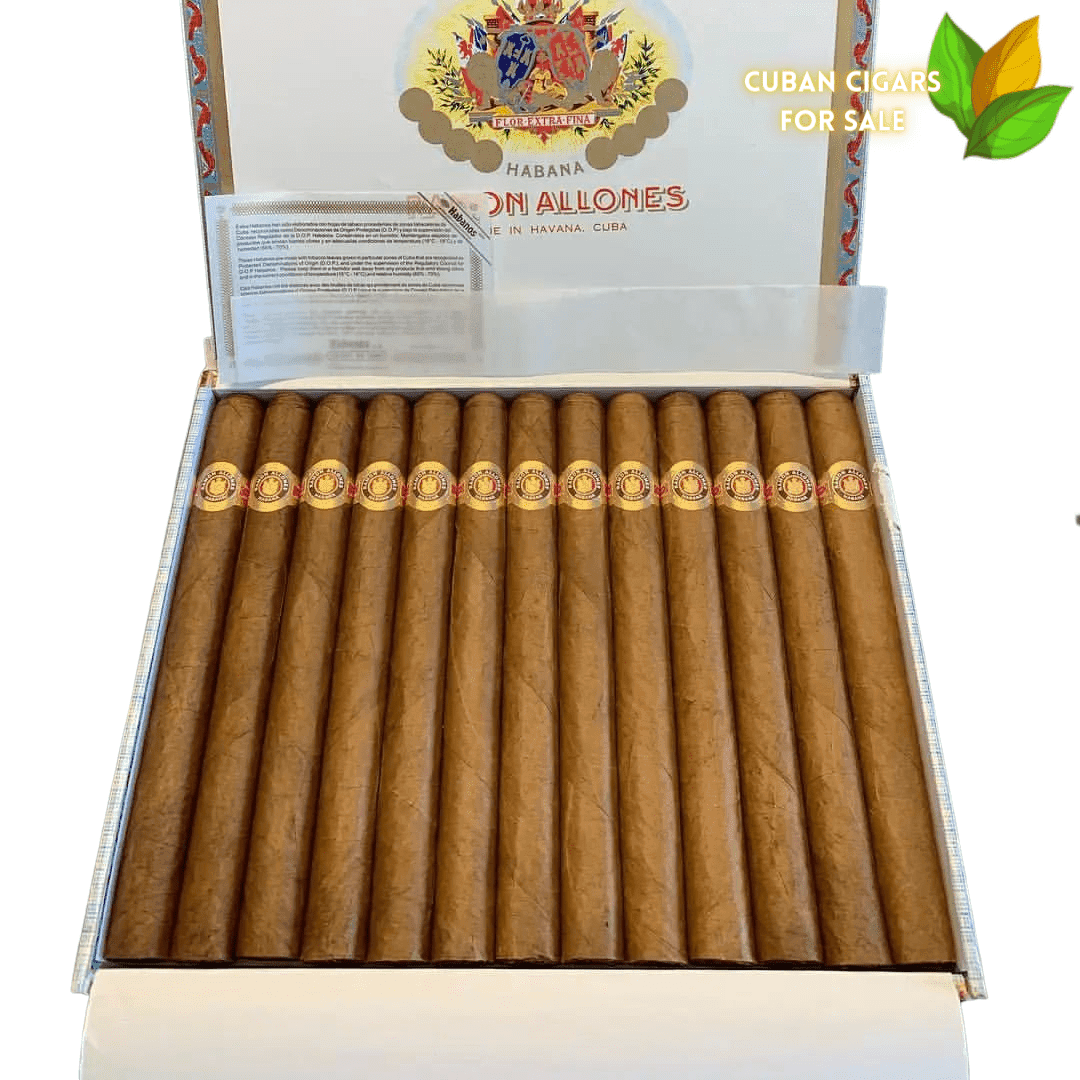
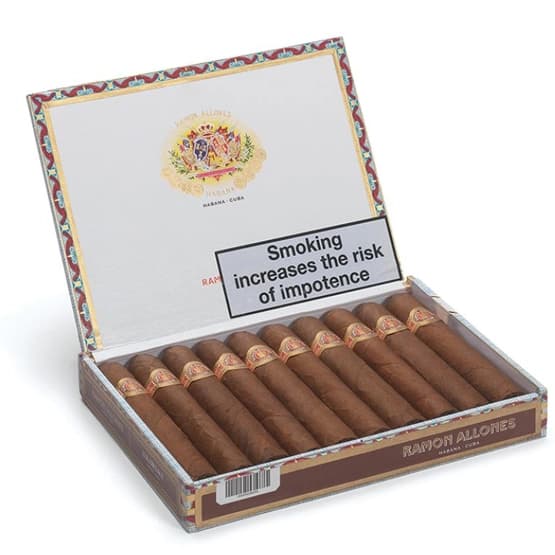
- Packaging: Dress boxes of 25 units
- Wrapping: Individual cellophane sleeves
The packaging further emphasized its role as a practical smoke. Each cigar was housed in a dress box of 25, individually wrapped in cellophane. This protective measure was essential for preserving the integrity of the tobacco, ensuring that the "thousand flowers" character remained fresh from the factory to the humidor.
A Shift in Manufacturing Philosophy
The existence of the Mille Fleurs highlights a fascinating divergence in the tobacco industry's history. In today's market, the term "machine-made" is often associated with lower-quality, mass-market products. However, during the height of the Mille Fleurs' popularity, Cuban machine-made cigars were respected for their specific role. They allowed manufacturers like Ramón Allones to utilize high-quality tobaccos in a format that required less labor than a fully hand-rolled cigar, passing the savings on to the consumer.
This approach allowed the brand to cast a wider net, introducing smokers to the Ramón Allones style—characterized by its robustness and complexity—at an entry-level price. The Mille Fleurs was never intended to compete with the Gran Corona or other flagship hand-rolled formats; rather, it served as a dependable companion for the morning commute or a short break. Its discontinuation signals a shift in Habanos' strategy, moving away from these mechanized offerings to focus almost exclusively on the prestige of fully handmade craftsmanship.
Collecting the Mille Fleurs Today
Since production halted nearly two decades ago, the Ramón Allones Mille Fleurs has transitioned from a common store item to a collector's curiosity. Finding these cigars on the secondary market offers enthusiasts a tangible connection to a different philosophy of production. The surviving stock provides a unique opportunity to taste a blend that prioritized aromatic, floral notes—a profile that has become increasingly rare in the modern Ramón Allones portfolio, which often leans toward full-bodied strength.
For the historian or the completist, the Mille Fleurs is more than just tobacco; it is an artifact. It represents a time when the Cuban cigar industry was more varied in its manufacturing techniques, offering a broader spectrum of price points and construction methods. While the machine-made aspect might deter purists who insist on hand-rolling, the Mille Fleurs remains a vital reference point for understanding the evolution of the Ramón Allones brand throughout the 20th century.