For the dedicated aficionado, the pursuit of Cuban cigar history often leads beyond the humidors of modern boutiques and into the archives of discontinued vitolas. Among these forgotten treasures, the Ramón Allones Delgados stands out as a defining example of mid-20th century craftsmanship. While contemporary smokers often obsess over limited editions and robust ring gauges, this slender, elegant cigar recalls a different era of consumption. It serves as a tangible reminder of a time when machine-made precision met high-quality Cuban tobacco, offering a smoking experience that is now entirely a part of the past.

The Historical Context of the Delgados
The story of the Delgados begins well before the Cuban Revolution reshaped the island's tobacco industry. Introduced to the market prior to 1960, this cigar quickly secured a permanent spot in the Ramón Allones regular lineup. Its longevity is a testament to its popularity; it remained in production for decades, only seeing its run come to an end during the 1980s. This timeline places the cigar firmly within the "industrial" golden age of Havana, where brands expanded their portfolios to offer a diverse range of formats to suit every occasion and budget.
What makes the Delgados particularly intriguing to historians is its method of construction. In the modern luxury market, the term "machine-made" often carries a negative connotation, but during the heyday of the Delgados, it was a mark of accessibility and consistency. Unlike the hand-rolled premiums that required the delicate touch of a torcedor, the Delgados was produced using mechanized processes. This allowed the brand to maintain a uniform draw and burn, ensuring that every cigar delivered a predictable experience to the consumer. It was a workhorse vitola, designed for the everyday smoker rather than the special occasion connoisseur.
Technical Specifications and the 'Toppers' Vitola
In the complex nomenclature of Cuban cigar factories, the Delgados is identified by its industrial name: Toppers. This designation helps archivists and collectors categorize the specific dimensions and weight of the smoke. The vitola presents a profile that is distinctly different from the thick "robusto" or "gordo" shapes preferred by modern smokers. It is a throwback to a time when longer, thinner cigars were the standard of elegance.
- Factory Name: Toppers
- Dimensions: Length of 160 mm (6¼ inches) with a ring gauge of 39
- Official Weight: 8.29 grams per cigar
- Construction: Machine-made
With a ring gauge of 39, the Delgados falls into the category of slender smokes. This format typically encourages a cooler smoke, as the ratio of filler to wrapper is different from thicker cigars. At over six inches in length, it was designed to provide a substantial smoking duration, making it a reliable companion for a leisurely afternoon before it was discontinued.
Packaging and Visual Presentation
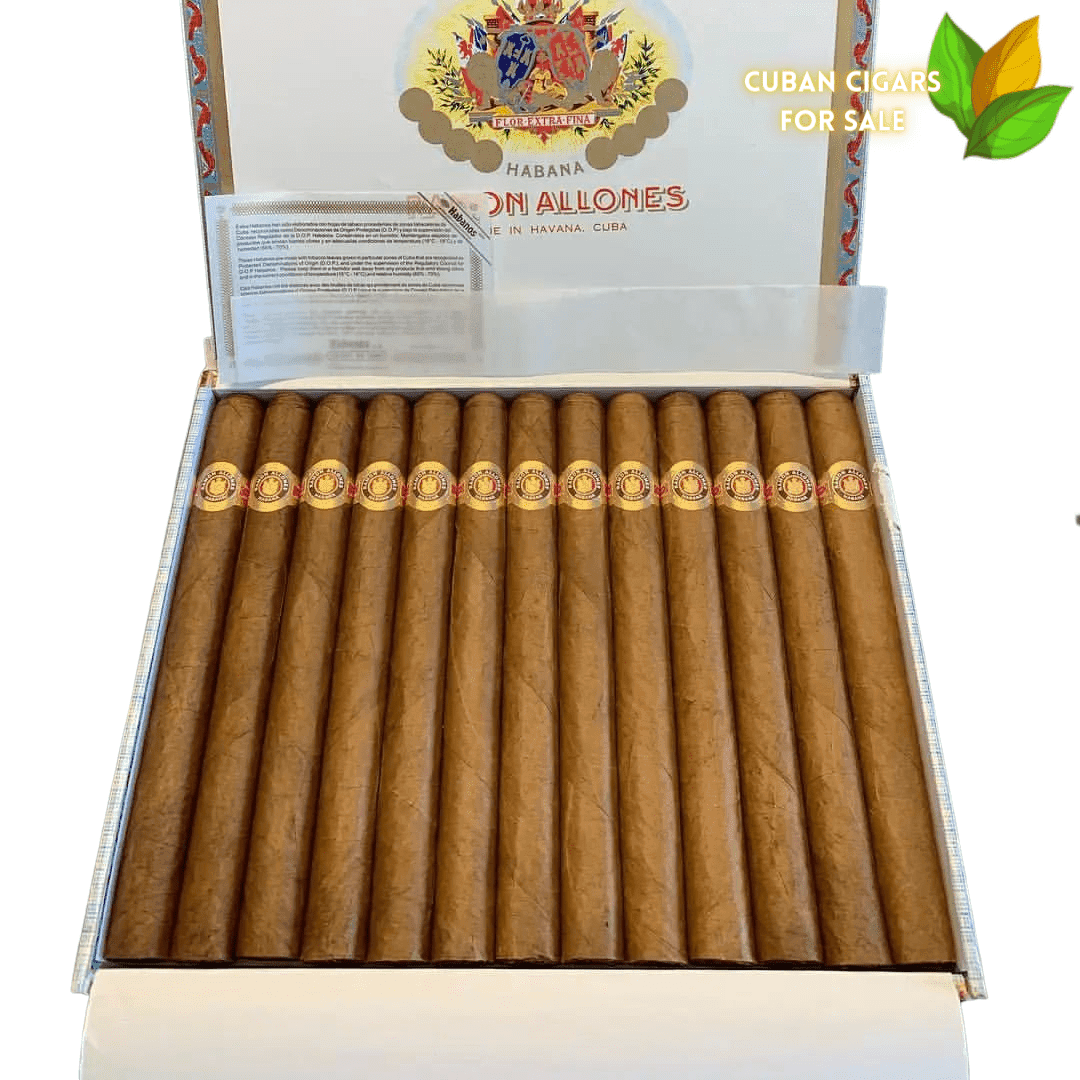
The visual identity of the Ramón Allones Delgados remained consistent with the brand's storied aesthetic. Collectors will note that the cigars were adorned with the standard Ramón Allones bands, specifically designated as Band B and Band C. This consistency ensured that even though the cigar was machine-made, it visually aligned with the brand's premium hand-rolled siblings, reinforcing the Ramón Allones reputation for quality.
Preservation was also a key focus in the packaging design. The cigars were housed in dress boxes containing 25 units each. To ensure freshness and protect the delicate wrappers during transport and storage, each individual cigar was encased in cellophane. This detail is particularly important for collectors today, as the presence of original cellophane can help verify the authenticity and condition of a vintage box discovered at auction or in private collections.
A Modern Perspective on Collectibility
For the serious collector, the Ramón Allones Delgados represents more than just tobacco; it is a piece of industrial archaeology. Having been discontinued in the 1980s and originating from a pre-1960 production run, finding these cigars today is a challenge. While they may not command the astronomical prices of certain hand-rolled "pre-embargo" icons, they hold a significant place in the hobby. They offer insight into the segmentation of the Cuban cigar market during the mid-century, illustrating how legendary brands managed different tiers of product quality.
The Delgados serves as a bridge between the mass-market orientation of the past and the boutique focus of the present. Owning a box provides a unique opportunity to taste the flavor profiles of Cuban tobacco from a bygone era, processed through the machine-made techniques of the time. It remains a fascinating, albeit obscure, entry in the encyclopedia of Havana cigars.