Within the rich tapestry of Cuban cigar lore, few subjects captivate the modern aficionado quite like the "ghosts" of the industry—those distinguished vitolas that once graced humidors but have long since ceased production. The Ramón Allones Club Coronas stands as a prime example of this phenomenon, representing a bygone era of Havana's tobacco manufacturing. While the Ramón Allones brand remains a powerhouse today, known for its robust blends, this specific iteration offers a window into the mid-20th century, a time of immense transition for the island nation and its most famous export.

A Bridge Between Two Eras
What makes the Club Coronas particularly intriguing to historians is its timeline. This cigar emerged on the global scene prior to 1960, placing its birth firmly in the pre-revolutionary epoch. Its production run was surprisingly short-lived, spanning roughly two decades before the plug was pulled in the 1970s. Consequently, this cigar serves as a tangible bridge connecting the golden age of Cuban tobacco with the early years of the post-revolution industry.
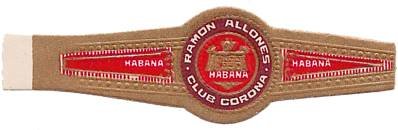
For collectors, the Club Coronas is more than just a smoke; it is a historical artifact. Its existence helps map out the evolution of the Ramón Allones portfolio during a chaotic century. The brand utilized this specific release as an early showcase for what experts now refer to as Standard Band C. This classification system provides crucial clues regarding how the brand sorted and identified its various lines during the mid-century, offering a roadmap for researchers trying to understand the hierarchy of Cuban cigars from that period.
The Cosacos Vitola: Dimensions and Design
Beyond its historical placement, the cigar itself was built on a foundation of classic proportions. In the factory, the size was known by the industrial name "Cosacos," a moniker shared by other famous cigars of the time. The specifications were strictly traditional:
- Length: 135 mm (approximately 5⅜ inches)
- Ring Gauge: 42
- Official Weight: 8.84 grams
These dimensions place the Club Coronas squarely within the traditional corona format. Unlike the trend toward thicker ring gauges seen in the modern market, the 42 ring gauge was the standard for a balanced smoke. This slimmer profile typically forces the wrapper leaf to contribute significantly to the flavor profile, ensuring that the smoker experiences the nuance of the tobacco rather than just raw strength. It was designed for a contemplative experience, allowing the signature Ramón Allones blend to unfold gradually over a moderate duration.
Presentation and Craftsmanship
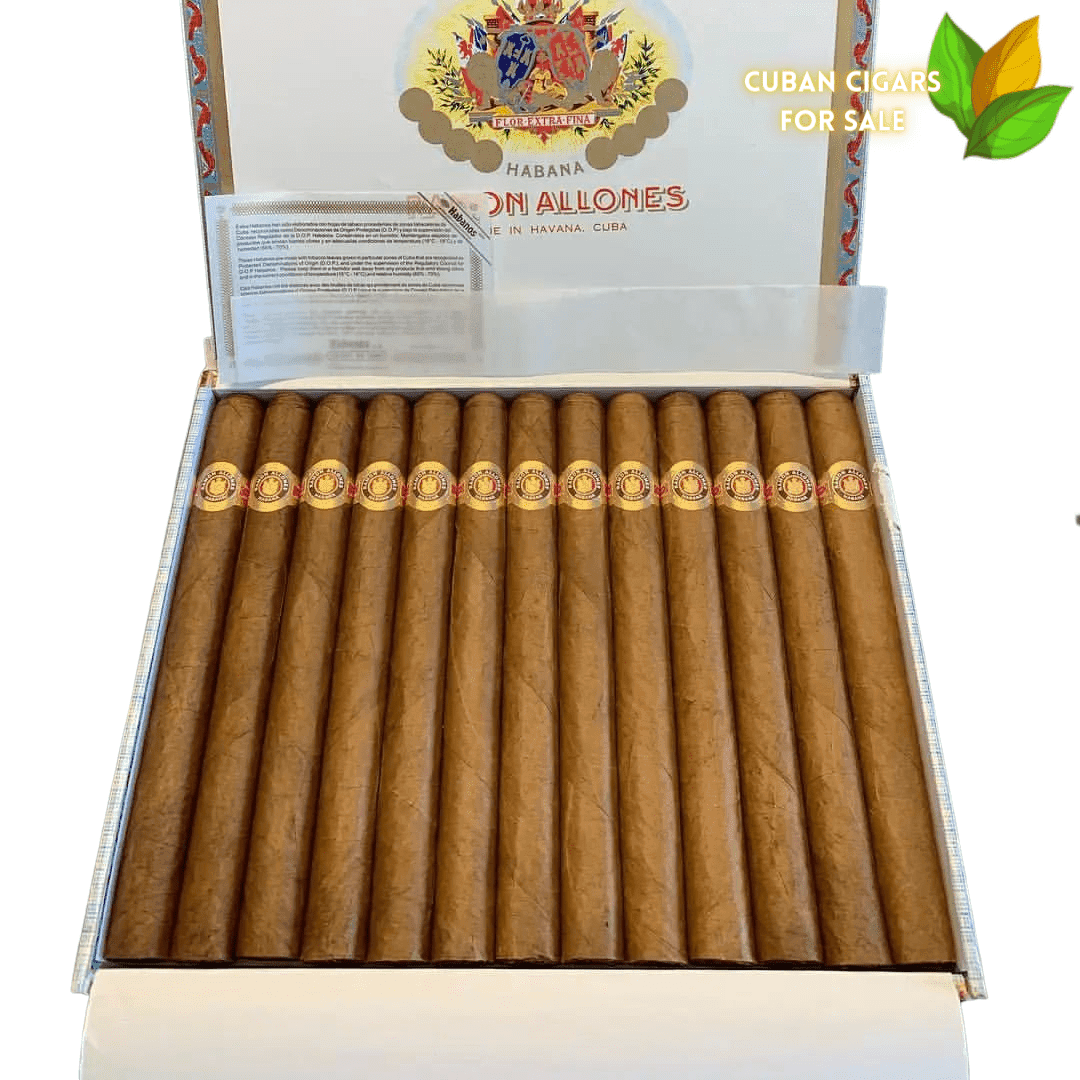
In its prime, the Club Coronas was a testament to the art of handmade construction. Every unit was rolled by hand, reflecting the high standards of the era. However, it was the visual presentation that truly set this vitola apart. While many brands utilized generic bands for different sizes, the Club Coronas featured its own distinctive "Special Club Corona" band. This unique labeling signaled to the consumer that this was a premium offering, deserving of a specific identity within the brand's broader catalog.
The packaging further reinforced this premium status. The cigars were housed in dress boxes containing 25 units. These boxes, often ornate and detailed, were designed to sit proudly on a tobacconist’s shelf, catching the eye of discerning buyers. The combination of specialized banding and high-quality dress boxes indicated that the Club Coronas was positioned as a luxury item, intended to compete with the best offerings from other Havana houses.
The Rarity of a Discontinued Icon
Because production ceased permanently in the 1970s, the Ramón Allones Club Coronas has transitioned from a consumer product to a rare collectible. Surviving examples are exceedingly difficult to locate, and when they do surface, they are often snapped up by museums or private collectors. The finite nature of the supply means that the cigar now exists primarily as a reference point in history books.
For the serious student of tobacco, the legacy of the Club Coronas lies in what it represents: a specific moment in Cuban manufacturing where tradition met change. It reminds us that the cigar industry is fluid, with blends and sizes appearing and vanishing based on market demands and political shifts. While modern smokers can still enjoy the Ramón Allones brand, the Club Coronas remains a lost chapter of that story—a phantom vitola that once delivered the brand's characteristic power through a classic, refined format.