Among the pantheon of diminutive Cuban smokes, the Punch Petit Coronations (1) occupies a special niche. Known within the factory walls as “Franciscanos,” this slender vitola rode the wave of popularity for small‑gauge cigars throughout the latter half of the twentieth century, becoming a quiet staple on humidors from Havana to Hong Kong. Its story is a blend of heritage, craft, and the inevitable march of market trends—a tale that continues to intrigue collectors and smokers alike.

Origins and Early Years
The roots of the Petit Coronations (1) stretch back to the pre‑1960 era, a period when Cuban cigar manufacturers were experimenting with a variety of ring gauges and lengths to cater to an increasingly global audience. The Punch brand, already celebrated for its robust robusto and corona formats, introduced this petite format as a refined, quick‑smoking alternative. For more than four decades, the Franciscanos held a steady presence on store shelves, surviving the upheavals of the Cuban Revolution and the subsequent shifts in export markets. The cigar’s longevity is a testament to its consistent quality and the brand’s ability to adapt while preserving a classic profile.
Technical Profile and Construction
Below is a concise breakdown of the key measurements that define the Punch Petit Coronations (1):
- Factory designation: Franciscanos
- Ring gauge: 40 (approximately 1.58 cm)
- Length: 116 mm (4 ⅝ inches)
- Official weight: 6.72 g
- Construction: Handmade
- Band style: Standard Punch band
The cigar’s modest dimensions belie a meticulously crafted blend of premium aged long‑filler tobaccos, enveloped in a smooth, oily wrapper. The 40‑ring gauge provides a cool, even burn, while the length delivers a concise yet satisfying smoke that clocks in at around 30–40 minutes, depending on the smoker’s pace. The standard band, bearing the iconic Punch mascot, adds a touch of visual elegance without overwhelming the cigar’s slender silhouette.
Packaging and Collectibility
During its production run, Punch offered the Petit Coronations (1) in two primary packaging configurations, each designed to meet different market demands:
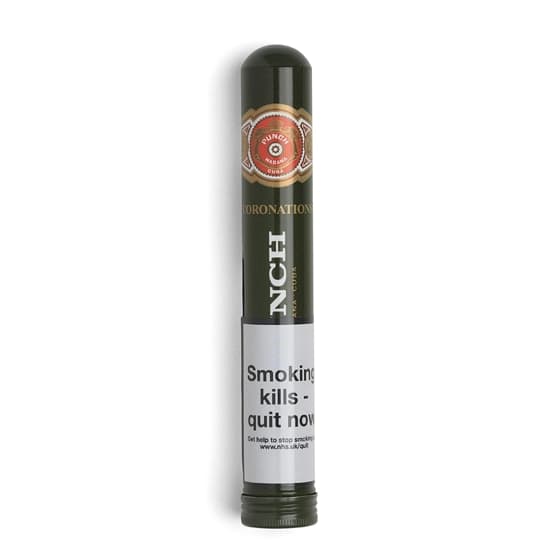
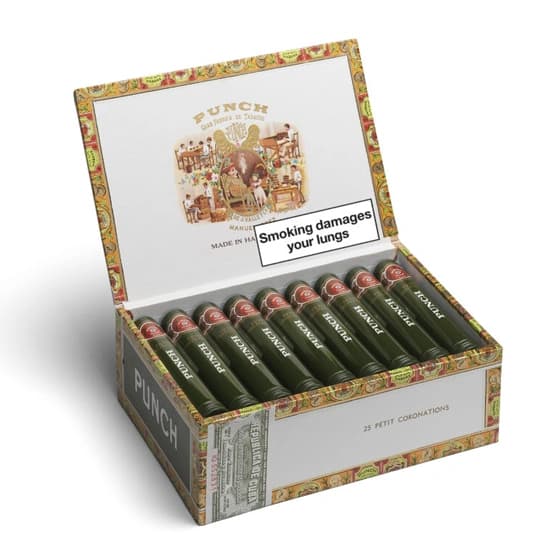
- Dress box: 25 cigars, each sealed in its own individual aluminium tube to protect the delicate wrapper and preserve humidity.
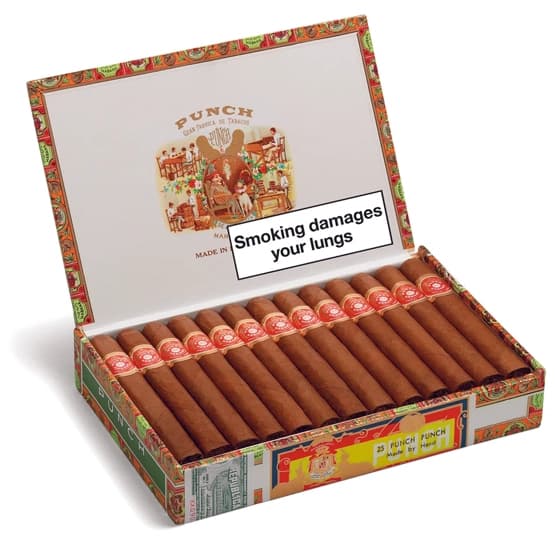
- Cajón (cabinet box): 100 cigars packaged together, ideal for retailers and enthusiasts who prefer bulk storage.
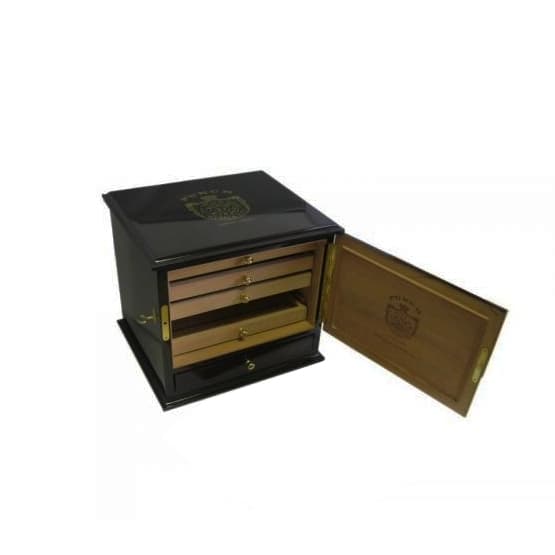
In addition to these standard offerings, a limited‑edition incarnation was released as part of the Punch Petit Coronations (1) Siglo XXI Millennium Humidor. This commemorative set celebrated the turn of the millennium and provided collectors with a distinctive presentation—often featuring a hand‑crafted cedar humidor adorned with commemorative lettering. The scarcity of the millennium humidor has made it a prized piece among aficionados, frequently commanding premium prices at auction.
Legacy and Modern Successors
Although the original Petit Coronations (1) was officially discontinued around 2002, its impact endures in several ways. First, the cigar’s lengthy production span—spanning from the mid‑twentieth century to the early twenty‑first—ensured its inclusion in countless private collections, museum displays, and smoking lounges worldwide. The disappearance of this vitola marked a symbolic end of an era for the Punch brand, as it signaled a shift toward newer, more market‑driven releases.
Nevertheless, Punch has kept the name alive through the introduction of the Petit Coronations (2), a contemporary iteration that retains many of the original’s hallmarks while incorporating updated agronomic practices and blend refinements. The (2) version continues to attract both loyal fans of the original and newcomers seeking a compact, high‑quality smoke. For those who cherish the history of the (1), the (2) serves as a bridge, linking the storied past with the present-day palate.
In summary, the Punch Petit Coronations (1) stands as a microcosm of Cuban cigar evolution—a small vitola that managed to carve out a lasting legacy despite its modest size. Its story, from pre‑revolutionary inception to millennium‑era collectibility, exemplifies how tradition, craftsmanship, and market forces converge to shape the world of premium cigars.