The landscape of Cuban tobacco is littered with legends that have faded into history, but few leave behind a legacy as intriguing as the Punch Royal Coronations (2). This particular cigar represents a fascinating bridge between different eras of Habanos production, having served smokers for nearly sixty years before its eventual retirement. For enthusiasts looking to understand the evolution of the Punch marca, this vitola serves as a perfect case study, embodying the shifts in manufacturing standards and aesthetic preferences that have occurred over the decades.

A Legacy Spanning Generations
Tracing its roots back to a time before 1960, the Royal Coronations (2) is a true survivor of the industry's "Golden Age." Its creation predates the Cuban Revolution, placing it among a prestigious class of vitolas that managed to endure the sweeping nationalization and restructuring of the tobacco sector. While many formats from this era were lost to time, this specific model remained a staple for the brand for decades. However, all good things must come to an end; Habanos S.A. officially removed the cigar from their commercial portfolio in 2017, closing the book on a nearly six-decade run.
It is crucial for buyers to distinguish this release from its sibling, the Royal Coronations (1). Both variants have now been discontinued, but the "(2)" designation refers to this specific size and presentation that remains a point of interest for serious collectors today.
Evolution of Construction Techniques
Perhaps the most defining characteristic of the Royal Coronations (2) is its manufacturing history. For the majority of its life, this cigar was produced using machine-made techniques. During the mid-to-late 20th century, it was not uncommon for Cuban manufacturers to utilize machinery for certain vitolas to ensure consistency and meet global demand. Consequently, smokers enjoying this cigar in the 1980s or 1990s would have experienced a product built with that industrial method.
However, the turn of the millennium brought a significant shift in quality standards. Around the year 2002, production was transitioned entirely to handmade methods. This move aligned the Royal Coronations (2) with the premium totalmente a mano (totally by hand) reputation that modern Cuban cigars are famous for. This transition creates a unique dichotomy for collectors: finding a box from the 1990s offers a completely different experience than finding one from 2010, making the hunt for this cigar particularly nuanced.
Presentation and Packaging Details
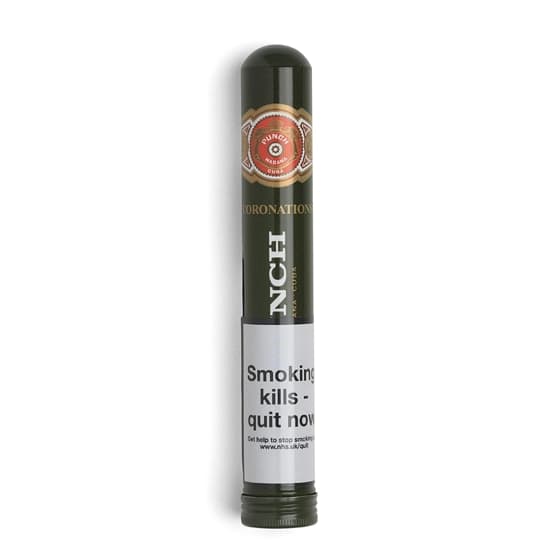
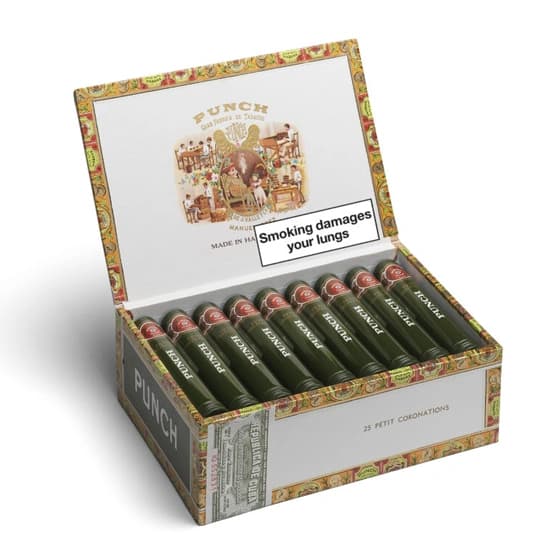
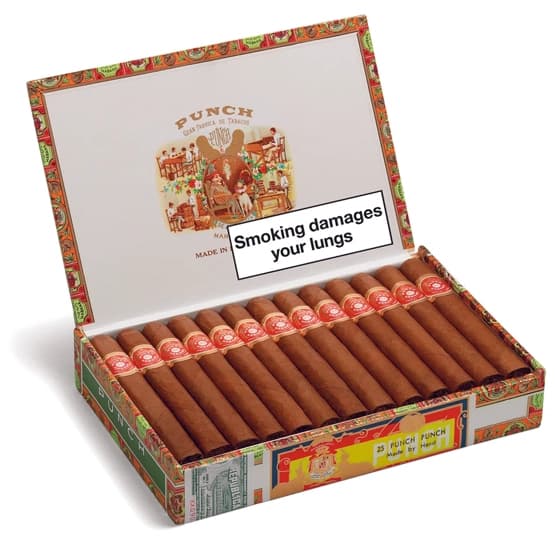
The visual presentation of the Royal Coronations (2) was designed to project elegance and ensure preservation. The cigars were traditionally sold in dress boxes containing 25 units. To protect the delicate wrappers and maintain optimal humidity, each individual cigar was housed inside an aluminum tube.
The aesthetic of these tubes underwent a refresh in 2009 when Punch introduced a new green tube design. This change gave the cigar a more modern and distinct look on the shelf, distinguishing later production runs from earlier, more utilitarian packaging. The bands utilized the standard Punch configuration, featuring both band A and band B, which proudly displayed the brand's iconic Mr. Punch figure and name.
Technical Specifications and Collectibility
Understanding the physical dimensions of this cigar helps explain its appeal to smokers who prefer a moderate smoking time. The Royal Coronations (2) measures 145 mm (5¾ inches) in length with a ring gauge of 43. This creates a profile that is substantial yet manageable.
Below are the key technical details for reference:
- Factory Name: Conservas
- Dimensions: 145 mm length / 43 Ring Gauge
- Official Weight: 9.66 g
- Production: Handmade (post-2002), formerly Machine-made
- Packaging: Dress boxes of 25, aluminum tubes (green tubes introduced c.2009)
Since its discontinuation in 2017, the Punch Royal Coronations (2) has transitioned from a standard retail item to a sought-after collector's piece. The variations in production methods—specifically the divide between machine-made and handmade examples—combined with the packaging changes in 2009, create a layered market for enthusiasts. Finding well-preserved boxes from the pre-2002 era offers a glimpse into a different philosophy of Cuban cigar making, while the later handmade tubes represent the final, premium iteration of this historic vitola.