When the smoke curls off a well‑aged Cuban, it carries with it decades of heritage, craftsmanship, and the subtle nuances of a bygone era. Among the many vitolas that have captured the imagination of aficionados, the Punch Gran Corona stands out as a timeless icon—a slender, hand‑made cylinder that once graced humidors across the globe before slipping into the realm of legend. This guide revisits that classic format, explores its technical soul, and explains why it remains a prized treasure for collectors today.

Origins and Early Years
The Gran Corona made its debut before the cultural shift of 1960, positioning it among the inaugural releases under the Punch banner. At a time when Cuban factories were still honing the art of premium hand‑rolling, this vitola quickly earned a reputation for balance and refinement. Its production continued uninterrupted for several decades, allowing generations of smokers to experience its steady, medium‑strength profile. Eventually, the winds of change blew through the industry, and the Gran Corona was retired in the mid‑1980s, marking the end of a long‑standing chapter in the brand’s history.
Technical Profile
Understanding the Gran Corona means delving into a precise set of measurements that define its silhouette and smoking character. The following specifications encapsulate the vitola’s DNA:
- Vitola Name: Gran Corona
- Factory Designation: Superiores
- Ring Gauge: 40
- Length: 146 mm (approximately 5 ¾ inches)
- Official Weight: 8.46 g
- Construction: Fully handmade
- Band: Standard Punch band A
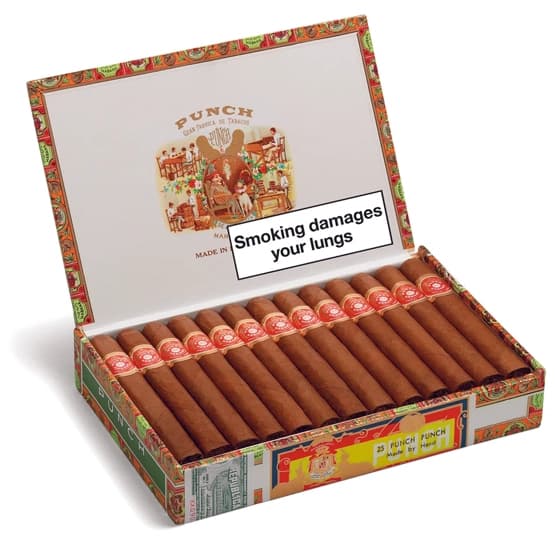
- Packaging: Shipped in humidors of 100 cigars
- Status: Discontinued (mid‑1980s)
These numbers are more than mere data points; they outline the proportions that yield a classic corona experience—lean enough to allow a slow, measured burn, yet substantial enough to deliver a rich, evolving flavor as the session progresses.
Craftsmanship and Smoking Experience
Because the Gran Corona was crafted entirely by hand, each stick reflects the meticulous skill of Cuban torcedors. The slender 40‑ring gauge pairs with a generous length to create an elegant, tapered profile that sits comfortably between the fingers. The standard Punch band A, a hallmark of the brand’s visual identity, adds a touch of understated sophistication. When lit, the cigar unfurls a measured draw, inviting the smoker to savor each puff in a contemplative manner. The flavor profile—characterized by a harmonious blend of earthy tobacco, subtle spice, and a faint sweetness—evolves gently, mirroring the unhurried pace of a leisurely afternoon.
The packaging in humidors of 100 units further underscores the cigar’s appeal to serious enthusiasts and establishments alike. Such bulk presentation ensured that the Gran Corona could be aged collectively, allowing the flavors to meld over time, a practice that today yields bottles of aged smoke that are highly coveted on secondary markets.
Collectibility and Modern Appeal
With production halted decades ago, the Gran Corona has transitioned from a staple of everyday humidor to a collector’s gem. Specimens that date from the pre‑1960 era and survived into the 1980s represent a critical period in Cuban cigar manufacturing—a window when traditional techniques were still being refined, yet modernization was beginning to reshape the industry. For historians and aficionados, each surviving example serves as a tangible link to that transformative epoch.
Today, acquiring an original Gran Corona often means navigating auction houses, specialized retailers, or private collections. The scarcity, combined with the nostalgic allure of a discontinued vitola, drives market prices upward. Enthusiasts who manage to secure a well‑preserved stick are rewarded not only with a unique smoking experience but also with a piece of cultural heritage that tells the story of Cuban tobacco’s legacy.
In summary, the Punch Gran Corona endures as more than a relic; it is a testament to the enduring artistry of Cuban cigar making, a classic silhouette that continues to inspire reverence among those who appreciate the finer points of a perfectly rolled smoke.