Within the vast and storied catalog of Habanos, few names command as much immediate respect as Punch. Among its varied offerings, one vitola stands out as a fascinating historical footnote: the Punch Black Prince. This cigar, which served as a staple for the brand for decades, offers modern enthusiasts a tangible connection to the pre-revolutionary golden age of Cuban tobacco. Though it has since ceased production, the legacy of this specific format endures, driven by its unique dimensions and the intriguing circumstances surrounding its eventual departure from the market.

A Heritage Vitola with Pre-1960 Roots
The history of the Black Prince is deeply intertwined with the expansion of the Punch brand during the mid-20th century. The cigar made its debut sometime prior to 1960, establishing itself as a core component of the regular production lineup. This era was a transformative period for Cuban cigars, and the Black Prince was there to witness the industry's evolution firsthand. For over four decades, this vitola remained a reliable choice for smokers who appreciated the brand's characteristic flavor profile.
However, the timeline of the Black Prince is marked by an interesting anomaly that often fascinates collectors. While official records from Habanos S.A. list the cigar as discontinued in 2002, the reality on the ground told a different story. Evidence indicates that production continued well past that official cutoff date, with fresh stock reportedly rolling off the factory lines as late as 2006. This discrepancy between the administrative record and actual manufacturing output is not entirely uncommon in the Cuban cigar industry. It suggests that existing inventory and sustained demand from international dealers allowed the Black Prince to enjoy a prolonged lifespan, extending its availability to consumers for several years beyond its supposed obsolescence.
Technical Specifications and Format
To understand the appeal of the Black Prince, one must examine its physical construction. The cigar falls under the factory designation of Coronas Gordas, a format that strikes a harmonious balance between thickness and length. This size allows for a substantial smoking experience without requiring the time commitment of a larger double corona.
The technical measurements for this vitola were as follows:
- Vitola Name: Black Prince
- Factory Name: Coronas Gordas
- Dimensions: 143 mm (5⅝ inches) in length
- Ring Gauge: 46
- Official Weight: 11.41 grams
These dimensions place the Black Prince in a sweet spot for flavor development. The 46 ring gauge is wide enough to allow a complex filler blend to shine, ensuring a cool burn and a consistent draw. At nearly six inches, the length provided ample time for the distinct nuances of the Punch blend to evolve, transitioning from the initial light flavors to a more robust, fuller body as the ember progressed.
Presentation and Aesthetic Details
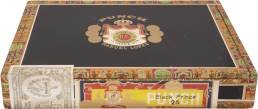
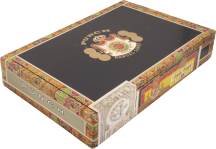
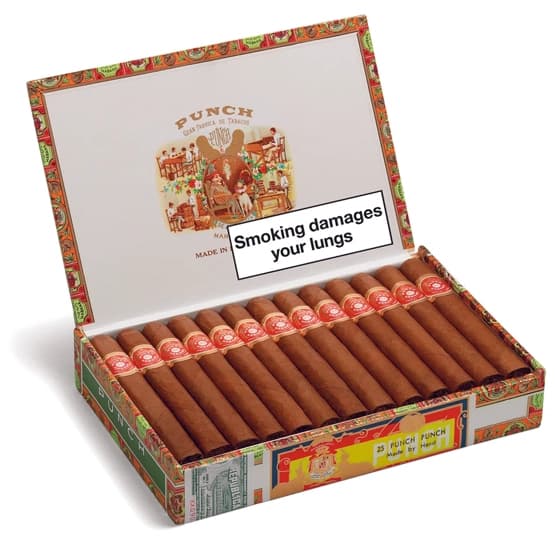
In terms of visual presentation, the Punch Black Prince adhered to the classic traditions of Cuban packaging. The cigars were dressed in the standard Band A associated with the Punch brand, a recognizable emblem for aficionados worldwide. This band, combined with the cigar's construction, signaled a product of pedigree and consistency.
The chosen packaging method was the traditional dress box, containing 25 cigars. This method of presentation was not merely functional but also aesthetic, designed to appeal to the eye of the retailer and the collector alike. The boxes themselves were often varnished, showcasing the rustic yet refined nature of the Cuban cigar industry during that era. For collectors, finding a sealed dress box of Black Prince cigars from the pre-2006 era is akin to uncovering a time capsule, preserving the construction standards of a bygone manufacturing epoch.
The Modern Legacy
Today, the Punch Black Prince exists exclusively in the realm of the secondary market and private humidors. Its discontinuation has transformed it from a regular production item into a sought-after relic. For those lucky enough to encounter well-preserved examples, the smoking experience offers more than just flavor; it provides a historical lesson. The cigar represents a time when the Coronas Gordas format was a dominant force in the market, before the trend shifted toward the massive ring gauges popular in the contemporary landscape.
The lingering production rumors—specifically the post-2002 manufacturing—only add to the mystique. It serves as a reminder that the Cuban cigar industry operates with a rhythm all its own, often driven by tradition and demand rather than strict corporate timelines. As the years pass, the Black Prince solidifies its status as a significant chapter in the Punch narrative, remembered for its heritage dimensions and the quiet way it slipped into history.