Within the vast and storied archives of Cuban tobacco, few artifacts capture the imagination quite like a discontinued vitola. The Punch Ambassador No. 1 serves as a prime example of this phenomenon, representing a distinct era in premium cigar manufacturing that has long since passed into history. While the Punch brand is synonymous with heritage and quality, this specific iteration offers a unique window into the commercial strategies of the mid-20th century, providing enthusiasts and historians with a tangible link to a transformative period in Havana's cigar industry.

A Relic of Pre-Revolutionary Cuba
The timeline of the Ambassador No. 1 places it firmly in a pivotal epoch for Cuban cigars. The vitola was brought to market sometime before 1960, positioning it as a product of the pre-revolutionary boom or the very early post-revolutionary transition. Its life cycle was relatively short-lived; by the 1970s, production had ceased entirely. This limited run has elevated the cigar from a mere consumer good to a collectible item, studied by those mapping the complex evolution of the Punch portfolio.
The decision to release this cigar as a machine-made product is telling of the era's industrial capabilities. During this period, manufacturers often utilized mechanized processes to ensure uniformity and affordability, making reputable brands accessible to a wider demographic. The Ambassador No. 1 was not a limited edition or a special release, but rather a regular production item designed for everyday consumption. It stood as a reliable workhorse in the lineup, offering the classic Punch flavor profile in a format that prioritized consistency and value.
Technical Specifications and Dimensions
The Ambassador No. 1 was defined by a classic silhouette, though its dimensions suggest a smoking experience of substantial duration. It was categorized under formats similar to the Corona Grandes, offering a lengthy profile that encouraged a leisurely pace.
- Measurements: The cigar measured 142 mm (approximately 5⅝ inches) in length with a standard ring gauge of 42.
- Weight: Official documentation lists the weight at 8.51 grams.
- Construction: Unlike the hand-rolled premiums that dominate the modern market, this vitola utilized machine-made construction techniques.
- Banding: It featured the standard "Band A" design, ensuring visual cohesion with other cigars in the Punch family.
- Factory Name: The specific factory name for this vitola remains unrecorded in standard catalogs.
Construction and Packaging Aesthetics
The manufacturing method employed for the Ambassador No. 1 was a hallmark of efficiency. By relying on machine-made construction, the producers guaranteed that every cigar leaving the factory adhered to a strict standard of draw and burn. This method removed the variability often found in hand-rolled cigars, providing a reliable smoke for the everyday aficionado. Despite the mechanized process, the cigar retained the essential character expected of the Punch marque.
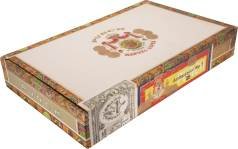
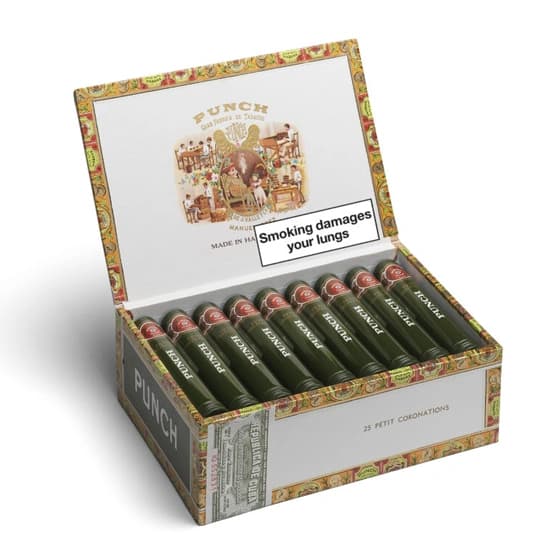
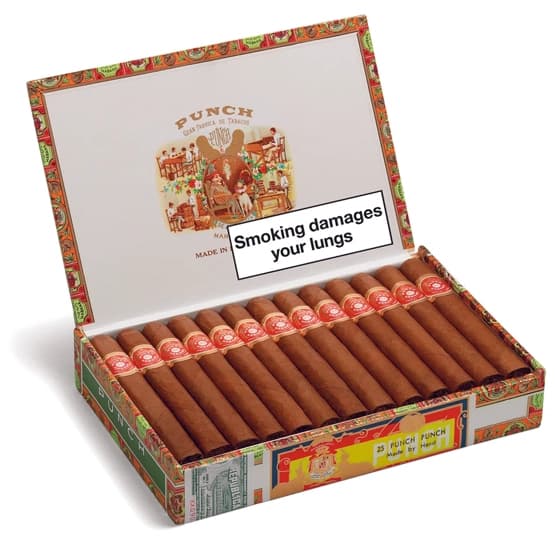
Presentation played a significant role in the cigar's appeal. The Ambassador No. 1 was housed in dress boxes containing 25 units. Crucially, these boxes utilized cedar wood to cradle the cigars. This choice of packaging material was not merely aesthetic; the cedar played a functional role in regulating humidity and imparting a subtle woody nuance to the tobacco over time. This attention to storage detail suggests that while the cigar was an accessible, regular production item, it was treated with a level of respect regarding its aging potential.
The Format and Smoking Ritual
Examining the physical dimensions of the Ambassador No. 1 reveals a format designed for evolution. The combination of a 42 ring gauge and a length exceeding five inches creates a cool smoke, allowing the burning foot to travel down the barrel over an extended period. This geometry ensures that the blend's nuances have time to develop, shifting in flavor profile from the first third to the final inch. It was a shape that demanded patience, offering a contemplative experience that mirrored the slower pace of life during the mid-20th century. Today, surviving examples serve as a benchmark for how machine-made Cubans of that era have matured, making them a fascinating subject for vertical tastings and historical research.