Within the pantheon of Cuban tobacco, few names command as much instant recognition as Montecristo. Yet, beyond the famous No. 2 torpedo and the ubiquitous No. 4, lies a shadowy figure from the brand's past: the Montecristo No. 6. This specific cigar offers a window into a different epoch of manufacturing, representing a vitola that has largely vanished from modern shelves. For the serious aficionado or the vintage hunter, finding one of these slender relics is akin to discovering a rare artifact, a smoke that tells the story of Cuban craftsmanship from decades past.

The Unique Seoane Vitola
What sets the No. 6 apart from its surviving siblings is its specific dimensions, known in the factory by the distinct name of "Seoane." This format is a study in elegance and precision. Unlike the thick robustos and gordos that dominate the contemporary market, the Seoane is slender and refined, measuring exactly 126 millimeters (or roughly five inches) in length. Its ring gauge sits at a svelte 33, a measurement that demands considerable skill from the roller to ensure a perfect draw.
This thin profile was once a staple of traditional cigar smoking, offering a different ratio of wrapper leaf to filler tobacco. With an official weight of just 5.01 grams, the construction had to be flawless; there was no room to hide imperfections inside such a narrow cylinder. The result was always intended to be a refined, focused flavor profile where the wrapper leaf plays a starring role. Every single unit was handmade, a testament to the torcedor's ability to manage a delicate format without damaging the precious leaves within.
A Production History Cut Short
The timeline of the Montecristo No. 6 is surprisingly brief when viewed against the brand's century-spanning legacy. It entered the market in the year 1980, a time when the global cigar landscape was markedly different from today. For eighteen years, this format remained a fixture in the regular production lineup, available to smokers who appreciated its particular characteristics.
However, the story of the No. 6 came to an abrupt end in 1998. It was at this point that Habanos S.A. made the decision to discontinue the vitola, removing it from standard circulation. The reasons for such discontinuations often vary, ranging from shifts in consumer demand toward larger ring gauges to the complexities of maintaining such a delicate roll in mass production. Consequently, the production window for these cigars is fixed firmly in the past, creating a finite supply that can never be replenished.
Presentation and Packaging Variations
During its nearly two decades of availability, the No. 6 was offered to the public in two primary forms of presentation. Collectors will often encounter references to distinct box styles that are key to authenticating a find:
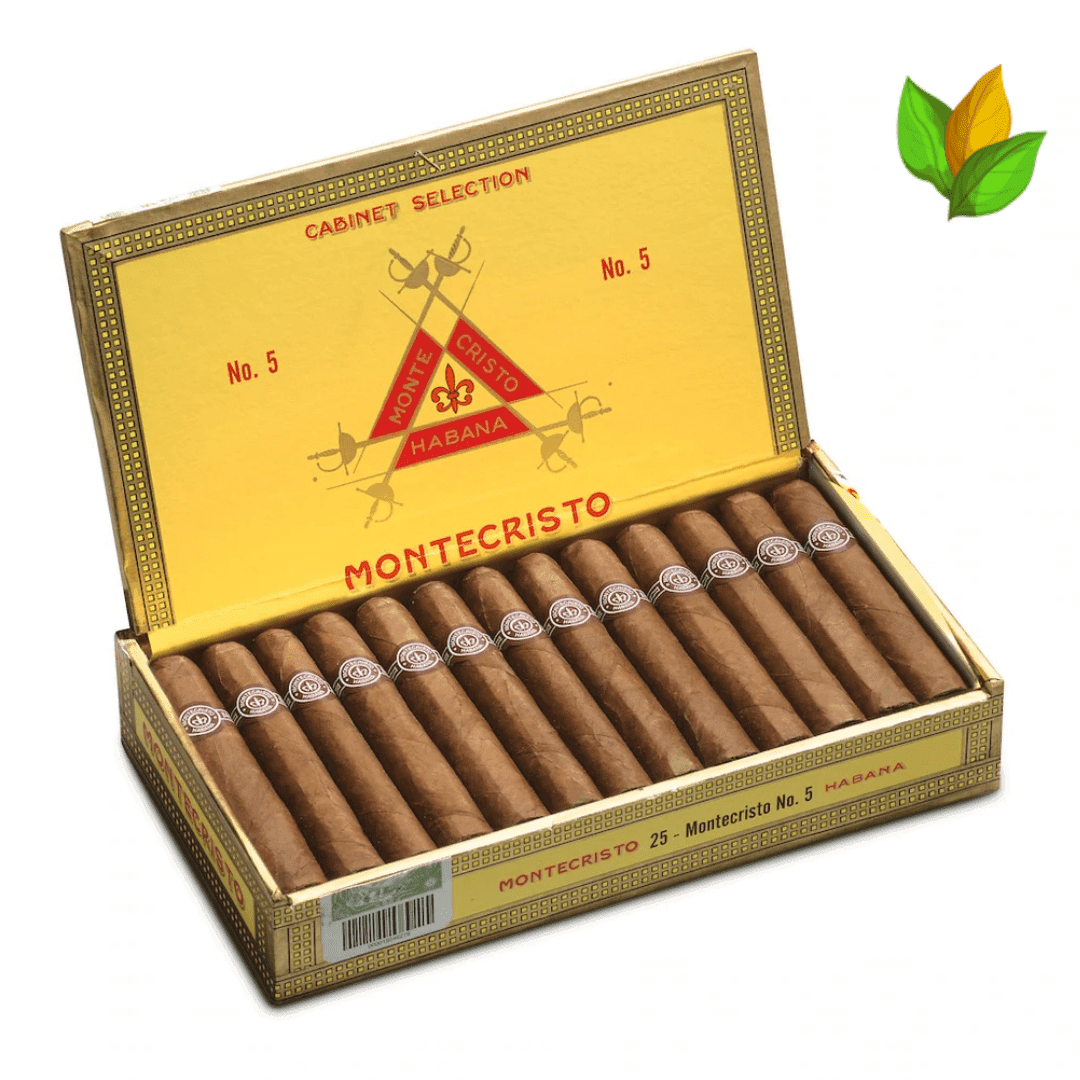
- Semi Boîte Nature: This refers to the classic, semi-plain wooden boxes designed for aging and storage. These boxes, holding 25 cigars, allowed the wood to breathe, making them a favorite for long-term cellaring.
- Dress Boxes: For those seeking a more visually striking presentation, the No. 6 was also sold in dress boxes of 25. These were typically more ornate, covered in the brand’s signature lithography, making them ideal for display or gifting.
Both packaging styles featured the standard Montecristo band A, the iconic yellow and red logo that has become synonymous with premium Cuban tobacco. Identifying the correct box type and verifying the factory codes are essential steps for any collector looking to acquire a box from this era.
The Modern Collector's Challenge
Today, the Montecristo No. 6 exists in a strange limbo: it is not quite old enough to be an antique, yet it is too discontinued to be found in retail humadors. This status has elevated the cigar to a sought-after item on the secondary market. Because production ceased over two decades ago, the available inventory has been steadily dwindling, consumed by smokers or lost to the ravages of time and poor storage conditions.
For a collector, locating a well-preserved box—or even a few individual sticks—is a significant achievement. The value lies not just in the smoke itself, but in the rarity. A cigar from the 1980s or early 1990s offers a flavor profile that modern production cannot easily replicate, having benefited from decades of rest. However, buyers must be cautious; the narrow ring gauge of the Seoane vitola makes these cigars particularly susceptible to drying out. Ensuring provenance and proper storage history is paramount. Ultimately, the Montecristo No. 6 remains a fascinating footnote in cigar history, a slender reminder of a bygone era that continues to intrigue those who seek it out.