Within the rarefied air of premium tobacco collecting, few discoveries generate as much excitement as a regional release from a bygone era. The Partagás Fox Selección No.9 serves as a prime example of this niche history, representing a bespoke creation born from the partnership between Havana’s industrious Partagás factory and the esteemed London-based merchant, J. J. Fox. As an entry in the retailer's exclusive portfolio, this cigar offers a tangible connection to the golden age of Cuban cigar production, specifically tailored for the discerning British palate.

Historical Origins and Timeline
The origins of the Selección No.9 trace back to a vibrant period in Cuban history, launching prior to the transformative year of 1960. This places the cigar firmly within the "pre-revolution" category, a designation that immediately elevates its status among purists. During this epoch, prominent tobacconists like J. J. Fox possessed the influence to commission special runs directly from top factories, ensuring the final product met the exacting standards of their sophisticated clientele.
While the cigar enjoyed a respectable lifespan, its journey eventually concluded. By the 1980s, production ceased, rendering the Selección No.9 a finite relic of the past. Unlike modern mass-market releases, this cigar was produced in relatively modest quantities. Consequently, any surviving boxes or individual sticks have transitioned from mere consumer goods to highly sought-after artifacts, treasured by historians and collectors for their scarcity and provenance.
Technical Specifications and Vitola
The physical attributes of the Partagás Fox Selección No.9 define it as a classic example of elegant cigar design. Based on examinations of surviving vintage stock, the dimensions reveal a slender profile that prioritizes finesse over brute strength. The technical makeup can be summarized as follows:
- Size: 110 mm (approximately 4 3/8 inches) in length.
- Ring Gauge: 42, offering a traditional draw and burn rate.
- Weight: Estimated at 7.44 grams per unit.
- Factory Name: Currently unverified in official archives.
It is important for enthusiasts to recognize that these measurements are derived from physical analysis rather than factory blueprints, as documentation for niche releases from this era is often incomplete. The size suggests a smoking experience that is neither too brief nor overly demanding, fitting the "caballeros" style often favored in British smoking rooms.
Construction and Visual Identity
True to the artisanal methods prevalent before the widespread industrialization of the industry, every unit of the Fox Selección No.9 was rolled by hand. This total manual construction ensures that each surviving specimen is a unique expression of the torcedor's skill. However, the most striking visual aspect of this release is arguably what it lacks: a cigar band.
In an era where branding is king, the absence of a band on the Selección No.9 speaks volumes about the confidence of the manufacturer and the merchant. The philosophy was simple yet bold—the quality of the tobacco should speak for itself. Without a paper ring to distract the consumer, the focus remains entirely on the construction and the wrapper leaf. This "bandless" presentation is a hallmark of certain exclusive merchant commissions, conveying a sense of understated luxury and old-world tradition.
Packaging and Modern Collectibility
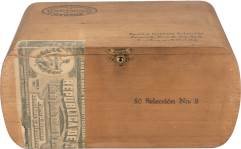
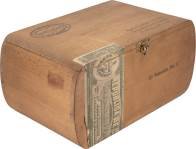
The presentation of the Selección No.9 adhered to the premium standards of its time. The cigars were housed in semi boîte nature boxes, typically containing 50 units. This style of packaging, characterized by its natural wood finish, was designed not just for storage but to facilitate the aging process, allowing the cigars to breathe and mature gracefully over decades.
Today, the Partagás Fox Selección No.9 is considered a "grail" item for serious collectors. Its status as a discontinued J. J. Fox exclusive, combined with its pre-1960 lineage, makes it a fascinating subject of study. Finding a box today offers a rare glimpse into the bespoke tobacco landscape of the mid-20th century, preserving the legacy of a unique collaboration between a legendary Havana factory and one of Britain's most distinguished tobacconists.