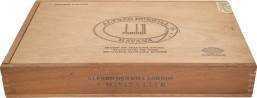
In the shadowed corners of cigar connoisseurship, where smoke rings intermingle with history, there exists a category of tobaccos that are spoken of in reverent whispers. These are the discontinued giants, the blends that once graced humidors but have long since ceased production. Among the most elusive of these is the Dunhill Havana Club, a Cuban cigar that occupied a unique space in the pantheon of premium smokes during the 1980s. While the Dunhill name is often associated with luxury accessories and menswear, its foray into Cuban tobacco produced some of the most elegant cigars of the era, with the Havana Club standing as a prime example of a format that has largely vanished from the modern landscape.

The Grandeur of the Gran Corona
The very soul of the Dunhill Havana Club lies in its specific dimensions, a format known technically as the "Gran Corona." In an age where thick, short robustos have come to dominate the market, this vitola serves as a reminder of a different aesthetic philosophy—one that prioritized length, elegance, and a cooler smoke over raw power and girth. The shape is a testament to the traditional Cuban understanding of blending, where a long filler allows for a gradual progression of flavor nuances.
Measuring an impressive 235 millimeters (approximately 9¼ inches) with a ring gauge of 47, this was never a cigar for the hurried smoker. It demanded time and patience, offering an extended duration of flavor that could easily surpass the two-hour mark. The construction was strictly handmade, a necessary approach for a format of this length, requiring masterful rolling skills to ensure an even draw from start to finish. At an official weight of 18.79 grams, the density was carefully calibrated to provide a consistent burn, a technical achievement that underscores the craftsmanship of the era.
- Factory Name: Gran Corona
- Dimensions: 235 mm (Length) x 47 (Ring Gauge)
- Weight: 18.79 grams
- Origin: Cuba (Handmade)
A Brief Decade of Distinction
The timeline of the Dunhill Havana Club is surprisingly concise, spanning less than a single decade. It made its debut in 1982, a period that saw significant interest in premium Cuban exports. For nearly ten years, it remained a staple for those who appreciated the Dunhill approach to tobacco—sophisticated, measured, and undeniably premium. However, the cigar world is often subject to shifting commercial tides and corporate strategy. By 1991, production came to a halt, and the Havana Club was officially discontinued.
This discontinuation has transformed the cigar from a retail product into a historical artifact. Unlike regular production lines that evolve over decades, the Havana Club remains frozen in time as a product of the late Cold War era. This specific production window means that any surviving examples are not merely old cigars; they are relics of a specific agricultural and industrial moment in Cuban history, offering a flavor profile that is impossible to replicate today.
Presentation Worthy of the Name
True to the Dunhill heritage of luxury, the Havana Club was presented with an attention to detail that elevated it above standard offerings. The cigar bore the "Standard Band A," the recognizable insignia used across the Dunhill portfolio, signaling its pedigree. However, it was the packaging that truly set it apart as a luxury item.
Collectors will note the distinctive housing: slide-lid boxes containing five cigars. But the presentation went a step further. Each individual cigar was encased in its own slide-lid box, creating a nested experience of unboxing. This method of packaging was not merely protective; it was a statement of exclusivity. It communicated to the consumer that these were not mass-produced commodities, but rather individual treasures deserving of isolation and care. This "cigar within a box" approach is rarely seen today and remains a highlight of the brand's design philosophy during that era.
The Significance of a Lost Vitola
Why does the Dunhill Havana Club continue to hold such fascination for historians and collectors? The answer lies partly in the vitola itself. The Gran Corona format has become an endangered species in the 21st century. Modern smokers have largely shifted preferences toward thicker ring gauges, causing many factories to abandon the slender, long formats. The Havana Club, therefore, represents a bygone era of elegance.
Because it is a discontinued regular production item, finding an authentic piece today requires navigating a market fraught with counterfeits and condition issues. Yet, for those who manage to acquire one, the experience offers a window into the 1980s Cuban cigar industry—a time when the collaboration between the British luxury house and Cuban manufacturers produced some of the most refined smoking experiences on record. The Havana Club remains a lost classic, a symbol of an era when length and lineage were the true measures of a cigar's stature.