
Description
Why the Short Churchill Deserves More Attention
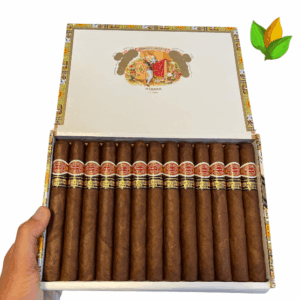
Look, I’ve been smoking Romeo y Julietas since my first trip to Havana back in ’96 – actually, might have been ’97, doesn’t matter – and here’s the thing: the Short Churchill is one of those cigars that gets overlooked because everyone’s chasing the big names in the lineup. But this robusto? It’s the one I keep coming back to when I want that classic Romeo elegance without committing to a two-hour smoke session.
What makes the Short Churchill special isn’t just the tobacco – though we’ll get into that cedar-forward profile that Romeo does better than almost anyone. It’s that this vitola captures everything the brand is known for – that refined, aristocratic character – in a format that actually fits into modern life. You know what I’m talking about, right? Not all of us have three hours to dedicate to a Churchill on a Tuesday evening.
In this deep dive, I’m going to walk you through exactly what makes this cigar tick. The flavor journey from first light to final puff, how it stacks up against other robusto-sized Habanos, and why I think – and yeah, I’m probably biased here – this deserves a permanent spot in your humidor rotation. We’re talking construction, aging potential, pairing suggestions, the whole nine yards.
The Romeo Legacy in Robusto Form
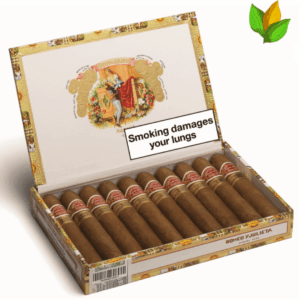
Romeo y Julieta has been around since 1875, which means they’ve had about 150 years to figure out what they’re doing. And Thing is, they’re one of those brands that never really lost their way, even through all the changes that happened after the Cuban Revolution. The Short Churchill – they call it a robusto in the factory, but it’s officially listed as Short Churchill in the Habanos catalogue – was introduced to give aficionados that classic Romeo profile in a more accessible format.
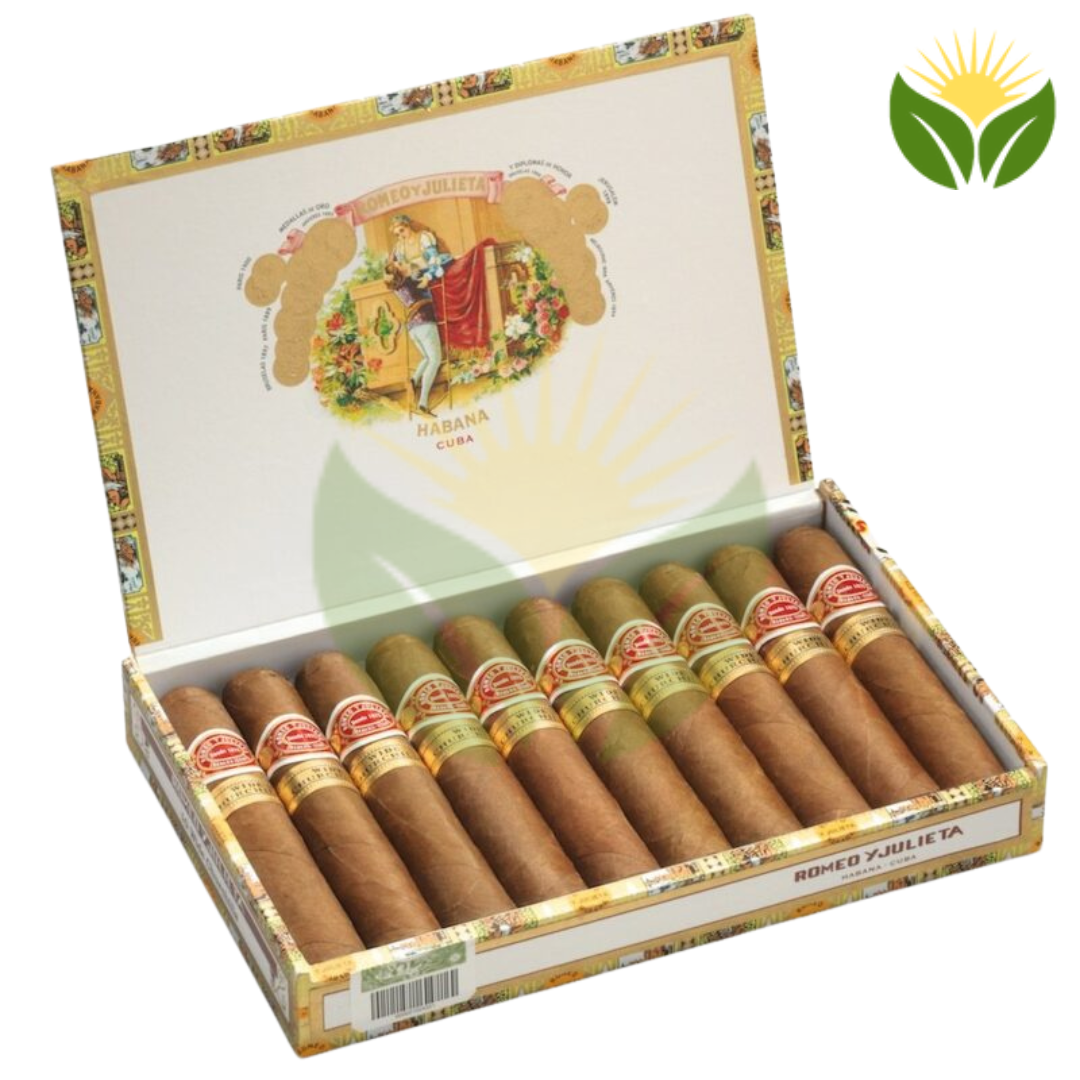
This isn’t some limited edition release or a special regional. It’s part of the core lineup, which I actually love. No gimmicks, no fancy bands, just solid tobacco work from the Vuelta Abajo region. The blend uses leaves from the San Juan y Martinez and San Luis zones, which are basically the Burgundy and Bordeaux of Cuban tobacco. I’m talking about terroir that produces some of the most elegant wrapper leaves on the planet.
Who’s this cigar for? Here’s my take: if you’re new to Cubans and want to understand what “classic Cuban profile” means without getting knocked on your ass by something full-bodied, this is your entry point. But – and this is important – it’s also complex enough that experienced smokers won’t get bored. I’ve shared these with guys who smoke nothing but Cohiba Behikes, and they always nod appreciatively. That’s the sweet spot Romeo occupies: sophisticated but not intimidating.
| Specification | Details |
|---|---|
| Vitola | Robusto (Short Churchill) |
| Length | 4.9 inches / 124 mm |
| Ring Gauge | 50 |
| Wrapper | Cuban (Vuelta Abajo) |
| Binder | Cuban |
| Filler | Cuban Long Filler Blend |
| Strength | Mild to Medium |
| Smoking Time | 45-60 minutes |
The Smoking Experience: A Journey in Three Acts
Okay, so let me walk you through what actually happens when you light one of these up. And I know this sounds dramatic, but the cold draw tells you everything you need to know about whether you’ve got a well-constructed cigar in your hand.
With the Short Churchill, that cold draw gives you this immediate cedar note – I mean right there, before you even toast the foot. There’s a sweetness underneath it, almost like raw honey, and just a whisper of that classic Cuban hay aroma. The draw resistance is usually spot-on, maybe a 7 out of 10 on the tightness scale. I’ve smoked probably two dozen of these over the years, and I think I’ve only had one that was plugged. Their quality control is pretty damn solid.
The first third hits differently depending on how much rest these have had. Fresh off the truck from Cuba? You’re going to get more pepper and a sharper cedar bite. But give them six months to a year in your humidor – which, real talk, you should do with any Habanos – and that’s when the magic happens. The initial flavors smooth out into this creamy, almost buttery profile with cedar taking the lead role. There’s cocoa in there too, not like dark chocolate, more like cocoa powder with a touch of sweetness. The smoke output is generous without being overwhelming, and the burn line usually stays pretty even if you’re not smoking too fast.
Here’s where it gets interesting – the second third. This is where you start to taste why Romeo y Julieta charges what they charge for their tobacco. The complexity opens up. That cedar backbone is still there, but now you’re getting these waves of coffee – not espresso, more like a café con leche – mixed with what I can only describe as baking spices. Cinnamon? Maybe. Nutmeg? Possibly. It’s subtle enough that you’re not sure, but it’s definitely happening. The strength picks up just a notch here, moving from mild into that medium territory, but it never gets aggressive. Some pepper joins the party on the retrohale, which I highly recommend trying if your sinuses can handle it.
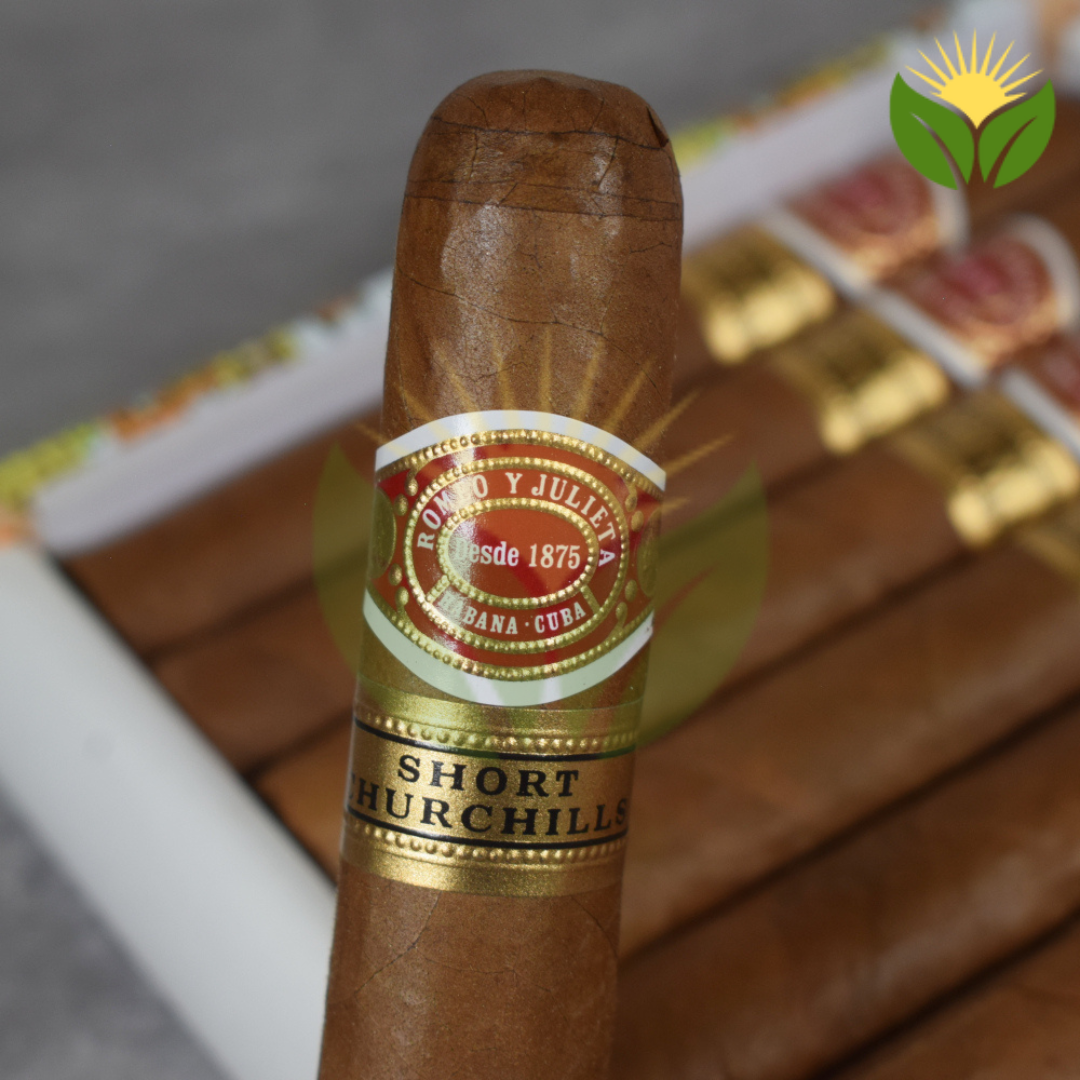
And the wrapper – oh man, the wrapper – deserves its own mention. That Vuelta Abajo leaf is oily in the best way possible, with this reddish-brown color that catches the light. It holds together beautifully even as you get into the final third, which is when some cigars start to unravel, literally and figuratively.
Final third is where opinions split. I’ll be honest with you: some people find this section gets a bit sharp, especially if they’ve been smoking too fast and the cigar’s running hot. But if you’ve been patient – and patience is everything with Habanos – this is when you get the fullest expression of the blend. The cocoa deepens, the cedar becomes almost aromatic, like sandalwood, and there’s this earthy undertone that reminds me of walking through tobacco fields after rain. The ash, by the way, holds for a solid inch and a half, sometimes two inches if you’re gentle with it. Light grey, firm structure. That tells you the filler is well-bunched and the tobacco’s been properly fermented.
Construction-wise? I’d give these an 8.5 out of 10 on average. The draw is usually perfect, the burn is generally even with maybe one or two touch-ups needed max, and the wrapper doesn’t crack or split unless you’re storing them wrong. I genuinely don’t understand why more people don’t talk about Romeo’s construction quality. It’s right up there with the bigger names.
How Does It Stack Up Against the Competition?
Look, comparing Cuban cigars is always going to start arguments at the lounge, but hear me out. The Short Churchill occupies this interesting middle ground in the robusto category.
| Cigar | Strength | Smoking Time | Best For |
|---|---|---|---|
| Romeo y Julieta Short Churchill | Mild-Medium | 45-60 min | Morning to afternoon smoke, elegant flavor without intensity |
| Partagás Serie D No. 4 | Medium-Full | 50-70 min | Experienced smokers wanting robust earth and coffee notes |
| Hoyo de Monterrey Epicure No. 2 | Mild-Medium | 50-65 min | Similar elegance with more grassy, floral characteristics |
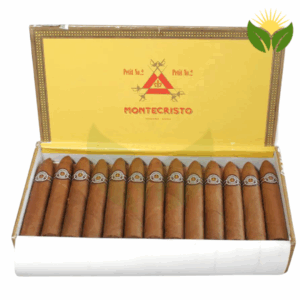
| Montecristo No. 4 | Medium | 40-55 min | Classic Cuban profile, slightly more straightforward flavor |
Thing is, if you put a Short Churchill next to a Partagás D4 – which is probably the most famous Cuban robusto – they’re completely different animals. The Partagás is bold, earthy, in-your-face with coffee and leather. The Romeo is refined, cedar-forward, more about nuance than power. It’s not better or worse, it’s about what you’re in the mood for. Some days I want the Partagás to wake me up. Other days, especially if I’m pairing with a lighter spirit or it’s earlier in the day, the Romeo is the obvious choice.
Against the Hoyo Epicure No. 2? Now that’s a closer comparison. Both are in that mild-to-medium range, both emphasize elegance over strength. But here’s my take after smoking both extensively: the Hoyo leans more floral and grassy – it’s got that distinctive Hoyo character that some people love and others find too delicate. The Romeo has more body to it, more of that cedar structure that gives it backbone. If the Hoyo is like a white wine, the Romeo is more like a light red. Still elegant, but with more substance.
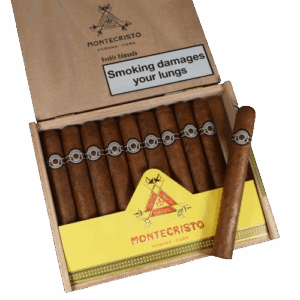
And the Montecristo No. 4? Everyone’s smoked a Monte 4. It’s like the gateway drug to Cuban cigars. The Short Churchill is similar in size but – and I know some aficionados will disagree here – I find it more interesting. The Monte 4 is reliable, consistent, but it’s also a bit one-dimensional. The Romeo has more going on, more layers to discover, especially if you’ve aged them properly.
What to Drink With It (Because Pairing Matters)
I’m going to be blunt: pairing matters more than most people want to admit. You can take a great cigar and completely waste it by drinking the wrong thing alongside it.
With the Short Churchill’s cedar-and-cocoa profile, you want something that complements without overpowering. My go-to is a good Spanish brandy – something like Carlos I or Lepanto. The grape sweetness picks up that honey note from the tobacco, and the oak aging echoes the cedar beautifully. Not gonna lie, this is my default pairing about 70% of the time.
Coffee works too, but it has to be the right coffee. Forget espresso – that’ll blow right through the cigar’s subtlety. I’m talking about a café con leche, maybe with a touch of sugar, or a good flat white if you’re at a coffee shop. The creaminess matches that buttery middle section perfectly. I remember sitting at a café in Little Havana, Miami, with one of these and a cortadito, and thinking “Yeah, this is exactly right.”
For spirits, aged rum is the obvious Cuban pairing, and it works. Something like Ron Santiago de Cuba 11-year or Havana Club 7. But here’s a less obvious suggestion: a light scotch. I’m talking Glenlivet 12 or Balvenie DoubleWood. That malt sweetness and the gentle peat smoke – if there is any – creates this interesting interplay with the tobacco that I really enjoy. My buddy Carlos from the cigar club thinks I’m crazy for this pairing, but try it and tell me I’m wrong.
Occasion-wise? This is your daytime cigar, your golf course smoke, your “sitting on the patio with the morning paper” companion. It’s not aggressive enough for after a heavy dinner – that’s when you want something fuller-bodied. But mid-morning through late afternoon? Perfect window. And honestly, it’s great for situations where you want to enjoy a quality cigar but you’re also doing something else – reading, conversation, whatever. It doesn’t demand 100% of your attention the way some cigars do.
Aging Potential and Storage Tips
Between you and me, this is where a lot of people mess up with Cubans. They buy them, smoke them fresh, and wonder why everyone raves about Habanos. Wait, let me back up.
The Short Churchill benefits enormously from rest. Fresh boxes – and by fresh I mean straight from the distributor or La Casa del Habano – can be a bit tight, a bit sharp, and they don’t show their full potential. Give them six months minimum at 65-67% humidity and around 65-68°F. That’s when the flavors marry and that harshness mellows into smoothness.
I’ve got one box from 2019 that I’m still working through, and honestly? They’re smoking better now than they did two years ago. The cedar has this almost aromatic quality now, the cocoa is richer, and there’s this subtle nuttiness that wasn’t there before. Will they age for a decade like some Cohibas or vintage Montes? Probably not – Romeo’s blend is meant to be elegant rather than powerful, and those lighter cigars typically peak around the 5-7 year mark in my experience. But I haven’t tried one with more than five years on it, so grain of salt.
Storage is critical. Too humid and you’ll get construction issues, maybe even mold. Too dry and you’ll lose all those essential oils that carry the flavor. I keep mine in a dedicated Cuban section of my humidor with Boveda 65% packs. Some people swear by 62%, saying it enhances the flavor, but I find that’s too dry for my taste. The wrapper starts to feel papery.
Common Questions About the Short Churchill
Is the Romeo y Julieta Short Churchill too mild for experienced smokers?
Not at all – and this is a misconception I hear constantly at the lounge. Mild doesn’t mean boring or one-dimensional. The Short Churchill has complexity and nuance that experienced palates will appreciate. I know guys who’ve been smoking for 30 years who keep these in rotation specifically because not every smoke needs to be a full-bodied powerhouse. Think of it like wine: sometimes you want a bold Cabernet, other times a refined Pinot Noir is exactly what the moment calls for. The Short Churchill is the latter. Plus, with proper aging, it develops even more complexity while maintaining that elegant character.
How long should I age Romeo y Julieta Short Churchills before smoking?
Here’s my honest take: minimum six months of rest after you receive them, but a year is better. Fresh Habanos can be tight and sharp, especially if they’ve been traveling through shipping channels. When I get a box, I’ll smoke one right away just to see where they’re at, but then the rest go into the humidor for at least six months at 65-67% humidity. I’ve smoked these with three to five years of age, and they just get smoother and more refined. The cedar becomes almost aromatic, the cocoa deepens, and you get this subtle nuttiness that wasn’t there initially. They’ll probably peak around 5-7 years, but I haven’t tested them beyond that.
What’s the difference between this and the Romeo y Julieta Churchill?
The main difference is size and smoking time – the Churchill is 7 inches versus this at 4.9 inches. That’s a two-hour commitment versus 45-60 minutes. Flavor-wise, they share the same DNA – that classic Romeo cedar-forward elegance – but the Short Churchill is more concentrated and gets to the point faster. The regular Churchill has more time to develop and evolve, showing more subtle transitions. If you’ve got time and want the full Romeo experience, go for the Churchill. If you want that same character but have less than an hour, the Short Churchill delivers. I actually prefer the Short Churchill for everyday smoking because let’s be real, I don’t always have two hours to dedicate to a cigar.
Can beginners smoke the Short Churchill as their first Cuban?
Absolutely, and I’d actually recommend it. The mild-to-medium strength means you won’t get nicotine sick if you’re not used to premium cigars, but you’ll still get that authentic Cuban flavor profile that makes Habanos special. The construction is reliable, so you’re not likely to have issues with draw or burn that can frustrate beginners. And the flavor is refined enough that it’ll teach you what to look for in Cuban tobacco – that cedar character, the creamy texture, the subtle complexity. I’ve introduced probably a dozen people to Cubans with this exact cigar, and they’ve all appreciated it. Just make sure to smoke it slowly and don’t inhale – that’s the mistake most beginners make.
What humidity level is best for storing these cigars?
I keep mine at 65% humidity with Boveda packs, and that’s the sweet spot in my opinion. Some people go as low as 62% claiming it enhances flavor, but I find that makes the wrapper feel papery and you lose some of those essential oils. Anything above 70% and you’re asking for construction issues – the draw gets too tight, burn problems crop up, and you risk mold if your temperature isn’t perfectly controlled. Cuban cigars generally prefer slightly lower humidity than New World cigars. Temperature should be around 65-68°F. I learned this the hard way after storing some at 70% humidity and having several cigars smoke poorly. Since dropping to 65%, the performance has been consistently excellent.
How does the Short Churchill compare to the Romeo y Julieta Wide Churchills?
The Wide Churchill is a completely different beast – it’s actually a limited edition format that was released a few years back with a 55 ring gauge. Thicker cigars smoke cooler and often bring out different flavors from the blend. The Wide Churchill emphasizes the creamy, smooth aspects of Romeo’s tobacco more, while the Short Churchill with its 50 ring gauge gives you a bit more intensity and that cedar comes through stronger. Real talk: I prefer the standard Short Churchill because I find the Wide Churchill almost too mellow, to the point where it lacks character. But if you’re sensitive to any harshness or want the absolute smoothest smoke possible, the Wide Churchill might be your pick. Just know they’re not in regular production, so availability is hit or miss.
Do Romeo y Julieta Short Churchills need to be cut or punched?
I’m a straight cut guy myself – I use a good guillotine cutter and take off about 1/16th of an inch, just enough to open up the cap cleanly. That gives you the best draw and lets you taste the full flavor profile. Some people like V-cuts with Cuban cigars, and that works too, though I find it sometimes concentrates the smoke too much and you lose some of the subtlety. I wouldn’t punch these – the punch creates too small of an opening for a 50 ring gauge cigar, and you won’t get enough smoke volume. Whatever you do, make sure your cutter is sharp. A dull cutter will tear the wrapper, and there’s nothing more frustrating than damaging a good cigar before you even light it. I replace my cutters every couple of years just to make sure they’re performing properly.
My Final Thoughts on This Classic Cuban
After smoking these for years – and I mean consistently keeping them in my rotation, not just trying one or two – the Romeo y Julieta Short Churchill represents what I love most about Cuban cigars. It’s not trying to be the strongest or the most complex or the most exclusive. It just does everything well. That cedar-forward profile with creamy cocoa undertones, the reliable construction, the way it fits perfectly into an hour-long window of relaxation – it’s a cigar that knows exactly what it is.
Is it going to blow your mind if you’re used to smoking full-bodied Nicaraguan powerhouses? Probably not. But that’s not what it’s designed to do. This is about refinement, about appreciating subtle complexity, about understanding why Cuban tobacco earned its reputation in the first place. With some age on them – and please, give them time to rest – these develop into something genuinely special.
If you’re building a well-rounded Cuban collection, the Short Churchill deserves a spot. It’s your daytime smoke, your “introducing someone to Habanos” cigar, your “I want quality but only have an hour” option. And at the end of the day, isn’t that what we really need? Not every cigar has to be a special occasion smoke. Sometimes you just want something reliably excellent that you can enjoy without overthinking it.
Stock up on a few boxes if you can. Let them rest. Then revisit them every six months or so and taste how they evolve. That’s the journey with Cuban cigars, and the Short Churchill is an excellent companion for that journey. Now if you’ll excuse me, I’ve got one in my humidor that’s been calling my name all morning.