
Description
I was out in the garage last Tuesday, hunched over a 1974 Honda CB750 that’s been giving me nothing but grief. The smell of gasoline and old shop rags is usually my sanctuary, but that afternoon, I was just frustrated. My hands were stained with oil, and I was about two minutes away from throwing a wrench across the room. That’s when my old man walked in. He didn’t say much—he never does when I’m mid-fix—but he set a small, slide-lid cedar box on my workbench, right next to a pile of rusted bolts. “Found this in the back of the cabinet,” he said. “Thought you might need a distraction.”
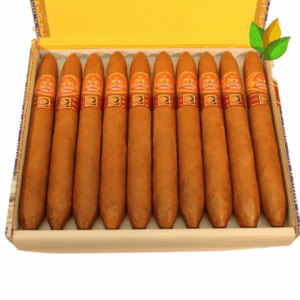
I wiped my hands on a towel and opened the box. Inside was a beast of a smoke, a double-tapered giant that looked like it belonged in a museum rather than my cluttered workspace. I was curious, to say the least. I’ve seen my share of cigars, but the sheer scale of this thing, with its pointed head and bulging foot, felt like a challenge. I set the wrench down, pulled up a stool, and decided the bike could wait. I needed to see what this thing was all about.
That smoke? The Partagás Salomones. It’s not something you just “have” on a whim. It’s an event. I spent the next two-plus hours figuring out exactly why this stick has the reputation it does among the guys who know their way around a La Casa del Habano shelf.
The Specs
| Ring Gauge | 57 |
| Length | 184 mm (approx. 7.25 inches) |
| Vitola | Salomon (Double Perfecto) |
| Origin | Havana, Cuba |
| Wrapper/Binder/Filler | Vuelta Abajo, Cuba (Full Strength) |
Construction: A Handful of History
The first thing I noticed when I picked this up was the weight. It’s got some heft to it. The Salomon shape—or double perfecto, if you want to be formal—is a bit of a lost art. It tapers at both ends, which means the guy who rolled this (the torcedor) had to be at the top of his game. You don’t just slap these together. Holding it in my garage, surrounded by half-finished projects, I felt a weird respect for the craftsmanship. It’s smooth, with a wrapper that looks like burnished leather, and just a few veins that let you know it’s a natural product.
I gave it a gentle squeeze. It felt firm, no soft spots, which is a relief because with a cigar this big, a bad draw can ruin your entire afternoon. The scent off the foot was subtle—mostly just clean tobacco and a hint of something sweet, like dried hay. I used a straight cutter on the head, being careful not to take too much off. You want to preserve that taper so it fits comfortably in your mouth. The pre-light draw was a bit snug, which is expected with that tiny “nipple” at the foot, but I could tell the air was going to move once I got it firing.
The First Third: The Slow Burn
Lighting a Salomon is a bit of a ritual. You have to be patient. I used a single-flame torch to carefully toast that small tip at the bottom. Once it caught, the first few puffs were tight, but as the burn line expanded into the wider part of the bulb, the draw opened up beautifully. I gotta say, the smoke started out much lighter than I anticipated. I was expecting a punch to the gut right away, but instead, I got this smooth, young leather vibe.
There was a definite saltiness on my lips, which I find common in good Cuban leaf, mixed with a grassy, almost floral note. It wasn’t aggressive. It felt like the cigar was just introduced itself, shaking my hand before getting down to business. About an inch in, a gentle earthiness started to creep in, along with a woody sweetness that reminded me of the cedar box it came in. The smoke was thick and white, hanging in the stagnant air of the garage like a low-lying cloud. It was a solid start, very refined for something that looks so intimidating.
The Second Third: The Partagás Growl
By the time I hit the second third, the cigar had fully woken up. This is where the “Partagás” personality really started to show. If the first third was a polite conversation, the second third was a deep, gravelly monologue. The strength ramped up from a medium to a full-bodied experience. I started picking up these heavy, roasted nut flavors—think cashews that have been left in the oven a minute too long.
Then came the espresso. It wasn’t a bitter coffee, but more like a rich, dark crema. I noticed a distinct cedar note that stayed on the back of my tongue, and then, out of nowhere, a bit of spice. It wasn’t a stinging pepper, but more like cinnamon and black pepper mixed together. It felt complex. Every time I thought I had the flavor figured out, something else would pop up. The leathery notes from the beginning stayed as a base, but they got darker and more intense. I found myself leaning back against my workbench, completely forgetting about the carburetor. This thing demands your full attention; you can’t just puff on it mindlessly while doing something else.
The Final Third: The Heavy Hitter
As I got into the final stretch, the Salomones stopped playing nice. The strength really kicked in here. I could feel the nicotine, and the flavors became very concentrated. The woodiness turned dry, almost like charred oak, and that black pepper spice I mentioned earlier? It moved to the front of the line. It was a hot finish, but not in a way that felt “young” or “harsh”—it just felt powerful.
The smoke stayed creamy, which I think is the hallmark of a well-aged stick (and I suspect this one had been sitting in my dad’s cabinet for at least a couple of years). If you’re not used to full-bodied Cubans, this part might be a bit much for you. It’s got a “growl” to it. I had to slow down my puffing frequency just to keep the heat in check. It’s a long road to get to this point—I was probably two hours in by now—but the payoff is this massive, earthy, peppery crescendo that leaves no doubt about where this tobacco came from. I smoked it down until I could barely hold the nub without burning my fingers. I didn’t want to let it go.
Pairing: What to Drink?
In the garage, I was just sipping on some cold water to keep my palate clean, but if I were doing this “properly,” I’d go with something that has some backbone. A dark, aged Cuban rum would be the obvious choice—something with enough sweetness to counter that final third spice. If you’re a coffee drinker, a double espresso or a very stout café Cubano would hold up well. I wouldn’t go with anything delicate like a light beer or a white wine; the Partagás Salomones would just steamroll right over them. You need something that can stand toe-to-toe with it.
The Verdict
Is the Partagás Salomones for everyone? Honestly, no. It’s a massive commitment of time and it’s got a price tag and a rarity (being an LCDH exclusive) that makes it a “special occasion” smoke. But man, if you have the time and you can find one, it’s a hell of an experience. It’s not just a cigar; it’s a journey through the history of the Partagás factory. It’s got that old-school Cuban soul that you just don’t find in every vitola.
I walked back into the house after I finished, smelling like a campfire and feeling completely relaxed. The motorcycle was still broken, and my hands were still dirty, but my head was clear. Sometimes, a gift like that is exactly what you need to reset. It’s a solid, complex, and deeply satisfying smoke that reminds me why I love this hobby in the first place. If you see a box of ten at a La Casa del Habano, don’t think twice. Just grab them. You’ll thank me later when you’re hiding out in your own version of my garage.