
Guides
What does Habano mean? Language, origin and history
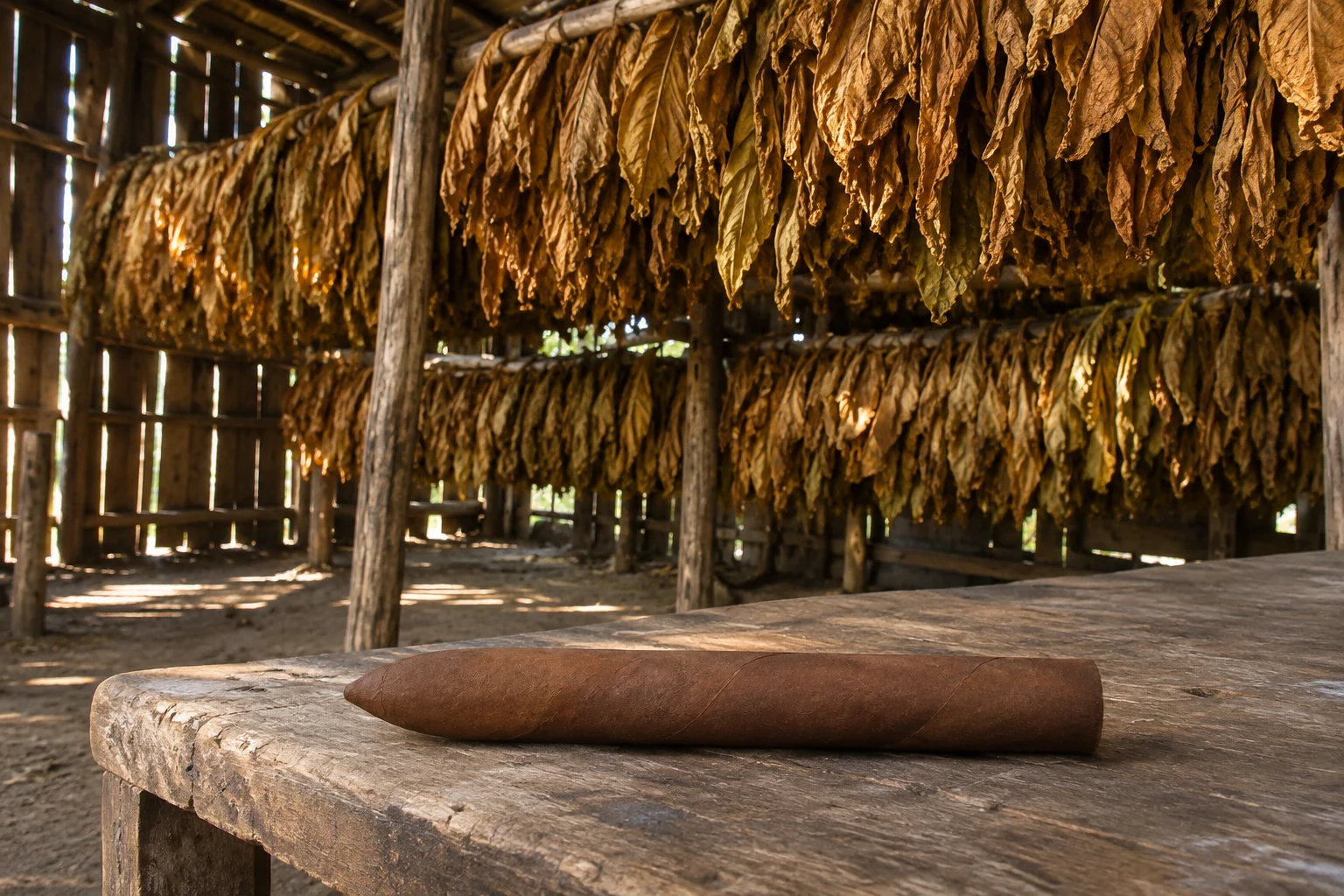
Habano has both a general Spanish meaning and a more specific meaning in Cuban tobacco terminology. It relates to Havana and, by extension, Cuba; as a noun, it can mean a cigar made in Cuba from Cuban tobacco. Habanos also names a protected denomination of origin with production requirements. A wrapper described as “Habano” does not by itself establish that denomination.
The word in ordinary Spanish
The Diccionario de la lengua española entry for habano records the geographic adjective and the noun referring to a Cuban cigar. The adjective can change form with the noun it modifies. In English tobacco writing, the masculine form is commonly retained, sometimes with a capital letter.
The dictionary also records a colour sense associated with light tobacco brown. That is a reminder that context matters. A word in a clothing description, a historical passage and a cigar document can have different functions. Its spelling alone cannot establish which meaning a particular writer intended.
What the denomination describes
In its official explanation, Habanos identifies the name as a Denominación de Origen Protegida, abbreviated D.O.P., or protected denomination of origin. The designation concerns qualifying cigars made in Cuba using tobacco from specified Cuban growing areas under established production standards. It is more specific than simply calling an object Cuban.
Habanos' introduction to the denomination describes hand production and the role of the regulatory council. These are statements about the category's requirements. They should be kept separate from the source's promotional assessments of taste or superiority, which are not necessary to explain the meaning of the term.
A geographic name is not a leaf variety
Several layers of information can appear in a tobacco description: the place where a plant grew, the type of tobacco, the place of manufacture and a designation applied to the finished cigar. These layers are related, but they are not interchangeable. A statement about one leaf does not describe the complete manufacturing history.
In broader industry usage, “Habano wrapper” can describe a tobacco type cultivated outside Cuba. La Aurora's discussion of wrapper terminology gives examples of such cultivation. In that context, the word is attached to a component. It is not a claim that the finished object qualifies for the Cuban Habanos denomination.
The historical setting
Tobacco use in Cuba predates the arrival of European expeditions. Habanos' historical introduction recounts the Spanish expedition's observation of Indigenous tobacco use in 1492. That date describes an encounter recorded by Europeans; it does not mark the invention of tobacco use or the beginning of its Indigenous history.
The modern word, the later organisation of cigar production and the present denomination belong to different historical layers. Collapsing them into one origin date would be misleading. An account can recognise a long history of tobacco cultivation and manufacture without claiming that the current regulatory category existed throughout that entire period.
What packaging dates can establish
The official account of denomination markings states that the Habanos seal has appeared on boxes since 1994. This is a specific fact about a packaging mark. It should not be expanded into an unsupported claim that every aspect of the denomination was created on that exact date.
The same account describes other marks with different histories, including manufacturing wording and factory or boxing-date stamps. These serve different purposes. A date associated with one mark should not be assigned to all the others, and a packaging description should make clear which feature and period it concerns.
Denomination, company and individual brand
“Habanos” can refer to the protected category, while “Habanos, S.A.” refers to a company. An individual cigar brand is another level of naming. A text becomes easier to understand when it distinguishes the designation, the organisation and the individual label instead of treating them as equivalent.
This distinction also helps when interpreting historical documents. A modern corporate name should not be inserted into an earlier period without evidence. Likewise, an older description of a Havana cigar does not automatically describe the same institutional framework as a current explanation of the protected denomination.
Reading the term carefully
Start with the noun the term modifies. “Habano wrapper” concerns a leaf component; a discussion of the Habanos D.O.P. concerns a defined category of finished cigars. A dictionary usage can be broader than the technical designation. Capitalisation can help signal an author's intention, but it is not documentary proof of origin.
A precise explanation therefore identifies the context and the source rather than treating the word as a complete certificate. Language explains how the term is used; historical evidence explains how usage developed; production documentation explains a particular object's origin. Keeping those questions separate preserves the meaning of Habano without adding claims the word itself cannot support.
Reader questions
Questions & answers
No questions yet. Ask the first one.