
For the discerning aficionado, a Cuban cigar serves as more than just a smoking experience; it is a tangible piece of history. Nowhere is this more evident than in the Troya brand, a name that has graced humidors for decades. While the tobacco inside remains the primary focus for smokers, the exterior band offers a silent but detailed narrative of the cigar's origins. The evolution of Troya's packaging design provides a fascinating roadmap for collectors, allowing them to pinpoint the age of a vintage stick simply by observing the artwork and texture of its band. This visual timeline is divided into distinct eras, each characterized by specific design choices that reflect the manufacturing trends of their time.
The Origins: Design A and the Delicate Vitolas
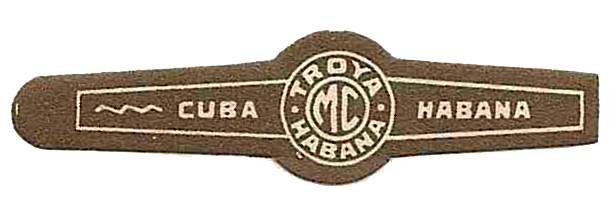
The earliest chapter in this visual history is defined by what collectors classify as Standard Band A. This specific design was tailored for a particular segment of the market—the slender ring gauge cigars that were popular in earlier decades. Unlike the robust cigars often favored today, these thinner formats required a band design that complemented their elegant proportions.
Production for this specific design spans a considerable timeframe, originating well before the 1960s and continuing until its retirement in the late 1970s. A defining characteristic of Band A, and a key identifier for those examining vintage boxes, is its texture. The printing method used during this era resulted in a smooth, flat finish. Collectors handling a Troya from this period will notice the absence of raised elements; the paper lacks the tactile relief found on later iterations, marking it clearly as a product of the mid-20th century.
The Era of Texture: Standard Band B
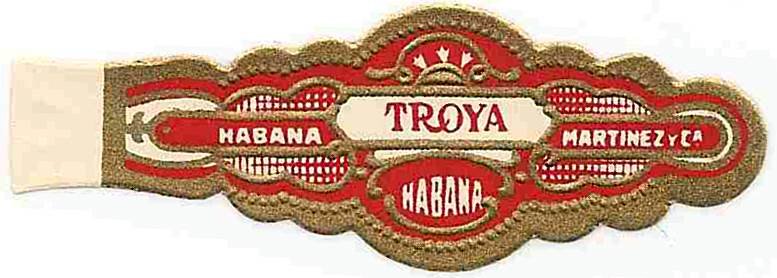
Following the initial design, the brand transitioned into what would become its most enduring visual identity. Standard Band B served as the primary face of Troya for nearly half a century. Like its predecessor, this band appeared on cigars produced prior to the 1960s, but its lifespan extended far further, remaining in active use until approximately 2005. This longevity makes it the most common band found in the secondary market today, yet it holds a secret that distinguishes the true vintage from the merely old.
The most significant innovation introduced with Band B was the inclusion of embossing. This added a third dimension to the band, providing a sophisticated texture that caught the light and added a sense of premium quality. However, collectors must be aware of a nuanced variation within this category. An early iteration of the embossed Band B existed during the pre-1960s era alongside the smooth Band A. While this "classic" version shared the textured finish of its successor, it was eventually phased out as the brand consolidated its image. Distinguishing between this early embossed variation and the later standard production is essential for accurate dating.
The Modern Transformation: Standard Band C
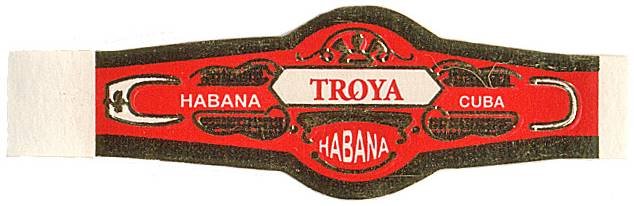
As the industry moved into the new millennium, Troya once again updated its visual presentation. Around the year 2005, the brand phased out the long-running Band B and introduced Standard Band C. This current design represents the modern era of production. While the artwork evolved to suit contemporary tastes, the brand retained the embossed styling introduced by its predecessor. This decision ensures that modern Troya cigars maintain a tactile link to their heritage, preserving the sense of quality that collectors expect. Today, this remains the active design, signaling a cigar produced in the last two decades.
A Collector's Guide to Identification
Understanding these distinct classifications is crucial for anyone looking to authenticate or date a specific box of Troya cigars. The finish of the band—whether smooth or embossed—combined with the production era, creates a clear diagnostic tool for verification.
To assist in the identification process, the history of the bands can be summarized as follows:
- Standard Band A (Pre-1960s – Late 1970s): Designed for slender ring gauges, this band is distinguished by its lack of texture, featuring a completely smooth finish. It is no longer in production.
- Early Standard Band B (Pre-1960s): A short-lived, classic variation that introduced embossing. It is a rare find for vintage enthusiasts.
- Standard Band B (Pre-1960s – c. 2005): The defining band for decades, recognized by its embossed texture. It was discontinued in the mid-2000s.
- Standard Band C (c. 2005 – Present): The current band in circulation. It continues the tradition of embossing but represents the most recent era of the brand.
By mastering these visual cues, collectors can navigate the complex history of the Troya brand with confidence, ensuring that every acquisition is accurately placed within the rich tapestry of Cuban cigar history.