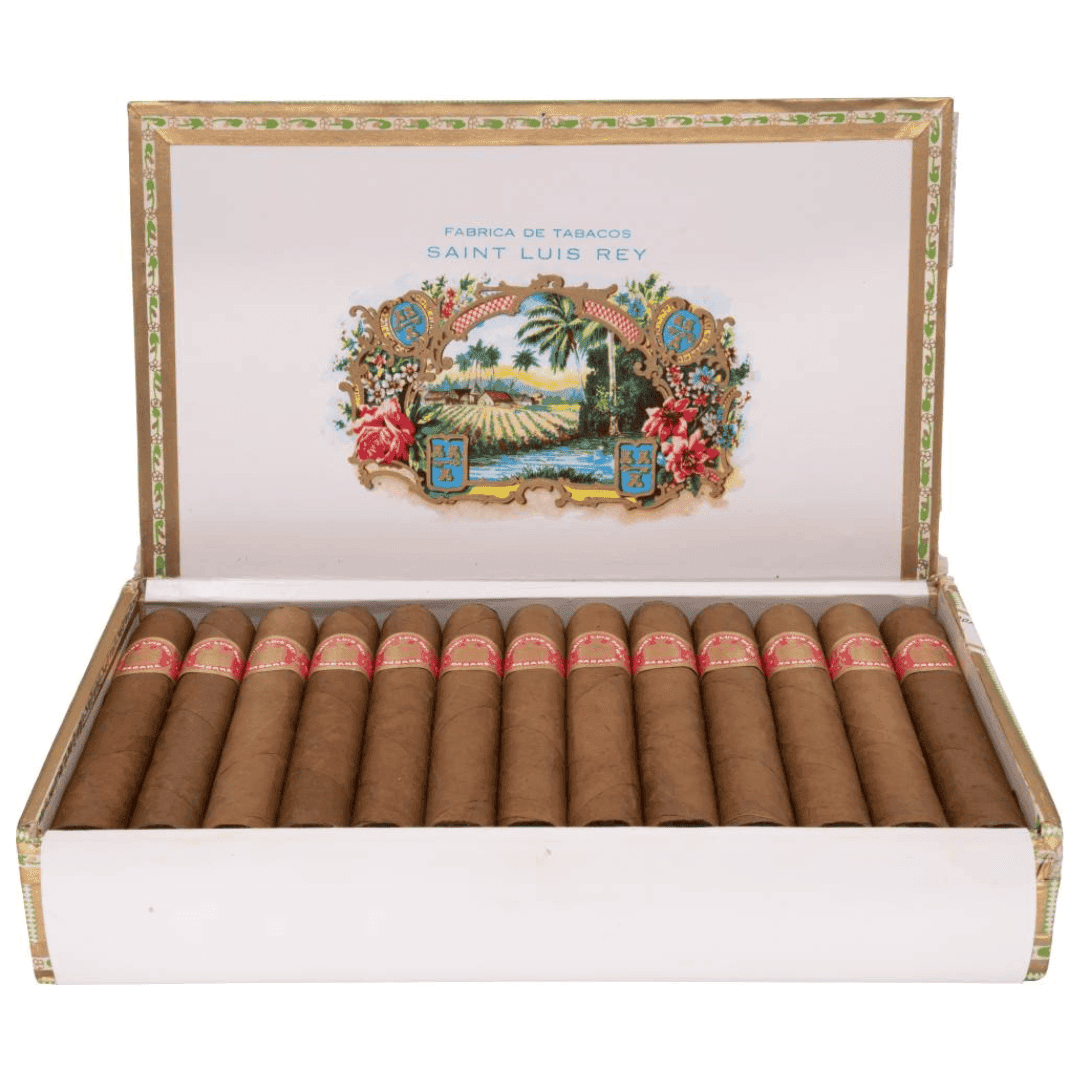
In the rarefied air of premium tobacco collecting, few artifacts command as much reverence as a surviving pre-revolutionary Cuban cigar. Among these historical treasures, the Saint Luis Rey Pyramides No.1 stands out as a definitive example of the island's "golden age" of cigar making. Before the sweeping industrial changes of the 1960s transformed the tobacco landscape, brands had the freedom to produce distinct shapes and sizes that are now largely lost to history. This particular vitola serves as a time capsule, offering a glimpse into the craftsmanship and aesthetic priorities of a bygone era, where the Saint Luis Rey marque established itself as a benchmark for quality and character.

A Product of the Pre-Revolutionary Golden Age
The history of the Pyramides No.1 is inextricably linked to the dramatic socio-political shifts that defined Cuba in the mid-20th century. This cigar entered the market well before 1960, placing its birth squarely in the pre-revolutionary period—a time often romanticized by aficionados for the perceived superiority of its agricultural output and manufacturing freedom. For approximately two decades, this model was a staple of the regular production lineup, available to smokers who sought a robust and expertly constructed smoke.
However, the cigar's lifespan was ultimately finite. By the 1970s, the Saint Luis Rey Pyramides No.1 was discontinued, falling victim to the standardization and rationalization of cigar formats that occurred in the decades following the revolution. Its disappearance marked the end of an important chapter for the brand, leaving behind a legacy that can only be appreciated through the few surviving boxes that occasionally surface at elite auctions today.
Architecture of a Figurado
The physical construction of the Pyramides No.1 reveals why it was considered a sophisticated smoke for the discerning palate. As a figurado—a term used for cigars with tapered shapes rather than straight sides—this model required a high level of dexterity from the torcedores (cigar rollers). The shape is distinct: a wide, open foot allows for an easy light and ample smoke volume, while the tapered head concentrates the draw, intensifying the flavors as the smoker progresses through the cigar.
Measuring a substantial 156 mm (approximately 6 1/8 inches) in length and boasting a ring gauge of 52, this was no small cigar. It occupied the larger end of the spectrum, promising a lengthy smoking session. The dimensions were demanding on the roller; ensuring an even burn in a pyramid shape requires expert placement of the filler leaves to avoid tight draws or canoeing. The finished product was adorned with the brand's Standard band A, a visual seal of authenticity that collectors still look for today.
Technical Specifications
- Vitola Name: Pyramides No.1
- Dimensions: 156 mm (Length) x 52 (Ring Gauge)
- Format: Figurado (Pyramid)
- Construction: Handmade
- Packaging: Dress box of 25 cigars
Presentation and Packaging
Beyond the tobacco itself, the Saint Luis Rey Pyramides No.1 was distinguished by its presentation. The cigars were housed in "dress boxes," a traditional packaging method that prioritized both protection and visual appeal. Each box contained 25 cigars, arranged meticulously to showcase the uniformity of the handmade rolls. This method of presentation was standard for premium exports during the era, reflecting a time when the unboxing experience was nearly as important as the smoking experience itself. The weight of each cigar was estimated at 14.37 grams, a dense packing that further hints at the rich, complex flavors contained within the wrapper.
The Legacy of a Discontinued Legend
Today, the Saint Luis Rey Pyramides No.1 exists primarily as a reference point for historians and a "white whale" for serious collectors. Because production ceased in the 1970s, any existing inventory is decades old, making these cigars incredibly rare finds. They represent a specific lineage of tobacco that has largely been replaced by modern standard sizes like the Piramide or Robusto.
For those lucky enough to encounter one, the cigar offers more than just nicotine; it offers a sensory connection to the past. It stands as a testament to the Saint Luis Rey brand's heritage, documenting a time when the brand offered a wider, more diverse array of formats to the global market. While the Pyramides No.1 may no longer roll off the production lines of Havana, its ghost continues to haunt the humidors of the world's most dedicated enthusiasts.