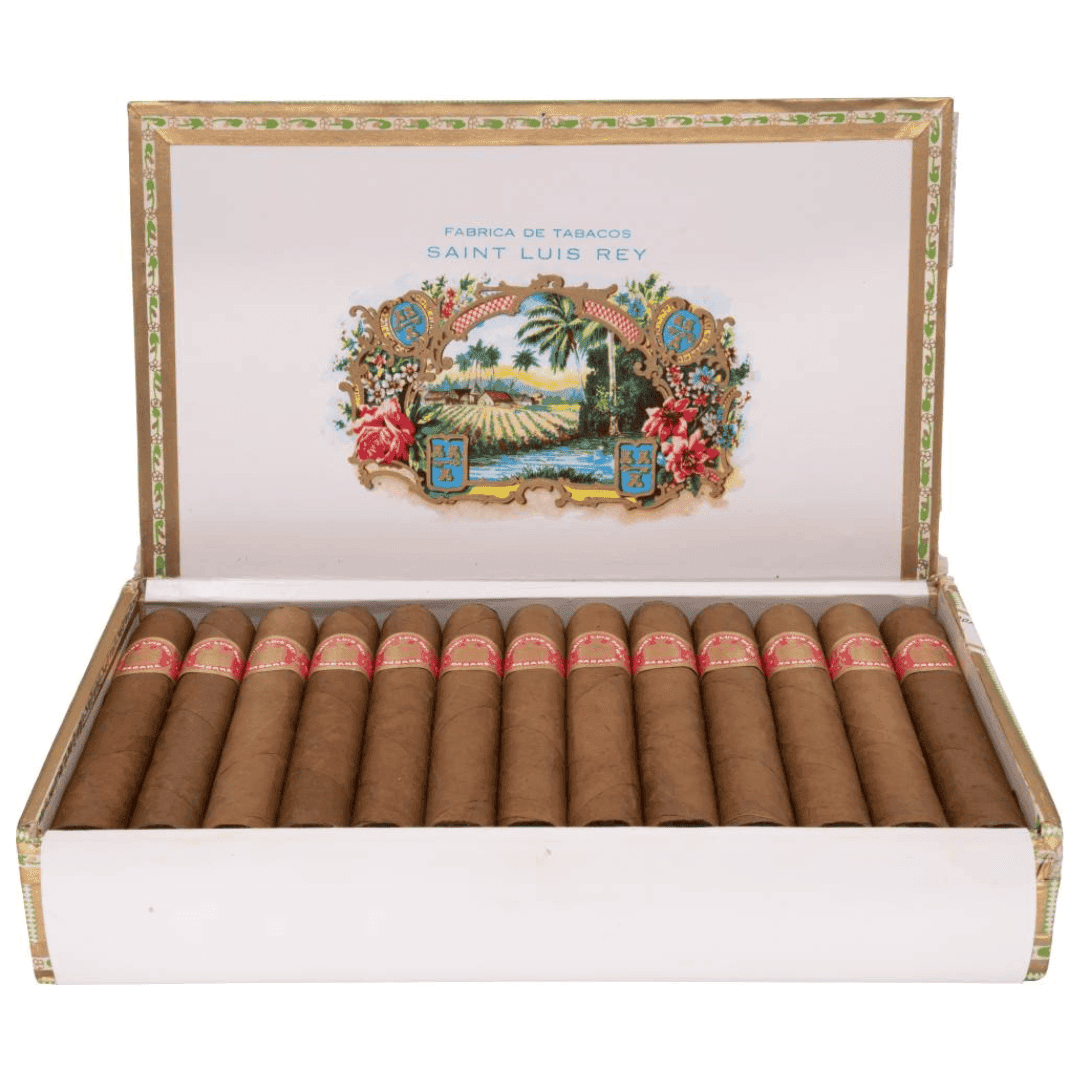
Among the pantheon of discontinued Cuban cigars, few names evoke a sense of lost artistry quite like the Saint Luis Rey Lonsdales. Known by the factory designation "Cervantes," this cigar was never merely a smoking product; it was a benchmark for elegance. For decades, it stood as a testament to a time when slimmer gauges and longer lengths defined the pinnacle of smoking sophistication. While modern trends have shifted toward robust, thick ring gauges, the Cervantes represented a different philosophy—one that prioritized nuance, cool smoke, and the gradual unfolding of flavor over a substantial period of time.

The Architecture of the Cervantes
The dimensions of this cigar tell a story of their own. Measuring 165 mm (approximately 6½ inches) in length and sporting a slender ring gauge of 42, the Saint Luis Rey Lonsdales adhered to the classic proportions of a bygone era. This was a format that demanded patience from the smoker, rewarding them with a burn time that allowed for deep contemplation. The official weight of 10.80 grams speaks to a tightly packed bunch of leaves, ensuring a draw that remained consistent from the first ignition to the final inch. In an industry that has seen the average cigar expand in girth, the svelte silhouette of the Cervantes remains a visual reminder of the "golden age" of Cuban manufacturing.
A Complex Production History
The timeline of this cigar is as layered as its flavor profile. Originally introduced prior to the 1960 embargo, the brand witnessed the dramatic transformation of the Cuban cigar industry firsthand. It survived the shift from private ownership to state-run production, maintaining its prestige for decades. However, all good things must eventually come to an end. Habanos S.A. officially removed the Lonsdales from their standard portfolio in 2006.
Interestingly, the official discontinuation did not result in an immediate disappearance from the market. Production was reported to have lingered in limited capacities until at least 2010, creating a unique window where "new" stock was still finding its way to discerning palates. This extended swan song has made the cigar a particular point of interest for collectors, who must now navigate the secondary market to find well-preserved examples.
Packaging Nuances and Variations
Collectors know that not all Saint Luis Rey Lonsdales are created equal. The cigar was primarily presented in dress boxes containing 25 units, a format that remained in production until the 2006 cutoff. However, an earlier packaging variant exists that holds significant historical value: the slide lid box containing 50 cigars. This larger presentation was phased out around 2003, making it a rarer find. Perhaps the most distinct characteristic of the slide lid boxes was the absence of the standard "A" band; these cigars were sold naked, relying solely on their wrapper quality and cap finish to identify them as authentic Saint Luis Rey products.
Sensory Profile and Tasting Notes
To smoke a Saint Luis Rey Lonsdales is to experience a masterclass in balance. Unlike the brute force often found in modern, heavy-bodied cigars, this vitola was celebrated for its refinement. Reviews consistently highlight a medium-bodied strength, making it an approachable choice for smokers who value complexity over raw power.
The flavor architecture is built on a foundation of classic Cuban earthiness, but it is the secondary notes that truly define the experience. Smokers can expect a symphony of leather and dried fruit, interwoven with the grassy, herbal undertones characteristic of the region. The cigar is frequently lauded for its "elegance"—a term that encompasses the smoothness of the draw and the harmonious way the flavors interact. It is a smoke that evolves in the hand, offering a complexity rating that rivals far more expensive limited editions.
Legacy and Special Editions
The enduring appeal of the Cervantes format was cemented by a special release at the turn of the millennium. The Saint Luis Rey Lonsdales Siglo XXI Millennium Humidor edition offered a modern twist on the classic, celebrating the year 2000 with a distinctive presentation that has since become a holy grail for aficionados.
Today, the standard Saint Luis Rey Lonsdales exists only in humidors and auction lists. Its discontinuation serves as a reminder of the shifting tides in the cigar world. While the brand name lives on through other vitolas, the original Lonsdales remains a symbol of traditional Cuban craftsmanship—a slender monument to the history of tobacco.