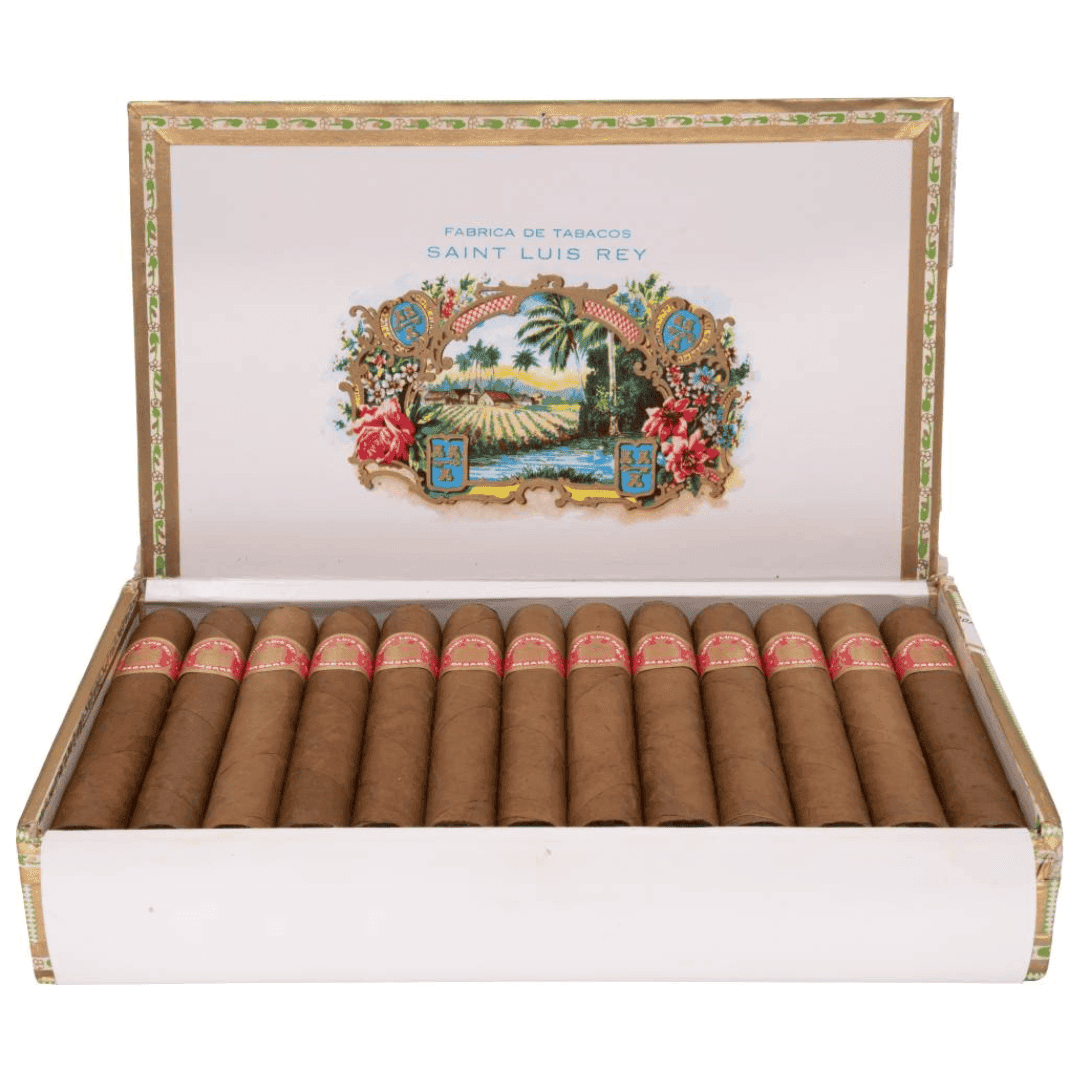
For the serious aficionado, the pursuit of vintage Cuban cigars is often less about the act of smoking and more about the preservation of history. Among the myriad of discontinued vitolas that once defined the golden era of Havana, few carry the quiet mystique of the Saint Luis Rey Havana Club. This particular cigar, long absent from retailer shelves, stands as a testament to a bygone epoch of tobacco craftsmanship. It is a relic from a time when production methods and tobacco varietals differed vastly from today’s standards, offering a unique window into the pre-revolutionary soul of the island’s cigar industry.

Origins in a Bygone Era
The story of the Havana Club begins in a dramatically different Cuban landscape. Introduced to the market prior to 1960, this cigar was born during the pre-revolutionary period, a time widely regarded as the "golden age" of Cuban cigar production. During these years, the Saint Luis Rey brand was establishing its reputation for robust, full-flavored smokes, and the Havana Club was an integral part of that early success.
Unlike modern limited editions that are created specifically to generate buzz, the Havana Club was originally released as a regular production item. It was intended to be a staple in the rotation of smokers of the era. However, the cigar’s lifespan was surprisingly concise. While it weathered the initial storms of political change, production eventually ceased during the 1970s. This discontinuation created a finite supply, transforming what was once a standard purchase into a rare collector's piece. The fact that it was only produced for a few short decades ensures that surviving examples are imbued with a sense of scarcity that drives modern demand.
Technical Profile and Presentation
From a dimensional standpoint, the Saint Luis Rey Havana Club adheres to the classic proportions that defined the era's elegance. It is a cigar that prioritizes balance and tradition over the massive ring gauges popular in the contemporary market. The construction details reveal a commitment to the standards of the mid-20th century.
- Vitola Dimensions: The cigar measures 122 mm (approximately 4¾ inches) in length with a slender ring gauge of 42. This size aligns with the traditional preferences for a focused, intense flavor profile.
- Manufacturing: Entirely handmade, the Havana Club was crafted by skilled torcedores using the era's distinct rolling techniques.
- Weight: The official weight is recorded at 7.73 grams, indicative of a denser roll often found in vintage Cuban cigars.
- Factory Name: Interestingly, the specific factory name for this vitola remains unrecorded in official archives, adding a small layer of mystery to its provenance.
In terms of aesthetics, the cigar was finished with the brand’s standard "Band A" design, a mark of authenticity for the Saint Luis Rey portfolio. It was presented in the conventional dress boxes of 25, a presentation style that was the industry norm for Havana manufacturers at the time. This packaging not only protected the cigars but also lent an air of formality to the product, making it a distinguished addition to any humidor of the period.
The Modern Collector's Perspective
Today, the Saint Luis Rey Havana Club occupies a revered space in the pantheon of vintage Cubans. Its status is elevated by the simple mathematics of time; as a pre-1960 release that vanished from production lines in the 1970s, very few boxes have survived the decades intact. Collectors prize these cigars not only for their rarity but for the historical narrative they represent. They are artifacts from a time when the Cuban tobacco infrastructure was undergoing massive shifts, yet still managing to produce world-class leaf.
For those lucky enough to encounter a well-preserved box, the Havana Club offers more than just aged tobacco. It provides a sensory connection to the past. The scarcity of the vitola has cemented its reputation as a "must-have" for completists who specialize in pre-revolutionary brands. While the Saint Luis Rey name continues under modern production, the Havana Club remains a ghostly reminder of the brand’s origins—a fragile, smokable piece of history that becomes harder to find with every passing year.