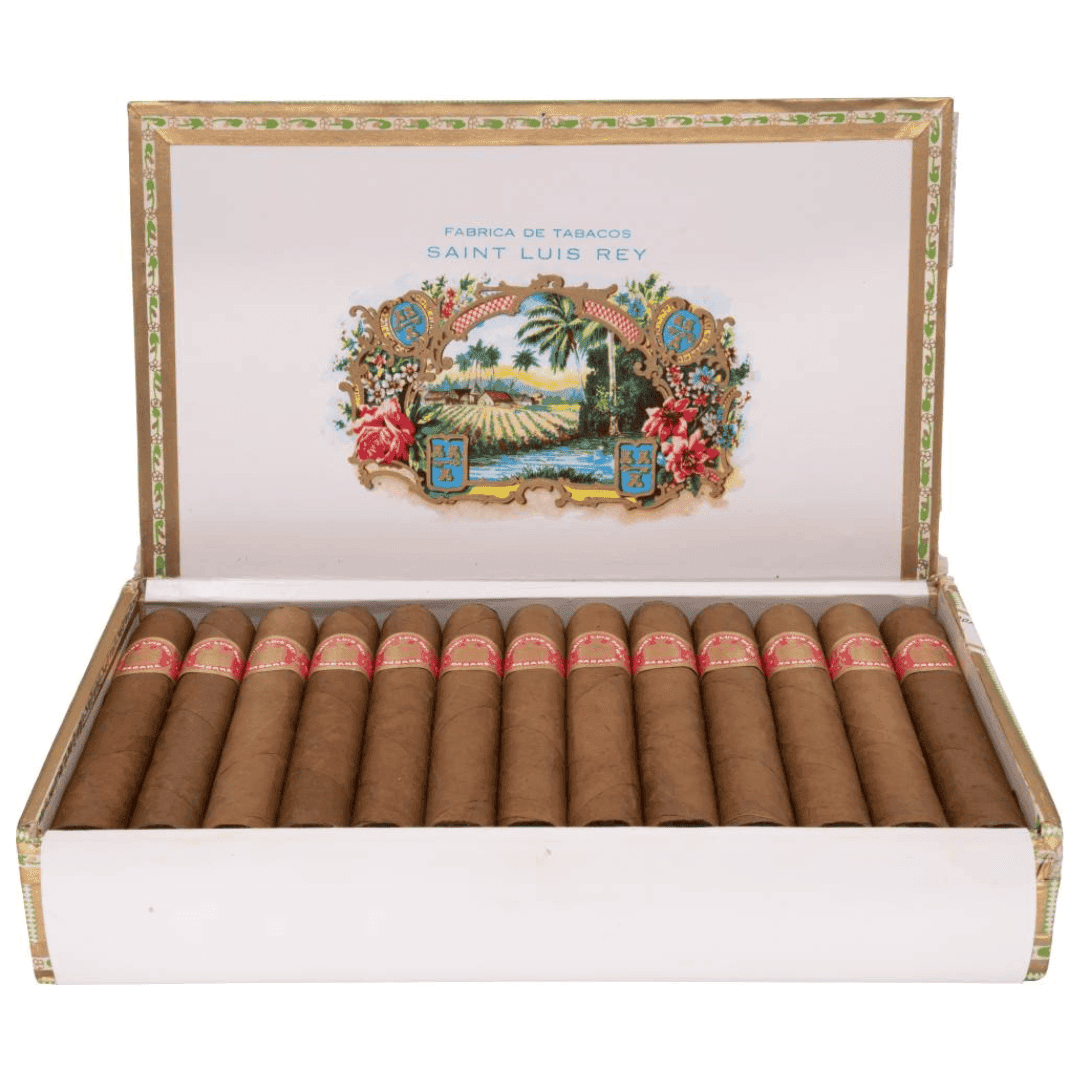
Imagine holding a slender, hand‑rolled cylinder that once graced the humidors of Havana before the world changed. The Saint Luis Rey Entre Palmas is exactly that—a rare, discontinued vitola that slipped out of production in the 1970s but still lives on in the memories of veteran smokers and the occasional unopened box discovered in a collector’s vault. For those who appreciate the artistry of pre‑revolutionary Cuban cigars, this petite parejo offers a tangible link to an era when flavor profiles were shaped by time‑honored techniques and a simpler, more intimate smoking culture.

A Glimpse into the Past: The Birth of the Entre Palmas
The Entre Palmas first appeared on the market prior to 1960, making it one of the oldest offerings in the Saint Luis Rey catalog. For decades it was produced continuously, serving aficionados who sought a classic, medium‑strength smoke with the brand’s signature balance of earth, cedar, and subtle spice. As the 1970s rolled around, the cigar was quietly retired, a victim of shifting consumer tastes and the gradual consolidation of vitolas within Habanos S.A.’s portfolio. Today, its original release date and limited production run have turned the Entre Palmas into a coveted artifact of Cuban cigar heritage.
Technical Specifications
Below is a concise rundown of the physical characteristics that defined the Entre Palmas and set it apart from contemporary vitolas:
- Ring gauge: 38
- Length: 166 mm (approximately 6½ inches)
- Official weight: 8.90 g
- Factory designation: Parejos (straight‑sided, open‑foot, rounded head)
- Construction: Handmade, using traditional Cuban long‑filler techniques
- Band style: Standard band A, bearing the iconic Saint Luis Rey crest
- Packaging: Dress boxes containing 25 cigars
- Status: Discontinued (production ceased in the 1970s)
Handmade Craftsmanship and Visual Presentation
Each Entre Palmas was rolled by a skilled torcedor who followed the same methods that have been passed down through generations of Cuban cigar makers. The cigar’s slim 38‑ring profile provided a long, contemplative burn, allowing the smoker to experience a gradual evolution of flavors as the ash crept toward the foot. The standard band—adorned with the brand’s elegant gold and black motif—gave the smoke a refined visual identity, while the dress box of 25 units underscored its status as a premium, collectible offering. The straight‑sided parejo design, with its open foot and rounded cap, not only contributed to a steady draw but also highlighted the purity of the tobacco blend.
Collectibility: Why the Entre Palmas Commands Attention
Because it vanished from production more than four decades ago, the Entre Palmas has become a prized trophy for vintage cigar enthusiasts. Surviving boxes, when they surface, are often sealed and retain a surprising amount of freshness, a testament to the robust construction that characterized the era’s cigars. Collectors prize the vitola not only for its scarcity but also for the story it tells—a narrative of a time when Cuban cigar factories were still experimenting with sizes and shapes that later gave way to more standardized portfolios. While the Saint Luis Rey brand continues to produce a range of modern cigars, its discontinued Entre Palmas occupies a special niche in the annals of cigar history, reminding us that some of the most memorable smokes are those that have slipped through the cracks of time.