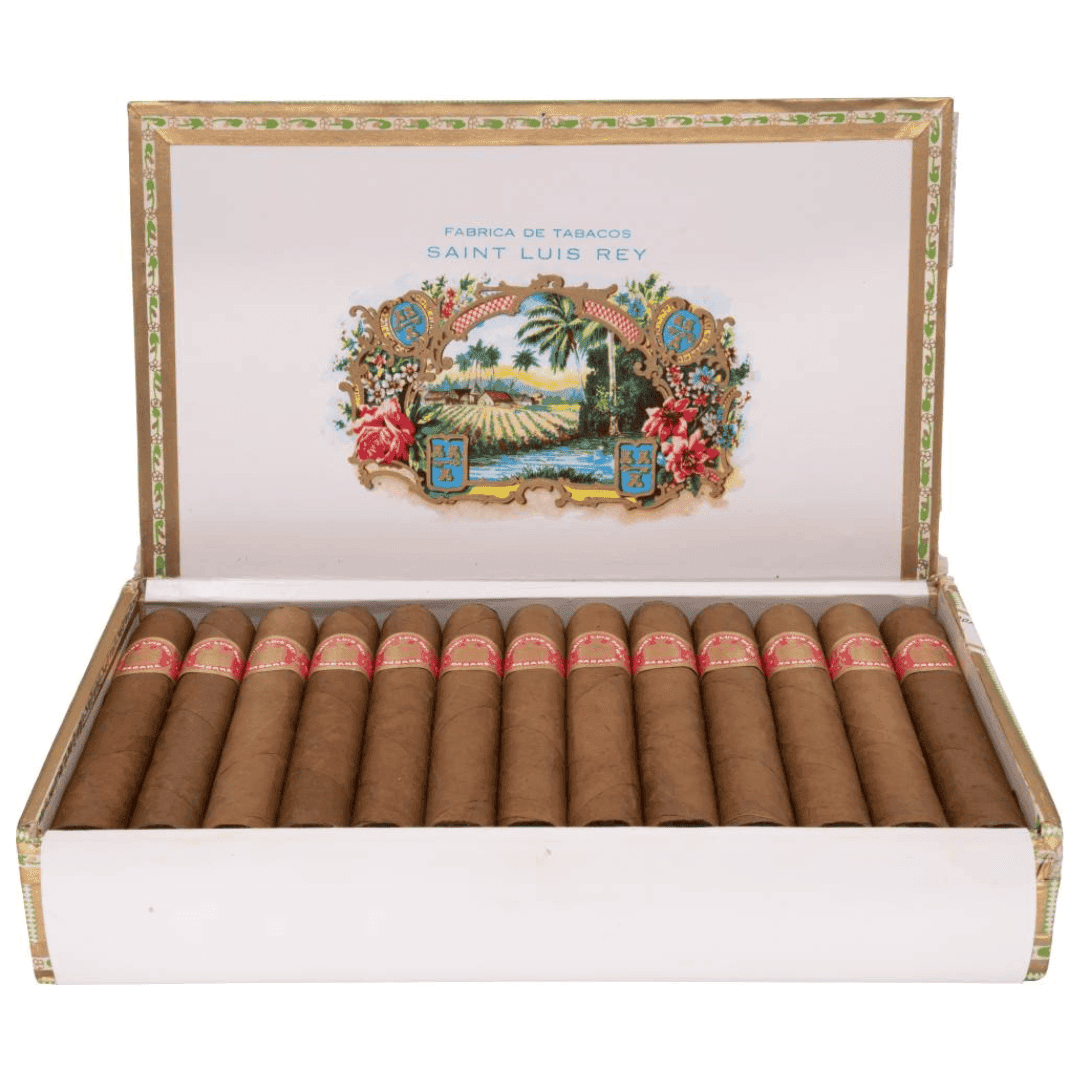
For collectors of vintage Cuban tobacco, few discoveries generate as much excitement as stumbling upon a well-preserved box of Saint Luis Rey Coronas Inmensas. This enigmatic cigar, born in an era when Cuba's tobacco industry operated under vastly different circumstances, represents a fascinating chapter in the island's rich cigar-making heritage. Today, the Coronas Inmensas exists only in the memories of seasoned aficionados and the occasional auction catalog, having vanished from production nearly half a century ago.

The Golden Age of Saint Luis Rey
Saint Luis Rey emerged as one of Cuba's most respected brands during the early twentieth century, named after the historic California mission rather than any Cuban location. The brand built its reputation on producing cigars of exceptional character and consistency, earning particular favor among British smokers who appreciated the brand's distinctive flavor profile. The Coronas Inmensas debuted during this prosperous period, arriving on the scene sometime before 1960 when Cuba's cigar industry operated under private ownership and international export relationships looked markedly different than they do today.
This pre-revolutionary context matters significantly when understanding the Coronas Inmensas. During those years, Cuban cigar manufacturers enjoyed considerable freedom in developing new vitolas, experimenting with blends, and responding to market demands with agility. The Coronas Inmensas was a product of this dynamic environment, designed to satisfy smokers seeking a more substantial smoking experience without committing to the massive dimensions of some larger formats.
Understanding the Specifications
The Coronas Inmensas measured 167 millimeters in length, translating to approximately six and five-eighths inches—a generous dimension that placed it comfortably among the longer offerings available at the time. The ring gauge of 48 provided enough girth to deliver complex flavor development while remaining approachable for experienced smokers. This combination of length and thickness created what aficionados describe as a substantial yet manageable smoking experience, one that could easily occupy ninety minutes or more of contemplative enjoyment.
Each cigar weighed approximately 14.38 grams, reflecting the careful attention to construction that characterized Cuban cigar manufacturing during this era. The factory name for this particular vitola has been lost to history, a common occurrence with discontinued models from this period when record-keeping practices differed from modern standards.
Key Measurements at a Glance
- Length: 167 mm (approximately 6⅝ inches)
- Ring Gauge: 48
- Estimated Weight: 14.38 grams per cigar
- Construction: Entirely handmade
Presentation and Packaging Excellence
Saint Luis Rey understood that premium cigars required equally premium presentation. The Coronas Inmensas arrived in traditional dress boxes containing 25 cigars each, a standard configuration that allowed collectors and retailers to inventory their offerings efficiently. These boxes featured the elegant woodworking and finishing techniques that distinguished Cuban packaging during this period, transforming each purchase into something approaching a luxury unboxing experience.
The cigars themselves bore the standard Band A design that Saint Luis Rey employed across its portfolio. This consistent branding approach helped establish immediate recognition among consumers, who learned to associate the distinctive band design with the brand's reputation for quality. Handmade construction ensured that each cigar received individual attention from skilled rollers who had spent years perfecting their craft, resulting in products that varied slightly in subtle ways while maintaining consistent overall quality standards.
The Mystery of Disappearance
Sometime during the 1970s, production of the Coronas Inmensas ceased permanently. The exact reasons behind this decision remain undocumented, lost amid the broader transformations reshaping Cuba's tobacco industry during that turbulent decade. Industry historians have proposed several theories: shifting consumer preferences toward different formats, production streamlining efforts, or simply the natural evolution of a brand's portfolio responding to changing market conditions.
What remains certain is that the Coronas Inmensas represents an irreplaceable piece of Cuban cigar history. Modern enthusiasts can only imagine the experience of smoking a fresh example, relying instead on the recollections of those fortunate enough to have enjoyed them during their brief production run. For serious collectors, encountering an authentic box represents a rare opportunity to own something genuinely historic—a tangible connection to Cuban cigar making's pre-revolutionary golden age that will never be replicated.