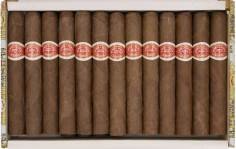
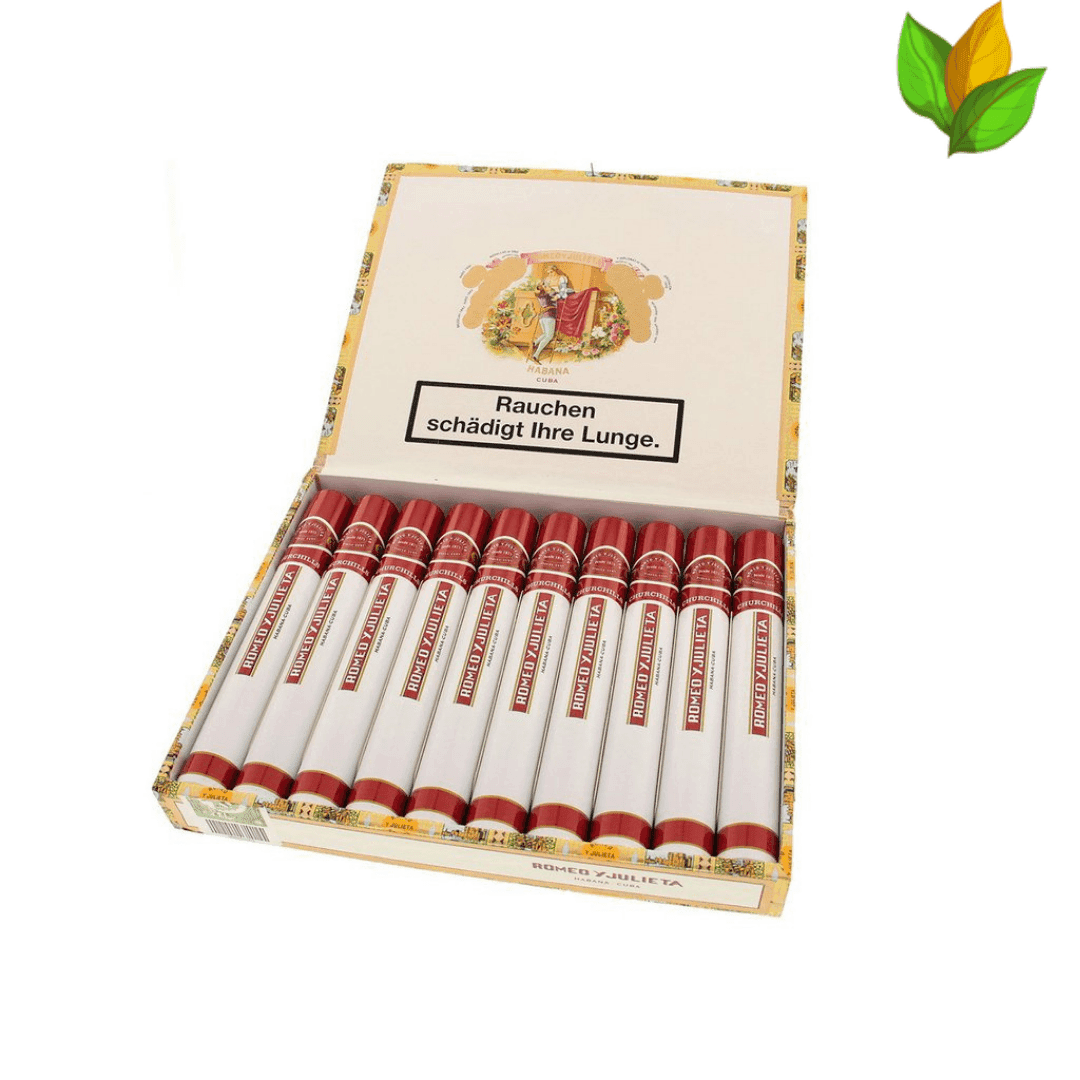
Among the storied vitolas that have shaped the landscape of Cuban cigar tradition, the Romeo y Julieta Trés Petit Coronas occupies a distinctive place. This diminutive yet memorable smoke delivered decades of enjoyment before its eventual departure from production, leaving behind a legacy that continues to captivate collectors and enthusiasts in the secondhand market. For those who experienced its nuanced profile, the Trés Petit Coronas represents a portal to an earlier era of Cuban cigar manufacturing.

The Trés Petit Coronas: A Compact Classic
The Trés Petit Coronas embodied the essence of what many consider the ideal short smoke. Measuring 116 millimeters in length with a 40 ring gauge, this petit corona format offered a perfectly proportioned experience for moments when time was limited but the desire for quality remained paramount. The factory designation of "Franciscanos" linked this particular vitola to a tradition of naming conventions that reflected the artistic sensibility present throughout Romeo y Julieta's extensive portfolio.
Each cigar was meticulously handmade, adhering to the rigorous standards that have defined Cuban cigar production for generations. The standard band featured on these cigars bore the unmistakable Romeo y Julieta crest, a symbol recognized worldwide as a marker of excellence in tobacco craftsmanship. With an official weight of 6.72 grams, the Trés Petit Coronas delivered a concentrated flavor experience that belied its modest dimensions.
Technical Specifications
- Vitola: Trés Petit Coronas
- Factory Name: Franciscanos
- Ring Gauge: 40
- Length: 116 mm (4⅝ inches)
- Weight: 6.72 grams
- Construction: Handmade
- Band: Standard Romeo y Julieta band
Packaging Options Throughout Production
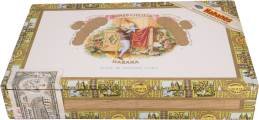
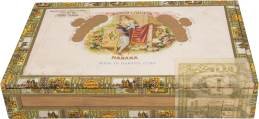
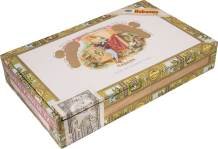
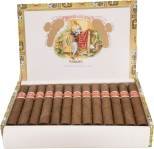
During its lengthy tenure in the Romeo y Julieta catalog, the Trés Petit Coronas appeared in several packaging configurations designed to accommodate varying preferences and market demands. The dress box containing 25 cigars represented the standard offering for retail environments, though this option was discontinued in 2006 alongside the cigar itself. A larger slide lid box holding 50 cigars served those who preferred to stock their humidor with this particular vitola, with production ending approximately three years earlier around 2003. Additionally, a dress box of 10 cigars provided a more modest quantity for those wishing to sample the smoke without committing to larger purchases.
Historical Context and Significance
The roots of the Trés Petit Coronas extend deep into the pre-1960 era, positioning this vitola among the most established offerings within the Romeo y Julieta lineup. Its nearly five-decade production run testified to the sustained demand for compact yet satisfying smokes that could deliver the brand's characteristic flavor profile in a condensed format. The cigar served as an accessible entry point for newcomers while remaining a reliable favorite among seasoned aficionados who appreciated its measured smoking duration.
The discontinuation of the Trés Petit Coronas in 2006 marked the end of an era for this particular vitola. Unlike some limited releases that generate artificial scarcity, the Trés Petit Coronas earned its current rarity through genuine market evolution and the natural consolidation of production lines. Today, these cigars exist exclusively in secondary market channels and private collections, where they command attention from those seeking to experience or revisit this chapter of Cuban cigar history.
The Enduring Appeal
What made the Trés Petit Coronas resonate with smokers across generations? The answer lies in its successful balance of convenience and quality. In a world where time often feels like the scarcest resource, this petit corona offered a complete smoking experience that respected the smoker's schedule without demanding compromise on flavor or construction. The Romeo y Julieta house style—renowned for its complexity and elegance—remained intact despite the cigar's modest proportions.
For collectors, the Trés Petit Coronas represents a tangible connection to an earlier chapter of Cuban cigar culture. Properly stored specimens from the production era continue to age gracefully, developing additional depth that rewards patience and proper humidification. Whether encountered in a seasoned collector's cabinet or discovered at a specialty tobacconist specializing in vintageCubans, these cigars carry with them the accumulated heritage of nearly fifty years of continuous production and the enduring reputation of one of Havana's most prestigious marques.