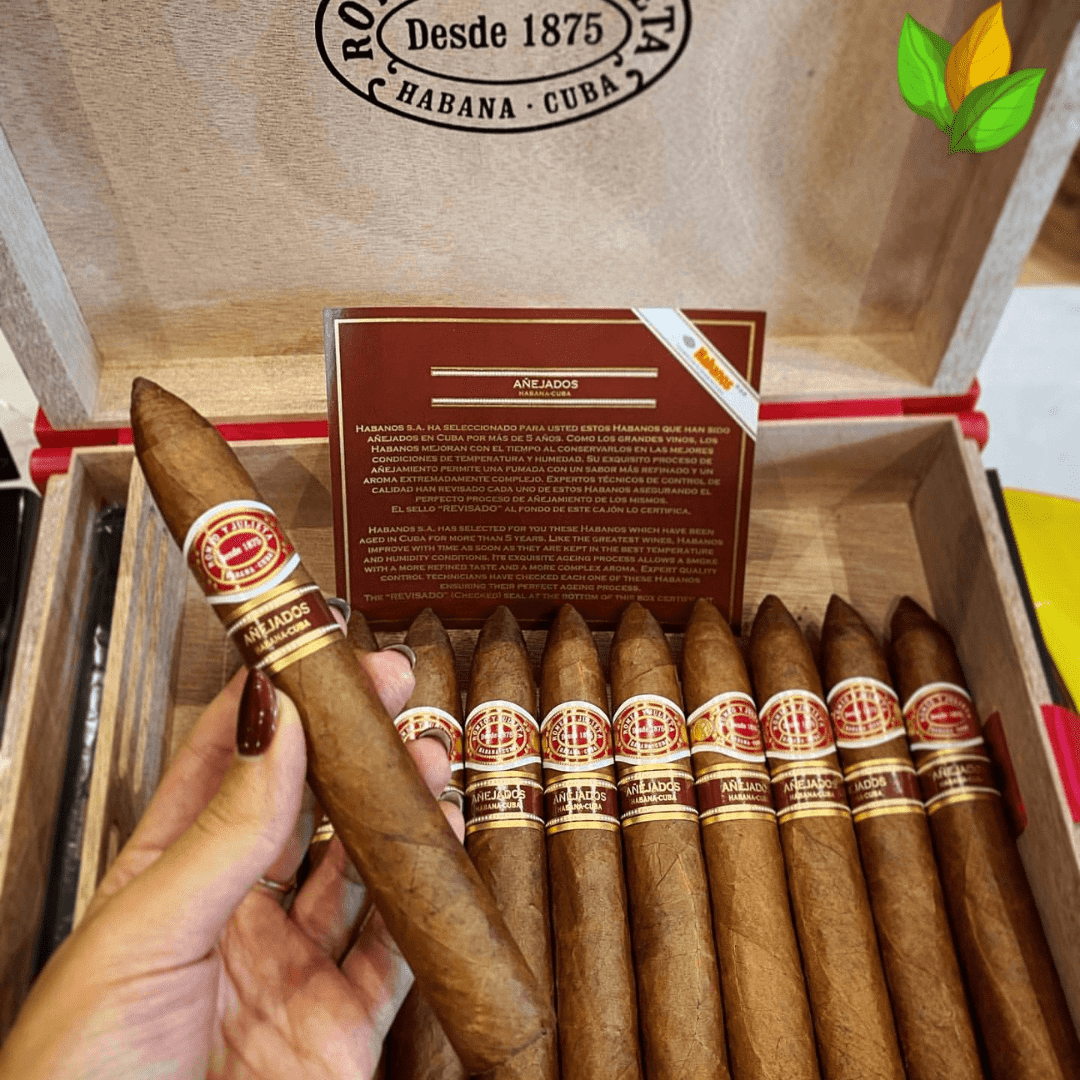
In the vast and storied timeline of Cuban tobacco, certain releases achieve legendary status through decades of uninterrupted production, becoming pillars of the industry. Other cigars, however, carve out a much different legacy—one defined by brevity and exclusivity. The Romeo y Julieta Piramides falls firmly into this second category. Introduced at the turn of the millennium, this distinctive figurado was intended to be a staple in the brand's portfolio. Instead, it vanished almost as quickly as it appeared, transforming from a standard shelf offering into a prized artifact for the modern connoisseur. Its story is not one of endurance, but of a fleeting moment in Cuban cigar history that has left collectors scrambling to find remaining samples.

Anatomy of a Discontinued Figurado
The physical attributes of the Romeo y Julieta Piramides command respect, adhering to the classic definitions of the Piramides vitola. This format, often revered for its tapered head and conical shape, offers a unique smoking experience that differs significantly from the straight-sided Parejos that dominate the market. With a substantial length of 156 mm (approximately 6 ⅛ inches), the cigar demands a considerable time commitment from the smoker, allowing for a complex evolution of flavors.
The ring gauge measures 52, providing a robust draw and a cool burn that figurado enthusiasts often seek. Weighing in at an official 14.26 grams, the construction was entirely manual, a testament to the skill of the rollers of the era. The shape itself is a work of art, tapering from the foot up to the head, which requires expert bunching to ensure an even burn. This shape is notoriously difficult to roll perfectly, making the craftsmanship a central point of interest for those analyzing the remaining stock.
A Three-Year Window of Opportunity
Perhaps the most fascinating aspect of this cigar is its timeline. The Romeo y Julieta Piramides entered the global market in late 2000, a period of transition and experimentation for Habanos S.A. Unlike many special releases that are earmarked for limited runs, this cigar was designated as regular production. The intention was for it to sit alongside other mainstays of the Romeo y Julieta marque, theoretically available to any smoker who desired the brand's profile in a pyramidal format.
However, the market reality defied these plans. Production of the Piramides ceased abruptly in 2003, resulting in a production window of roughly three years. This is an unusually short lifespan for a cigar that was not marketed as a limited edition or a special regional release. Why it was discontinued remains a subject of debate among aficionados; some speculate it was a strategic consolidation of the brand’s extensive catalog, while others suggest it may have been a victim of raw material allocation challenges. Regardless of the cause, its rapid disappearance turned it into a "phantom" release—a standard production cigar that became rarer than many limited editions simply because it failed to survive its infancy.
Presentation and Aesthetics
Visually, the Piramides did not deviate from the established identity of Romeo y Julieta. It was adorned with the brand's standard "A" band, the iconic red and gold emblem recognized by cigar smokers worldwide. There were no flashy special edition bands or unique markings to denote its eventual status as a discontinued item. It was presented with the classic elegance associated with the marca, relying on its shape and blend to sell itself rather than flashy packaging.
The cigars were housed in traditional dress boxes, each containing 25 units. This "SLB" (Slide Lid Box) presentation is synonymous with premium Cuban offerings, emphasizing the handmade nature of the product. For collectors, finding a sealed dress box from this era is akin to uncovering a time capsule. The presentation suggests a bygone era of Cuban cigar manufacturing, where the focus was strictly on the product inside the box rather than elaborate marketing gimmicks.
The Modern Collector's Challenge
Because the Romeo y Julieta Piramides existed for such a brief moment in time, it has transitioned from a retail item to a collector's piece. The supply chain has long since dried up; you will not find this vitola in the standard catalog of a local tobacconist today. The only avenue for acquisition is the secondary market, where well-preserved boxes or singles occasionally surface at auction or through specialized vintage retailers.
For the cigar enthusiast, the allure is twofold. First, there is the historical significance of owning a regular production cigar that effectively became a limited release by default. Second, there is the prospect of aging. Samples from 2000 to 2003 have now benefited from decades of maturation. The short production run ensures that inventory is finite, driving up both the monetary value and the desire to experience the flavor profile of a Romeo y Julieta blend from over twenty years ago. It serves as a reminder that in the world of Cuban cigars, permanence is never guaranteed, and the most interesting stories are often found in the gaps left behind by discontinued lines.