Within the vast and storied annals of Havana's tobacco industry, few narratives are as bittersweet as the retirement of a classic vitola. The Romeo y Julieta Perfectos stands as a prime example of a cigar that successfully bridged the gap between different eras of Cuban production, only to eventually fade into history. While the Romeo y Julieta brand is currently synonymous with premium hand-rolled luxury, this particular release offered a different kind of charm—one rooted in accessibility, consistency, and a classic silhouette that had served smokers for generations before its departure in 2003.

A Survivor of the Twentieth Century
The historical footprint of the Perfectos is deep, tracing its origins back to a time before the revolutionary government nationalized the island's tobacco industry. Introduced well before 1960, this vitola weathered the storm of dramatic political and economic shifts that defined Cuba's 20th century. While many brands and sizes vanished during the consolidation of the industry under state control, the Perfectos demonstrated remarkable resilience. It remained a fixture on shelves for over four decades, outlasting many of its contemporaries and serving as a reliable workhorse for the marque. Its eventual discontinuation marked the closing of a significant chapter, representing a shift away from older industrial methods toward the modern focus on premium hand-rolled cigars.
Industrial Precision and Specifications
Unlike the artisanal, hand-crafted image often associated with high-end Cuban cigars, the Perfectos was a product of mechanized efficiency. The decision to produce this cigar via machine rather than by hand was a strategic one, allowing for a uniform final product at a price point that was attainable for a broader demographic. This method of construction ensured that every single unit met a strict standard of consistency, a hallmark of the brand’s industrial output during that era.
From a technical standpoint, the cigar measured a comfortable 127 mm (approximately 5 inches) in length with a ring gauge of 44. It carried an official weight of 7.36 grams, offering a substantial feel in the hand without being overly burdensome for a standard smoking session.

Packaging and Presentation
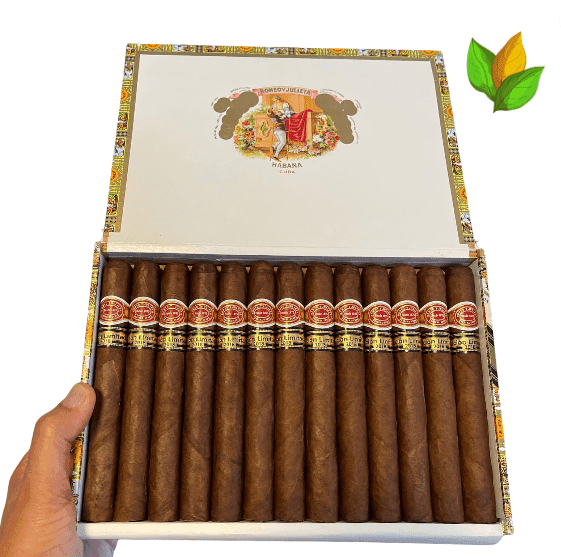
Visually, the Perfectos adhered to the time-honored aesthetic of the Romeo y Julieta house style. Each unit was adorned with the recognizable standard "A" band, a symbol that has long signaled quality to aficionados around the globe. For protection and preservation, the cigars were individually sheathed in cellophane before being arranged in the traditional dress boxes of 25. This packaging choice not only safeguarded the delicate wrappers during transport but also lent the product a sense of occasion and formality befitting its heritage.
The Distinctive Figurado Experience
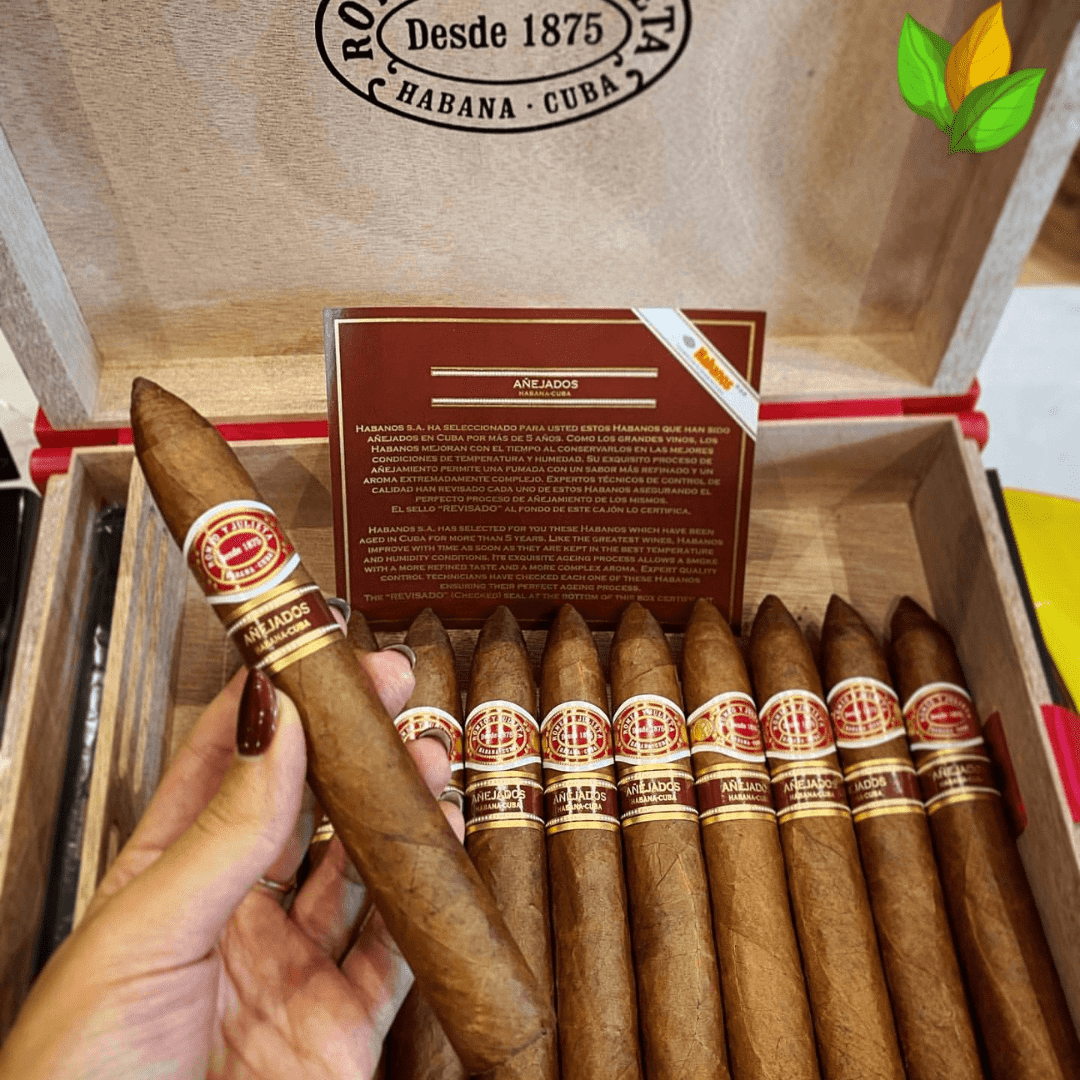
The name "Perfectos" was not merely a marketing term; it described a specific physical architecture known as the figurado. Unlike standard straight-sided cigars (parejos), this format features a tapered head and a narrowed foot, bulging outward at the center. This shape demands a specific ritual from the smoker, particularly during the lighting phase, where the tapered foot requires careful attention to ensure an even burn. As the smoker progresses through the cigar, the changing ring gauge subtly alters the draw and the combustion temperature, creating a dynamic evolution in flavor profile that is distinct from a straight cigar.
The Modern Legacy
Since its official retirement from production in 2003, the Romeo y Julieta Perfectos has transitioned from a consumer commodity to a collectible artifact. While it is impossible to find these as fresh inventory in standard cigar shop humidors today, they occasionally resurface in the secondary market. For the modern collector, stumbling upon a well-preserved box offers a rare window into the past—a chance to taste a style of Cuban cigar manufacturing that has largely been relegated to history.
- Status: Discontinued in 2003
- Construction: Machine-made
- Dimensions: 127 mm x 44 Ring Gauge
- Packaging: 25-count dress box
Ultimately, the legacy of the Perfectos serves as a reminder of the diverse portfolio Romeo y Julieta once maintained. It was a cigar built for endurance and everyday enjoyment, and its memory persists through the remaining inventory that circulates among serious enthusiasts.